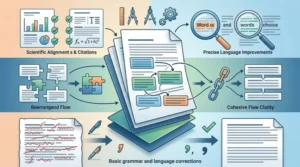
Key Takeaways
-
Use a two-part structure with a colon: combine your main topic with a specific focus (population, setting, or method) to immediately communicate relevance and improve database discoverability.
-
Include one to two primary keywords that match how your target audience actually searches literature, avoiding vague starters like 'Investigation of' or 'Study of' that waste space without adding clarity.
-
Keep titles under 15 words when possible, cutting redundant phrases, unnecessary adjectives, and articles to maintain conciseness while preserving accuracy—every word must earn its place.
-
Avoid overstating findings by ensuring your title claims are fully supported by your data; distinguish between correlation and causation, and specify limitations to population or setting when applicable.
-
Align your title format, length, and structure with your target journal's specific guidelines by reviewing author instructions and recent published titles to prevent desk rejection.
-
Use an iterative process to develop your title: start with a working version, verify accuracy against conclusions, check journal requirements, and seek feedback from colleagues or professional editors before submission.
Your research paper title is the first thing editors, reviewers, and readers see. It shapes their first impression before they read a single word of your work. A strong title can attract the right audience, improve discoverability in academic databases, and signal the quality of your manuscript. A weak title can bury even the most important findings.
Yet many researchers treat the title as an afterthought. They spend months perfecting their methods and results, then write a title in five minutes. This is a costly mistake. Learning how to title a research paper effectively is a skill that directly affects your publication success. This guide breaks down five proven strategies to help you craft a title that works.

Why Your Research Paper Title Matters More Than You Think
Most academic databases display only three pieces of information in search results: the title, the author list, and the abstract. Readers scan these elements to decide whether to open your paper. If your title is vague, misleading, or overly complex, readers will scroll past it. Your research never gets the attention it deserves.
Strong titles also support citation counts. A clearly worded title that includes the right keywords is easier to find and easier to remember. Journals and editors notice well-crafted titles too. They signal that the author understands scientific communication. For non-native English authors, a polished title also demonstrates linguistic confidence from the first line of submission. You can learn more about this in our guide on how to write a research paper title that gets noticed.

5 Proven Ways to Title a Research Paper
1. Use the Main Topic Plus a Specific Focus
The most reliable title structure combines a broad topic with a narrower, specific angle. This two-part format is widely used across scientific and medical journals. It tells readers exactly what the paper is about while still appealing to a wide audience.
A common approach is to use a colon to separate the general topic from the specific focus. For example: Antibiotic Resistance in Pediatric Patients: A Systematic Review of Global Trends. This structure immediately communicates the subject, the population, and the method. Readers know within seconds whether the paper is relevant to them.
When writing your title this way, follow these steps:
- Identify the single most important concept in your study.
- Narrow it down to the specific population, setting, or condition you studied.
- Add the study design or method if it adds value (e.g., randomized trial, meta-analysis).
- Join the two parts with a colon for clarity.
- Trim any words that do not add meaning.
This approach also supports discoverability. Databases like PubMed index title words directly, so placing your core concept early in the title improves search visibility. One publisher recommends keeping key terms within the first 65 characters so they remain visible in truncated search displays.
2. Include Keywords That Readers Actually Search For
Your title should reflect the exact language your target audience uses when searching the literature. This is not about stuffing in technical terms. It is about choosing the right terms — the ones that appear in relevant database searches.
Publishers including Springer Nature and Taylor & Francis recommend placing one to two primary keywords in your title. These should be the terms that define your study’s subject, method, or population. Avoid obscure abbreviations and field-specific jargon that only a narrow group of specialists would recognize.
Here is a quick comparison of keyword-optimized versus weak title choices:
| Weak Title | Keyword-Optimized Title | Why It Is Better |
|---|---|---|
| An Investigation of Glucose Levels | Fasting Blood Glucose in Type 2 Diabetes: A Cohort Study | Includes disease name, measure, and study design |
| Study of Lung Function in Athletes | Respiratory Capacity and Aerobic Performance in Elite Endurance Athletes | Uses searchable medical and sports science terms |
| New Findings on Drug X | Efficacy of Metformin in Early-Stage Type 2 Diabetes: A Randomized Trial | Drug name, condition, and trial type are all searchable |
Taylor & Francis specifically advises avoiding vague title starters such as “Investigation of…” or “Study of…” because they add little informational value and reduce clarity. These phrases waste precious character space without telling the reader anything meaningful.
3. Keep It Concise Without Losing Accuracy
Length is one of the most common problems in research paper titles. Authors sometimes write titles that read like full sentences or include unnecessary context. Nature Index editorial guidance recommends aiming for fewer than 15 words when possible while still being descriptive.
Concise titles are easier to read, easier to cite, and easier to remember. Every word should earn its place. If you can remove a word without losing meaning, remove it.
Common words and phrases to cut from your title include:
- “A study of” or “An investigation into”
- “Preliminary findings on” or “Initial observations about”
- “Novel” or “new” (unless novelty is specifically the focus)
- Redundant adjectives like “important” or “significant”
- Unnecessary articles such as “the” and “a” at the start
- Repetitions of words already implied by the subject matter
At the same time, do not sacrifice accuracy for brevity. A title that is short but misleading will cause problems during peer review and after publication. Your title must accurately represent what your study found. As you explore how to write a strong title for a research paper, accuracy and brevity must work together.
4. Avoid Overstating Your Findings
One of the most serious errors in research paper titles is making claims that go beyond what the data actually support. Editors and peer reviewers are trained to spot this immediately. A title that promises too much raises red flags before anyone reads your abstract.
Declarative titles — those written as complete statements of fact — can be powerful when used correctly. However, they require that your findings fully support the claim. If your study shows a correlation, your title should not imply causation. If your results are limited to a specific population or setting, make that clear.
Compare these examples:
- Overstated: Vitamin D Supplementation Cures Depression in Adults
- Accurate: Vitamin D Supplementation Reduces Depressive Symptoms in Vitamin D-Deficient Adults: A Randomized Controlled Trial
- Overstated: Exercise Prevents Heart Disease
- Accurate: Moderate Aerobic Exercise Reduces Cardiovascular Risk Factors in Middle-Aged Adults
Accurate titles also protect your credibility in the long term. They reflect well on your integrity as a researcher. If you are unsure whether your title accurately reflects your findings, working with a specialist editing service can help. Scientific editing professionals are skilled at identifying gaps between title claims and manuscript content.
5. Align Your Title With the Target Journal’s Style
Different journals have different expectations for title format, length, and structure. Some journals require structured titles. Others discourage colons. Some limit titles to a set number of words or characters. Submitting a title that conflicts with journal style guidelines is a small but avoidable reason for desk rejection.
Before finalizing your title, review the target journal’s author instructions. Look at recently published titles in that journal to understand the norms. Note the average length, the use of subtitles, and whether declarative titles are common in your field.
Key factors to check in journal guidelines include:
- Maximum word or character count for titles
- Whether subtitles and colons are permitted
- Whether abbreviations are allowed in titles
- Whether species names, gene symbols, or drug names follow specific conventions
- Any field-specific formatting requirements
This step is especially important for authors publishing in high-impact peer-reviewed journals, where editorial standards are strict. Understanding journal norms is also a core part of successful manuscript preparation. See our resource on 11 essential steps to write a manuscript for publication for a broader view of the submission process.
Common Mistakes to Avoid When Titling Your Manuscript
Even experienced researchers make predictable errors when writing titles. Being aware of these pitfalls helps you avoid them before submission.
- Being too broad: A title like “Advances in Cancer Research” tells the reader almost nothing specific about your study.
- Being too narrow: A title packed with highly specific terms may exclude readers from adjacent fields who could benefit from your work.
- Using unexplained abbreviations: Not all readers will know what “mTOR” or “CRISPR” means without context. If an abbreviation is not universally known, spell it out.
- Asking a question: Question-format titles can work occasionally but often feel informal and lack the declarative clarity that most journals prefer.
- Ignoring the abstract connection: Your title and abstract must work together. A disconnect between the two creates confusion for readers and reviewers. Review our guide on how to write an abstract that gets your paper published to ensure both elements are aligned.
A Step-by-Step Framework for Writing Your Title
If you are unsure where to start, use this structured approach to draft and refine your title. Many manuscript editors recommend an iterative process rather than writing a final title in one sitting.
- Start with a working title. Write a rough version that captures your study’s core topic. It does not need to be perfect yet.
- Identify your primary keywords. List the two or three terms that best define your study. These must appear in your title.
- Add specificity. Include population, setting, method, or condition to narrow the focus appropriately.
- Check for accuracy. Compare the title to your conclusions. Does it reflect what you actually found?
- Cut unnecessary words. Remove anything that does not add meaning or searchability.
- Check journal requirements. Review the target journal’s author instructions and adjust accordingly.
- Get a second opinion. Ask a colleague or professional editor to review your title for clarity and impact.
This process mirrors what professional manuscript editors do when working with authors. Services like San Francisco Edit provide expert feedback on titles as part of a broader manuscript review. With a 98% publication acceptance rate among edited papers and more than 325 years of combined staff experience, their editors know what makes a title work in practice.
Title Structure Reference Guide
Use this table as a quick reference when deciding which title format suits your paper type.
| Paper Type | Recommended Title Structure | Example |
|---|---|---|
| Original Research Article | Topic + colon + specific focus and method | Gut Microbiome Diversity in IBD: A Cross-Sectional Analysis |
| Systematic Review / Meta-Analysis | Topic + colon + study design | Efficacy of SSRIs in Adolescent Depression: A Systematic Review |
| Case Report | Condition + case descriptor + report type | Rare Presentation of Behçet’s Disease in a Pediatric Patient: A Case Report |
| Review Article | Broad topic + scope descriptor | Mechanisms of Antibiotic Resistance: A Comprehensive Review |
| Short Communication | Specific finding or observation | Elevated CRP Levels in Post-COVID Fatigue Syndrome |
For further guidance on structuring your entire manuscript, including the title, how to structure a research paper correctly is a valuable resource. Non-native English speakers can also benefit from specialist support through language editing services designed to improve clarity and precision throughout the manuscript.
How Professional Editing Improves Your Title and Beyond
Many authors work in isolation when finalizing their manuscripts. A professional editor brings an objective perspective that is difficult to achieve on your own. They can identify when a title is misleading, too long, keyword-poor, or misaligned with journal expectations.
The importance of scientific editing in research extends well beyond grammar. Editors with domain expertise understand the conventions of your field. They know what reviewers look for and how journal editors evaluate manuscripts at first glance. A polished title is just one signal of a well-prepared submission. You can also explore what the knowledge center offers for broader manuscript preparation guidance.
For researchers preparing their first submission or working across language barriers, expert manuscript editing is one of the most effective investments you can make. The scientific editing service for non-native English speakers at San Francisco Edit is specifically designed to address these challenges with precision and care. They also follow guidelines aligned with best practices from authoritative sources such as the Springer Nature author services and leading academic publishers.
Conclusion
Knowing how to title a research paper is a skill that takes practice but follows clear, learnable principles. Use a structured format that combines your main topic with a specific focus. Choose keywords your audience actually searches for. Keep the title concise without sacrificing accuracy. Avoid overstating findings. And always align your title with the style requirements of your target journal.
A strong title does not just describe your research — it invites the right readers in and makes your work easier to find, cite, and remember. Whether you are preparing your first manuscript or your fiftieth, applying these five strategies will improve both the clarity of your title and your chances of publication. To get expert support from experienced PhD scientists who understand exactly what journals are looking for, submit your manuscript for professional review and take the next step toward publication success.
FAQs
Q: How long should a research paper title be?
A: Most journals and editorial guidelines recommend keeping titles under 15 words when possible. This improves readability and ensures the most important terms remain visible in database search results. Always check your target journal’s specific author instructions for any word or character limits.
Q: Should a research paper title include keywords?
A: Yes. Including one to two primary keywords in your title significantly improves discoverability in academic databases such as PubMed, which index title words directly. Choose terms that reflect how your target audience searches the literature rather than highly specialized jargon unfamiliar to a broader readership.
Q: Can a research paper title mention the study method?
A: Including the study design or method in your title is often recommended, especially for clinical and scientific research. Terms such as “randomized controlled trial,” “systematic review,” or “cohort study” help readers immediately assess the level of evidence your paper provides and improve relevance in filtered database searches.
Q: What are the most common mistakes in research paper titles?
A: The most common mistakes include being too vague, overstating findings, using unexplained abbreviations, and including filler phrases like “A study of” or “An investigation into.” These errors reduce clarity and can signal poor manuscript preparation to journal editors, potentially leading to desk rejection before peer review.
Q: Can you change a manuscript title after peer review?
A: Yes, title changes are possible after peer review, and reviewers or editors sometimes request them if the original title is inaccurate or misleading. However, it is always preferable to submit a strong, well-considered title from the outset to make the best first impression and avoid unnecessary revisions during the editorial process.