Key Takeaways
- Abstracts are concise 150-300 word summaries that independently represent a research paper’s key elements – purpose, methods, findings, and significance.
- A well-crafted abstract determines whether reviewers and readers will invest time in reading your full paper, making it crucial for academic publication success.
- Every abstract should include five core components: background/context, research purpose, methodology overview, key findings, and implications/significance.
- Abstracts vary across disciplines, with STEM fields emphasizing methodology and quantitative results, while humanities focus more on theoretical frameworks and interpretive arguments.
- Avoid common abstract mistakes like using citations, introducing new information not in the paper, excessive jargon, or exceeding word limits.
- Effective abstracts use simplified language, provide specific data points, and clearly communicate the research’s contribution to knowledge.
- Academic databases index abstracts, so strategic keyword placement can significantly improve research discoverability and potential citation impact.
An abstract serves as the gateway to your research paper, offering readers a compact yet comprehensive overview of your entire study. Understanding what an abstract is and how to craft one effectively can significantly improve your manuscript’s chances of acceptance in peer-reviewed journals. This guide explains the essential components, purposes, and best practices for writing research paper abstracts in 2026.
Whether you’re a graduate student preparing your first manuscript or an established researcher seeking to refine your publication strategy, mastering the art of abstract writing is crucial for academic success. The abstract often determines whether reviewers and readers will invest time in your full paper, making it one of the most important sections of any research document.

Understanding the Core Definition of a Research Paper Abstract
A research paper abstract is a concise, standalone summary that encapsulates the essential elements of your study in approximately 150-300 words. This brief section appears at the beginning of your paper, immediately following the title and author information, and serves as a self-contained representation of your research.
The abstract must function independently from the rest of your paper, meaning readers should grasp the fundamental purpose, methods, findings, and significance of your work without needing to read the full text. This standalone quality makes abstracts particularly valuable for researchers who scan multiple papers to determine which ones warrant deeper examination.
Unlike an introduction that gradually builds context, an abstract delivers concentrated information quickly and efficiently. It provides a bird’s-eye view of your entire research project, from the initial problem statement through to the implications of your findings. Effective abstracts use simplified language and avoid technical jargon that might confuse readers from related but distinct fields.
Most journals and academic conferences have strict word limits for abstracts, typically ranging from 150 to 300 words, though some descriptive abstracts may be as brief as 50-100 words. Adhering to these limits requires careful selection of the most critical information while eliminating unnecessary details. Professional scientific editing services can help ensure your abstract meets journal requirements while maintaining clarity and impact.
The Five Core Components Every Abstract Should Include
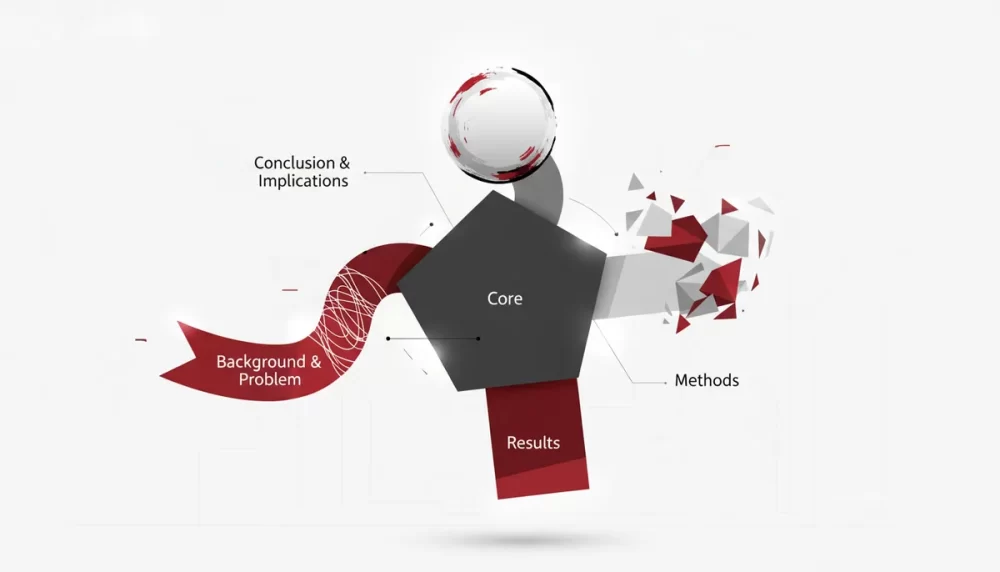
Regardless of your research discipline, effective abstracts typically incorporate five fundamental elements that guide readers through your study’s narrative. Understanding these components helps you structure your abstract logically and ensure you include all essential information.
Background and Context
The opening sentences establish why your research matters by providing context about the problem or gap in current knowledge. This section briefly identifies the research area and explains the motivation behind your study. You might mention previous findings that your work builds upon or contradicts, or highlight an unresolved question in your field.
However, keep this section extremely brief—typically one or two sentences. Avoid extensive literature reviews or detailed historical background. The goal is to quickly orient readers to your research domain and establish the significance of your investigation.
Research Purpose or Question
After establishing context, clearly state your research objective, hypothesis, or central question. This component tells readers exactly what you aimed to accomplish or discover. Use precise language that leaves no ambiguity about your study’s focus.
For experimental research, you might state your hypothesis. For exploratory studies, you might pose a research question. For applied research, you might describe a specific problem you sought to address. This clarity helps potential readers immediately assess whether your paper aligns with their interests or needs.
Methodology Overview
The methods section of your abstract briefly describes how you conducted your research. Include the study design, sample size or data sources, key procedures, and analytical approaches. This information helps readers evaluate the rigor and appropriateness of your research methods.
For quantitative studies, mention your sample characteristics, measurement instruments, and statistical analyses. For qualitative research, describe your data collection methods, participant selection criteria, and analytical framework. Keep descriptions concise—readers need enough information to understand your approach without getting bogged down in procedural details.
Different disciplines place varying emphasis on methodology in abstracts. PubMed listings show that STEM fields typically devote more abstract space to methods than humanities disciplines, which may focus more heavily on theoretical frameworks and interpretations.
Key Findings and Results
This section presents your study’s main discoveries or outcomes. Focus on the most significant findings that directly address your research question or hypothesis. Include specific data points, statistics, or qualitative themes when space permits, as concrete results strengthen your abstract’s credibility.
Avoid vague statements like “results are discussed” or “interesting findings emerged.” Instead, provide actual outcomes: “Patient satisfaction scores increased by 34 percent” or “Three major themes emerged from participant interviews.” Specificity demonstrates the substantive contribution of your research.
Remember that abstracts never include citations or references to other work. All information presented should come directly from your study. If you compared your results to previous research, simply state your findings without citing the comparative studies.
Implications and Significance
Conclude your abstract by explaining what your findings mean for your field, practice, or future research. This section answers the “so what?” question and helps readers understand why your work matters beyond its immediate results.
You might discuss theoretical implications, practical applications, policy recommendations, or directions for future investigation. Keep this section forward-looking and impact-oriented. Strong concluding statements leave readers with a clear understanding of your research’s contribution to knowledge or practice.

Different Types of Abstracts for Various Research Contexts
Not all abstracts follow the same format or serve identical purposes. Understanding different abstract types helps you match your approach to journal requirements and disciplinary expectations.
Informative Abstracts
Informative abstracts, the most common type in scientific publishing, provide comprehensive summaries of all major paper sections. These abstracts typically run 250 words or less and include background, objectives, methods, results, and conclusions.
Most peer-reviewed journals in STEM fields require informative abstracts because they give readers substantial information about study outcomes without requiring access to the full paper. This format proves particularly valuable for researchers conducting literature reviews or systematic analyses who need detailed information to determine paper relevance.
Descriptive Abstracts
Descriptive abstracts, shorter than informative types at 50-100 words, outline the paper’s scope and purpose without presenting specific results. These abstracts describe what the paper covers rather than what it found.
Descriptive abstracts are less common in scientific research but may appear in conference proceedings, book chapters, or humanities publications where the full text remains readily accessible. They function more as extended titles than standalone summaries.
Structured Abstracts
Structured abstracts organize information under explicit subheadings such as Background, Methods, Results, and Conclusions. Medical journals frequently require this format because it ensures authors address all critical components and helps readers quickly locate specific information.
These abstracts follow the same content guidelines as informative abstracts but use labeled sections to improve readability and standardization. San Francisco Edit specializes in helping medical and scientific researchers structure their abstracts according to specific journal requirements, ensuring compliance with formatting guidelines while maintaining narrative flow.
Unstructured Abstracts
Unstructured abstracts present the same information as structured versions but without explicit section headings. They flow as a single paragraph with logical transitions between components. Many social science and humanities journals prefer this format for its narrative cohesion.
While unstructured abstracts offer more flexibility in presentation, they still must include all essential components in a logical sequence. The absence of headings places greater emphasis on clear topic sentences and smooth transitions between sections.

Discipline-Specific Variations in Abstract Writing
Abstract conventions vary significantly across academic disciplines, reflecting different research methodologies, epistemological approaches, and publication cultures. Recognizing these variations helps you craft abstracts appropriate for your field.
STEM and Medical Abstracts
Scientific, technical, engineering, and medical abstracts typically emphasize methodology and quantitative results. These fields value reproducibility and empirical evidence, so abstracts must provide sufficient methodological detail for readers to evaluate study validity.
STEM abstracts often include specific numerical data, statistical significance levels, sample sizes, and measurement parameters. For example, a medical abstract might state: “The treatment group showed a 28 percent reduction in symptoms compared to controls (p<0.001, n=240).” This precision allows readers to quickly assess the magnitude and reliability of findings.
Maximum word counts for STEM symposia abstracts typically reach 250 words, requiring authors to balance methodological detail with brevity. Many researchers find that professional language editing helps them achieve this balance while ensuring their abstracts meet native English standards expected by international journals.
Humanities and Social Science Abstracts
Humanities abstracts often focus more heavily on theoretical frameworks, research questions, and interpretive arguments than on methods and data. These fields value nuanced analysis and conceptual contributions, so abstracts may dedicate more space to explaining the significance of ideas rather than reporting empirical findings.
Social science abstracts typically blend quantitative and qualitative elements, describing both research methods and the theoretical or practical implications of findings. They may discuss themes, patterns, or conceptual insights alongside traditional results.
In 2026, interdisciplinary research continues to grow, leading to hybrid abstract styles that incorporate elements from multiple traditions. Understanding your target journal’s preferences remains essential for crafting effective abstracts regardless of your discipline.
Common Mistakes to Avoid When Writing Abstracts
Even experienced researchers make predictable errors when drafting abstracts. Recognizing these pitfalls helps you avoid them in your own writing.
- Including citations or references: Abstracts should never contain citations to other work. They represent standalone summaries of your research alone, without contextual references to literature or previous studies.
- Introducing new information: Your abstract must only include information that appears in the full paper. Never present findings, methods, or interpretations in the abstract that readers won’t find in the body text.
- Using excessive jargon or abbreviations: Abstracts should be accessible to readers from related fields, not just narrow specialists. Minimize technical terminology and define any essential abbreviations on first use.
- Writing vague or generic statements: Avoid phrases like “results are discussed” or “implications are explored.” Instead, state actual findings and specific implications.
- Exceeding word limits: Journals strictly enforce abstract word counts. Papers with non-compliant abstracts may be immediately rejected without review. Always verify target journal requirements before finalizing your abstract.
- Neglecting the standalone requirement: Many authors assume abstract readers will access the full paper, but abstracts must function independently. Ensure your abstract provides complete information about your study’s purpose, approach, findings, and significance.
- Copying sentences directly from the paper: While abstracts summarize paper content, they should not simply reproduce introduction or conclusion sentences. Craft your abstract as a unique synthesis tailored to space constraints.
The Critical Role of Abstracts in Publication Success
Abstracts serve multiple functions that extend far beyond simple summarization. Understanding these roles helps you appreciate why investing time in abstract refinement yields significant returns for your publication goals.
Initial Screening and Relevance Assessment
Journal editors and peer reviewers typically read abstracts before deciding whether to continue with full manuscripts. A clear, well-structured abstract signals professionalism and helps reviewers quickly determine whether your paper aligns with journal scope and quality standards.
In 2026, with submission volumes at many journals reaching record highs, editors increasingly rely on abstracts for rapid desk rejection decisions. A poorly written abstract may result in immediate rejection regardless of the quality of your underlying research. This reality makes abstract quality a critical factor in publication success.
Database Indexing and Discoverability
Academic databases like PubMed, Web of Science, and Google Scholar index abstracts, making them searchable by researchers worldwide. Keywords and phrases in your abstract directly influence whether other scholars discover your work through database searches.
Strategic keyword placement in abstracts improves discoverability without compromising readability. Think about search terms researchers in your field might use and incorporate them naturally into your abstract text. However, avoid keyword stuffing, which reduces clarity and may violate journal policies.
Citation Impact and Research Visibility
Researchers often decide whether to read full papers based solely on abstracts. A compelling abstract increases the likelihood that others will access, read, and ultimately cite your work. Higher citation rates enhance your research impact and professional reputation.
Studies consistently show that papers with clear, informative abstracts receive more citations than those with vague or poorly written summaries. This correlation underscores the abstract’s role in maximizing research dissemination and influence.
Preparing Readers and Enhancing Comprehension
For readers who do access your full paper, the abstract serves as an advance organizer that prepares them for the detailed content ahead. It provides a conceptual framework that improves comprehension and helps readers navigate complex material more effectively.
Additionally, abstracts aid recall of key points after reading. Researchers often return to abstracts when citing papers or incorporating findings into their own work, making the abstract a lasting reference point for your research contributions.
Practical Steps for Writing an Effective Abstract
Follow these systematic steps to develop abstracts that meet journal standards and effectively communicate your research contributions.
- Write the abstract last: Complete your full manuscript before drafting the abstract. This ensures you accurately represent all paper components and can identify the most significant findings to highlight.
- Review journal requirements: Carefully read target journal guidelines for abstract length, structure, and content. Some journals provide specific prompts or required subheadings.
- Identify key components: Extract one or two sentences summarizing each major paper section—introduction, methods, results, discussion. These form your abstract’s foundation.
- Draft without looking at the paper: Try writing a first draft from memory. This helps ensure your abstract captures the essential story rather than getting lost in details.
- Revise for clarity and concision: Edit ruthlessly to eliminate unnecessary words while preserving meaning. Every sentence should convey substantive information.
- Use active voice: Although passive voice is common in scientific writing, active constructions often prove more concise and direct for abstracts.
- Verify standalone quality: Ask a colleague unfamiliar with your work to read only the abstract and explain your study back to you. Their understanding reveals whether your abstract functions independently.
- Check technical accuracy: Ensure all data points, statistics, and terminology match the full paper exactly. Inconsistencies between abstracts and papers raise red flags for reviewers.
- Proofread multiple times: Abstracts accompany your paper throughout the review and publication process. Even minor errors create negative impressions that may influence editorial decisions.
Many researchers, particularly non-native English speakers, benefit from professional manuscript editing services that ensure abstracts meet the linguistic precision required for publication in top-tier journals. San Francisco Edit’s team of PhD scientists provides expert editing that improves clarity while maintaining technical accuracy across scientific, medical, and general academic writing.
Abstract Length Guidelines Across Different Contexts
Understanding appropriate abstract lengths for different publication venues helps you tailor your writing to specific requirements.
| Publication Type | Typical Length | Key Characteristics |
|---|---|---|
| Journal Articles | 150-250 words | Comprehensive coverage of all major components; informative style preferred |
| Conference Proceedings | 150-300 words | May require specific formatting; often slightly longer than journal abstracts |
| Thesis/Dissertation | 150-350 words | Broader scope reflecting multiple chapters; may include more contextual information |
| Grant Applications | 200-500 words | Emphasis on significance and potential impact; may include preliminary results |
| Poster Presentations | 200-250 words | Similar to journal abstracts but may emphasize visual elements and findings |
Always consult specific guidelines for your target venue, as requirements vary considerably even within the same publication type. Submitting abstracts that deviate from stated word counts often results in automatic rejection or return for revision.
Optimizing Your Abstract for Maximum Impact
Beyond meeting basic requirements, several strategies can enhance your abstract’s effectiveness and increase its influence on readers and reviewers.
Strategic Keyword Integration
Incorporate relevant keywords naturally throughout your abstract to improve searchability and help readers quickly identify your paper’s focus. Think about terms researchers use when searching databases and integrate them seamlessly into your text.
However, maintain natural language flow—forced keyword insertion creates awkward phrasing that diminishes readability and professionalism. Balance SEO considerations with clear communication.
Front-Loading Critical Information
Place your most important findings and contributions early in the abstract. Many readers scan only the first few sentences, so prioritize essential information in opening statements after your brief contextual setup.
This approach, sometimes called the “inverted pyramid” style, ensures that even hurried readers grasp your work’s significance and main contributions. Save less critical details for later sentences or omit them entirely if space constraints require.
Quantifying Results When Possible
Specific numerical data strengthens abstracts by providing concrete evidence of your findings’ magnitude and significance. Rather than stating “significant improvement,” report “42 percent improvement” or “reduction from 8.3 to 5.1 units.”
Quantification particularly benefits STEM and medical abstracts, where precise measurements and statistical significance determine research credibility. Including key statistics helps reviewers and readers quickly assess your study’s robustness.
Crafting a Strong Concluding Statement
End your abstract with a memorable statement about your research’s implications, applications, or future directions. This final sentence shapes readers’ lasting impression and determines whether they feel motivated to access your full paper.
Effective conclusions might highlight practical applications, policy implications, theoretical contributions, or important questions your research raises for future investigation. Make this statement forward-looking and impactful without overstating your findings’ significance.
The Relationship Between Abstracts and Publication Success
Research consistently demonstrates strong correlations between abstract quality and publication outcomes. Understanding this relationship motivates investment in abstract refinement as a strategic publication priority.
A study analyzing rejection patterns at major journals found that poorly written abstracts contributed to desk rejections in 23 percent of cases, even when underlying research showed scientific merit. Reviewers and editors use abstracts as quality indicators, assuming that authors who cannot clearly summarize their work likely struggle with the full manuscript as well.
For non-native English speakers, abstract quality proves particularly critical. International journals maintain high language standards, and abstracts represent authors’ first impression. Linguistic errors or unclear phrasing in abstracts often trigger immediate rejections before reviewers consider the research substance.
San Francisco Edit has achieved a 98 percent publication success rate for edited manuscripts, with abstract refinement representing a crucial component of this service. The editing team’s combined 325+ years of experience includes deep understanding of journal expectations and discipline-specific abstract conventions. Authors working with professional editors significantly increase their publication chances while reducing time to acceptance.
Beyond initial acceptance, abstract quality influences citation patterns and research impact. Papers with clear, informative abstracts receive more citations because researchers can quickly determine relevance and accurately represent findings in their own work. This multiplier effect means a well-written abstract continues benefiting your research career long after publication.
Future Trends in Abstract Writing and Dissemination
As academic publishing evolves, abstract conventions and functions continue adapting to new technologies and communication platforms.
In 2026, many journals now require graphical abstracts—visual representations of key findings that accompany traditional text abstracts. These graphics increase engagement on social media and improve comprehension for visual learners. Authors should consider whether graphical abstracts might enhance their paper’s impact and accessibility.
Video abstracts are also gaining popularity, particularly in medical and biological sciences. These brief videos (typically 2-3 minutes) allow authors to explain their research using multimedia elements. While not replacing text abstracts, video supplements increase paper visibility and citation rates.
Artificial intelligence tools for abstract writing have emerged but remain controversial. While AI can help with language refinement, most journals explicitly prohibit AI-generated content without human oversight. Human expertise remains essential for accurately representing research nuances and maintaining scientific integrity.
Open access publishing continues expanding, making abstracts even more critical for attracting readers to freely available content. Without subscription barriers, researchers increasingly use abstracts to prioritize reading among numerous accessible papers. This trend emphasizes the importance of crafting abstracts that quickly convey value and relevance.
Conclusion: Mastering the Abstract for Research Success
The abstract represents far more than a perfunctory summary—it serves as your research paper’s most important marketing tool, quality indicator, and access point. Understanding what an abstract is and mastering its construction directly influences your publication success, research visibility, and professional reputation.
Effective abstracts balance comprehensive coverage with extreme concision, incorporate discipline-specific conventions while maintaining accessibility, and function as standalone documents that capture your research’s essence. They require careful planning, strategic writing, and thorough revision to meet the demanding standards of peer-reviewed journals.
For researchers at any career stage, investing time in abstract development yields substantial returns through improved acceptance rates, enhanced discoverability, and increased citations. The abstract’s outsized influence on publication outcomes makes it worthy of the same attention and care you devote to your research methodology and data analysis.
Whether you’re preparing your first manuscript or your hundredth, consider the strategic value of professional editing support. San Francisco Edit’s expert team understands the nuances of effective abstract writing across scientific, medical, and general academic disciplines. With more than 60 years of combined experience among principals and 325+ years across the full staff, the service provides the specialized knowledge needed to transform good abstracts into exceptional ones that capture reviewers’ attention and advance your publication goals. Submit your manuscript today to benefit from professional editing that significantly improves your chances of publication success in peer-reviewed journals.
FAQs
Q: How long should an abstract for a research paper be?
A: Most research paper abstracts range from 150 to 300 words, with the typical length being approximately 150-250 words or 6-7 sentences. Descriptive abstracts may be shorter at 50-100 words, while some conference proceedings allow up to 300 words. Always check your target journal’s specific requirements, as word limits vary by publication and deviating from stated guidelines often results in immediate rejection.
Q: What is the difference between structured and unstructured abstracts?
A: Structured abstracts organize information under explicit subheadings such as Background, Methods, Results, and Conclusions, making them easy to scan and ensuring all essential components are addressed. Unstructured abstracts present the same information as a flowing paragraph without section headings, requiring stronger transitions between components. Medical journals typically require structured formats, while many social science and humanities publications prefer unstructured abstracts for narrative cohesion.
Q: Should I include citations or references in my research abstract?
A: No, research paper abstracts should never include citations, references, or bibliographic information. Abstracts must function as standalone summaries of your specific study without referencing external sources. All information presented should come directly from your research findings and methods. If you compared your results to previous studies in the paper, simply state your own findings in the abstract without citing the comparative work.
Q: What are the main components that every research abstract must include?
A: Every effective research abstract should include five core components presented in a logical sequence: background or context establishing why the research matters, the research purpose or central question, a methodology overview describing how the study was conducted, key findings or results with specific data when possible, and implications or significance explaining the broader impact of your work. The relative emphasis on each component may vary by discipline, with STEM fields typically devoting more space to methods and results.
Q: When should I write the abstract for my research paper?
A: You should write your abstract after completing the full manuscript, not before or during the writing process. This ensures you can accurately represent all paper components and identify the most significant findings to highlight. Writing the abstract last also helps you maintain consistency between the summary and the detailed content, avoiding the common mistake of including information in the abstract that does not appear in the body of the paper.