Key Takeaways
-
Use 12-point Times New Roman font, 1-inch margins on all sides, and double-spacing for body text to meet standard manuscript requirements and maximize text per page.
-
Poor formatting can lead to outright rejection before content evaluation, so consistent professional formatting directly impacts publication success and peer-review outcomes.
-
Submit manuscripts as one complete .docx file using Word Styles for all headings, convert footnotes to endnotes, and include author contact info and word count on the first page.
-
Images must be at least 300 dpi in TIFF or EPS format, submitted as separate labeled files with captions to avoid revision requests after peer review.
-
Avoid common mistakes like inconsistent heading styles, low-resolution images, multiple spaces, separate chapter files, and ignoring journal-specific instructions which are leading causes of rejection.
-
Consult journal-specific submission guidelines before final submission and consider professional editing services to ensure formatting compliance and increase first-submission acceptance rates.
Getting your manuscript formatting right is one of the most important steps before submission. Editors, publishers, and peer reviewers all rely on consistent, professional formatting to assess your work quickly and fairly. Poor formatting can slow down the review process — or worse, lead to an outright rejection before your content is even evaluated.
Whether you are submitting a journal article, a medical case study, or a research thesis, formatting standards exist for good reason. They create a uniform presentation that allows editors to focus on your ideas rather than your layout. For academic researchers, non-native English authors, and early-career scientists, understanding these standards can make a meaningful difference in publication success.
This guide covers the essential elements of manuscript formatting — from fonts and margins to file types and heading styles. Use it as a practical reference before you send in your manuscript for professional review.

Why Manuscript Formatting Matters for Publication
Formatting is not just about appearance. It directly affects how editors and reviewers interact with your work. A well-formatted manuscript signals professionalism and attention to detail — qualities that reflect well on your research.
Studies and publisher guidelines consistently note that careless preparation contributes to manuscript rejection. When a reviewer struggles to read your document due to inconsistent spacing, missing headers, or improper font use, the scientific merit of your work can be overshadowed. The knowledge center at San Francisco Edit offers additional guidance on how presentation affects peer-review outcomes.
Good formatting also streamlines the editing process. When an editor receives a clean, consistently formatted file, they can focus on improving your language and structure — not correcting avoidable layout errors.
Core Elements of Standard Manuscript Formatting
While formatting requirements vary by journal or publisher, several core elements are considered standard across most submission types. Getting these right is your first line of defense against rejection.
Font and Type Size
The most widely accepted font for manuscript submission is 12-point Times New Roman. This applies across fiction, nonfiction, scientific articles, and academic theses. Some journals accept Arial or Calibri, but Times New Roman remains the safest default choice.
Avoid decorative or non-standard fonts. They distract from content and may not render correctly on all systems. Consistency in font use throughout the document is essential.
Margins and Page Layout
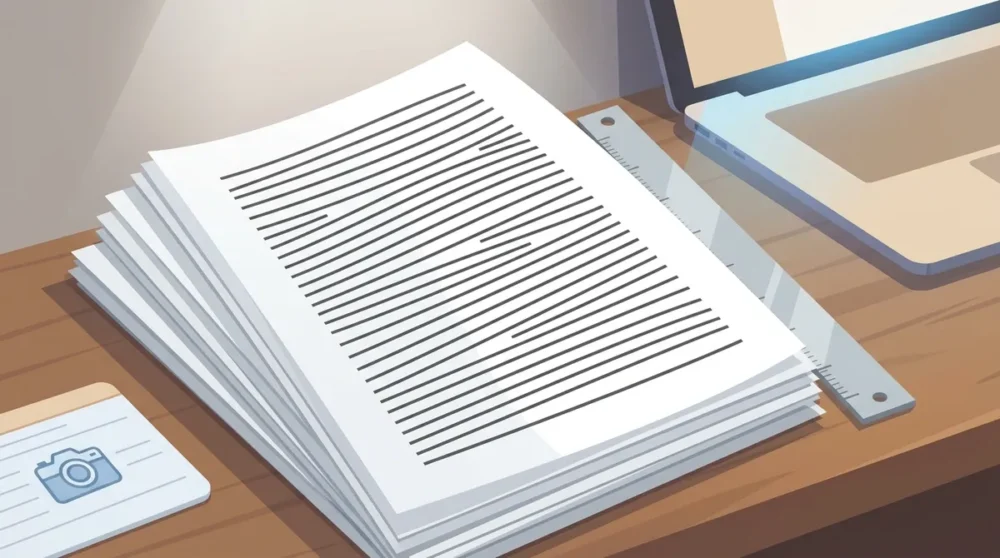
Standard manuscripts use 1-inch margins on all four sides. This layout yields approximately 1,560 characters and spaces per page with 24 lines of text — a commonly accepted page length for word count estimation.
If you use 1.25-inch margins, expect roughly 1,440 characters per page. At 1.5-inch margins, that drops to approximately 1,320 characters. Keeping to 1-inch margins maintains the most text per page and aligns with publisher expectations.
Line Spacing
Double-spacing is standard for most narrative and scientific manuscripts. It gives reviewers and editors room to add comments and corrections. Single-spacing may be acceptable for some specific sections — such as references or poetry submissions — but the body text should always be double-spaced unless the journal specifies otherwise.
Formatting Requirements by Manuscript Type
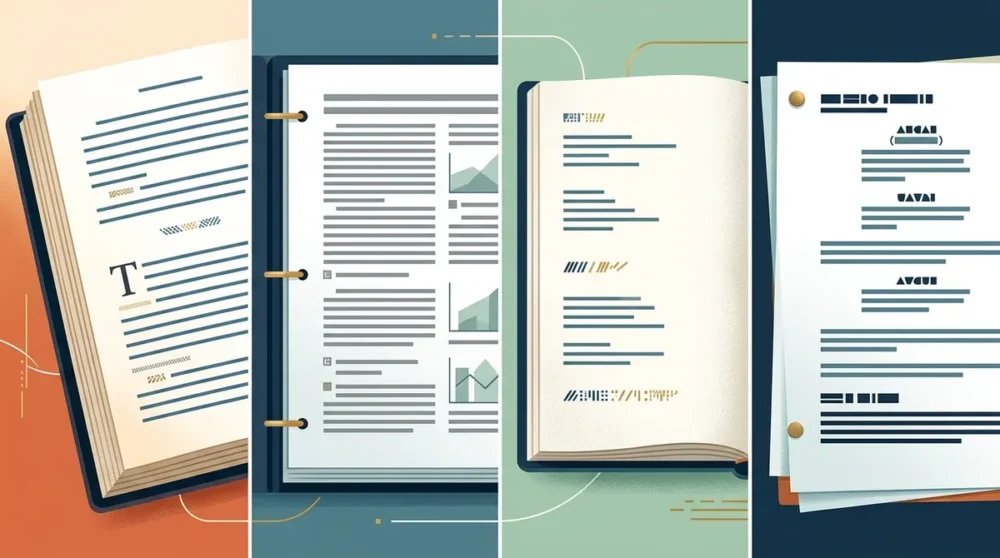
Different manuscript types have distinct formatting needs. Below is a practical comparison of key requirements.
| Manuscript Type | Font | Spacing | Special Notes |
|---|---|---|---|
| Journal Article / Scientific | 12pt Times New Roman | Double-spaced | Separate files for high-res graphics (300 dpi, TIFF or EPS) |
| Nonfiction / Academic Book | 12pt Times New Roman | Single or double | Uniform headings, one space after periods, endnotes preferred |
| Thesis / Dissertation | 12pt Times New Roman | Double-spaced | One complete file; no headers/footers unless specified |
| Poetry Collection | 12pt Times New Roman | Single-spaced | Contact info on each poem’s page; maintain consistent margins |
For medical professionals and clinicians submitting case reports or clinical studies to peer-reviewed journals, PubMed-indexed journal guidelines provide detailed formatting instructions specific to each publication. Always consult the journal’s author instructions before final submission.

First Page and Header Formatting
The first page of your manuscript carries important identifying information. Standard practice places the following elements in a specific layout.
- Top left corner: Author’s full name, mailing address, phone number, and email address — all single-spaced.
- Top right corner: Approximate word count of the manuscript.
- Center of the page: Title of the manuscript, followed by the author’s name (or pen name if applicable).
This layout gives editors immediate access to key information without needing to search through the document. Many academic journals also require an abstract on the first or second page — check the specific submission guidelines for your target publication.
Using Word Styles and File Structure
One of the most overlooked aspects of manuscript formatting is the proper use of document styles — especially in Microsoft Word. Using Word Styles consistently for elements like headings, block quotes, and chapter titles makes it far easier for editors and designers to restructure your document later.
Here are the key formatting rules for your document file:
- Submit one complete file — not separate chapter files
- Use Word Styles for all headings, not manual bold or font size changes
- Convert footnotes to endnotes unless the journal specifically requires footnotes
- Avoid headers and footers unless required by the journal
- Use .docx format for all narrative manuscripts
- Use one space after periods, not two
The scientific editing services at San Francisco Edit include a thorough review of document structure and formatting consistency — helping authors meet publisher requirements before submission.
Handling Images and Graphics in Manuscripts
Scientific and medical manuscripts often include figures, charts, and tables. These elements require special attention during formatting. Incorrect image handling is a common reason for revision requests after peer review.
Follow these guidelines for graphics:
- Images must be at least 300 dpi for print-quality reproduction
- Use TIFF or EPS formats for best results — avoid JPEG or GIF for print submissions
- Submit each graphic as a separate file, clearly labeled by figure number
- Include captions for all figures and tables within the main manuscript text
- Ensure all data in graphs is clearly readable at the final printed size
For guidance on how to present complex scientific data effectively, resources such as the PubMed Central author guidelines and individual journal instructions provide excellent reference points.
Common Manuscript Formatting Mistakes to Avoid
Even experienced researchers make formatting errors. Being aware of the most common mistakes can save you significant revision time.
- Inconsistent heading styles: Mixing manually bolded text with Word Styles creates formatting conflicts when editors process your file.
- Wrong image resolution: Low-resolution figures submitted as JPEG files often cannot be reproduced clearly in print.
- Multiple spaces or double paragraph breaks: These create visual clutter and signal inconsistency to reviewers.
- Submitting separate chapter files: Publishers expect one complete manuscript file, not individual chapter documents.
- Using footnotes instead of endnotes: Most academic publishers prefer endnotes; using footnotes can require significant reformatting later.
- Ignoring journal-specific instructions: Each publication has unique requirements — failing to follow them is one of the most avoidable causes of rejection.
Early-career scientists and graduate students in particular may not be familiar with all these conventions. Consulting a professional editing service before submission can help catch these issues before they reach a reviewer’s desk.
Formatting Checklist Before Submission
Use this checklist to confirm your manuscript meets standard formatting requirements before you submit.
- Font is 12pt Times New Roman throughout
- Margins are set to 1 inch on all sides
- Body text is double-spaced
- First page includes author contact info and word count
- One complete manuscript file in .docx format
- Word Styles used for all headings and structural elements
- Footnotes converted to endnotes
- Images saved separately at 300 dpi in TIFF or EPS format
- One space after all periods
- Journal-specific formatting guidelines reviewed and applied
University faculty managing multiple research projects across their team can benefit especially from establishing a standardized formatting workflow. This reduces revision time and increases the efficiency of the submission pipeline across multiple manuscripts.
How Professional Editing Supports Proper Formatting
Professional manuscript editors do more than correct grammar. They review document structure, formatting consistency, and compliance with journal-specific guidelines. This comprehensive review can significantly improve your manuscript’s chances of being accepted on first submission.
San Francisco Edit is a specialist editing service that works globally with academic researchers, medical professionals, non-native English authors, and university faculty. Their team of native English-speaking PhD scientists brings deep subject expertise alongside editorial precision. With a 98% acceptance rate across edited manuscripts and more than 325 combined years of experience among staff, they are one of the most trusted services in the field. You can learn more through their client testimonials or explore their pricing and payment options.
For non-native English authors in particular, professional editing addresses both language clarity and formatting precision — two of the most cited factors in journal rejection. The language editing services at San Francisco Edit are designed specifically for international scientists and researchers who need their work to meet the standards of leading English-language journals.
For further guidance on research writing and formatting, the World Health Organization’s publication guidelines also offer useful reference standards for health science manuscripts.
Conclusion
Manuscript formatting is a foundational part of the publication process. From font size and margin width to image resolution and file structure, every detail communicates your professionalism as a researcher and author. Investing time in correct formatting — or working with a professional editor who can ensure compliance — gives your manuscript the best possible chance of reaching the publication stage.
If you are ready to move forward, take the next step and submit your manuscript to San Francisco Edit for expert review. Their experienced team will ensure your work is formatted correctly, written clearly, and prepared to meet the standards of peer-reviewed publication.
FAQs
Q: What is the standard font and spacing for manuscript formatting?
A: The most widely accepted manuscript format uses 12-point Times New Roman font with double-spacing throughout the body text. Margins should be set to 1 inch on all sides, which allows approximately 1,560 characters per page and gives editors and reviewers space to add comments.
Q: Should I submit my manuscript as one file or separate chapter files?
A: Always submit one complete manuscript file, not individual chapter documents. Publishers and editors expect a single, unified .docx file. Submitting separate chapter files creates additional work for editors and can result in structural inconsistencies during processing.
Q: What image format and resolution should I use for manuscript figures?
A: Images included in manuscripts should be at least 300 dpi for print-quality reproduction. TIFF and EPS formats are strongly preferred over JPEG or GIF, which may not reproduce clearly in print. Each figure should be submitted as a separate, clearly labeled file alongside the main manuscript.
Q: How is manuscript formatting different for scientific journals compared to nonfiction books?
A: Scientific journal manuscripts typically require double-spacing, separate high-resolution figure files, and strict adherence to journal-specific author guidelines. Nonfiction book manuscripts may accept single or double spacing, but both require consistent Word Styles for headings, uniform punctuation, and endnotes rather than footnotes.
Q: Can a professional editing service help with manuscript formatting?
A: Yes. Professional editing services such as San Francisco Edit review both language quality and formatting consistency, ensuring your manuscript meets publisher and journal-specific requirements. This comprehensive review significantly reduces the likelihood of rejection due to avoidable formatting errors.