
Key Takeaways
-
Lead with primary findings directly tied to your research objectives, then present secondary findings in logical order that mirrors your research questions to maximize reviewer impact.
-
Write results exclusively in past tense and passive voice, reporting only objective facts without interpretation, speculation, or language like 'appears' or 'implies'—save all explanations for the discussion section.
-
Use subheadings to organize results when addressing multiple objectives, and strategically integrate tables for summary data and figures for trends, ensuring each visual is self-contained with clear captions and text references.
-
Report all relevant findings including negative and unexpected results to demonstrate transparency and scientific rigor; omitting unfavorable data undermines credibility and reproducibility.
-
Avoid redundancy by highlighting key takeaways from visual data in text rather than repeating every number, and ensure every reported statistic or result has a corresponding method described in your methods section.
-
Follow target journal's specific formatting guidelines precisely—including font size, line spacing, and table/figure numbering—as poor manuscript preparation and formatting inconsistencies are leading causes of journal rejection.
The results section is the heart of any research paper. It tells your readers what you found. Yet many researchers — from PhD candidates to experienced clinicians — struggle to write this section well. A poorly structured results section can lead to rejection, even when the science is strong. Knowing how to write the results section in a research paper is one of the most important skills any author can develop. This guide breaks it down into clear, actionable steps so you can present your findings with confidence and precision.
What Is the Results Section and Why Does It Matter?
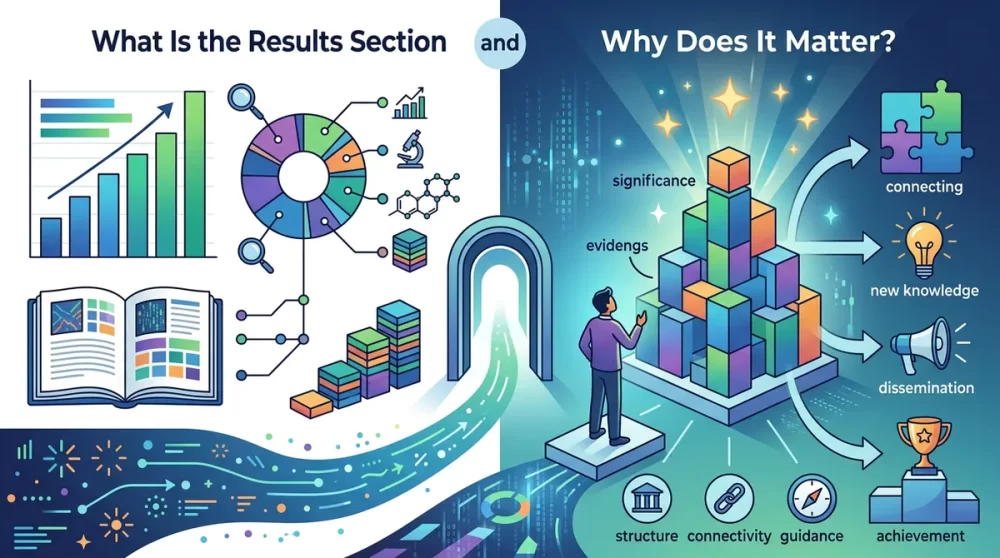
The results section objectively reports the key findings from your data analysis. It sits after the methods section and before the discussion. Its job is simple: present what happened, not why it happened. Interpretation belongs in the discussion section. Here, you focus only on facts.
Journals assess your results section carefully. Editors and peer reviewers look for clarity, logic, and completeness. A well-written results section increases your chances of acceptance. According to published studies referenced on the San Francisco Edit knowledge center, poor manuscript preparation — including unclear results — is a leading cause of rejection by peer-reviewed journals.
Key Principles Before You Start Writing
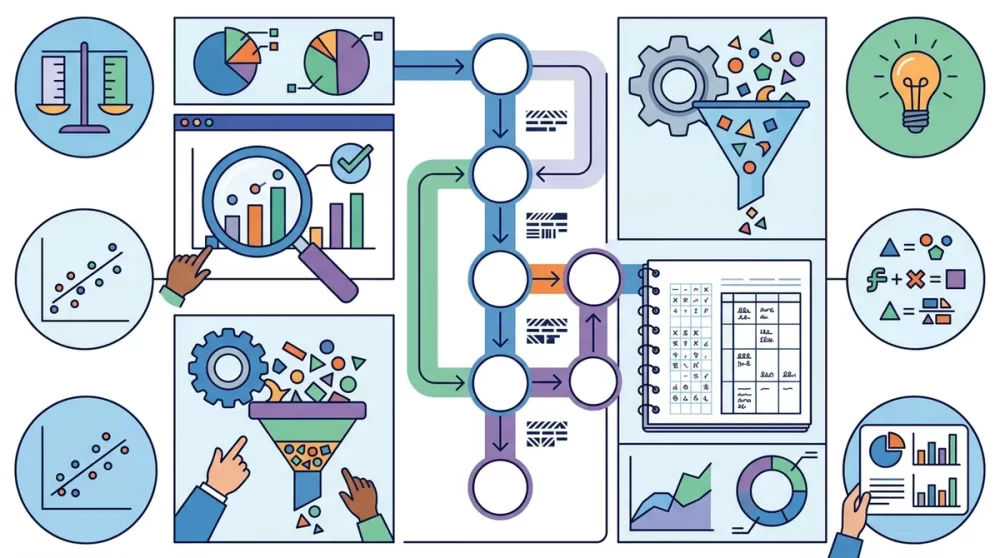
Before you write a single sentence, keep these core principles in mind. They will guide every decision you make in this section.
- Report objectively: State what the data shows, nothing more.
- Be concise: Include only relevant findings tied to your research questions.
- Use past tense: You are reporting what you already found.
- Use passive voice where appropriate: For example, “Data were collected” rather than “We collected data.”
- Avoid speculative language: Words like “appears” or “implies” do not belong in this section.
- Include all results: Report negative or unexpected findings too — they add scientific value.

Step-by-Step Guide to Writing the Results Section
Structuring your results section well makes a major difference. Follow these steps to organize your findings clearly and logically.
Step 1: Start With the Most Important Findings
Lead with your primary results. These are the findings most directly tied to your research objectives. Present them first, then move to secondary findings. This mirrors the order of your research questions or hypotheses.
Step 2: Use Subheadings for Multiple Objectives
If your study has several research objectives, use subheadings to organize results for each one. This improves readability and helps reviewers quickly locate specific findings. It also signals that your paper is well-structured and easy to follow.
Step 3: Integrate Tables and Figures Strategically
Visual elements should support your text, not replace it. Use tables for summary data such as means, standard deviations, and p-values. Use figures to illustrate trends, distributions, or comparisons over time. Every table and figure must be referenced in the text. They should also be self-contained — a reader should understand a table or figure just from its caption alone. For resources on manuscript formatting, visit the scientific editing services page.
Step 4: Avoid Redundancy Between Text and Visuals
Do not repeat in the text every number already shown in a table. Instead, highlight the most important takeaways from the visual data. For example, you might note the highest or lowest value, or a statistically significant difference, while directing readers to the table for full details.
Step 5: Report Negative and Unexpected Results
Do not omit results that did not support your hypothesis. Journals value transparency. Reporting all findings — including null results — strengthens your credibility and contributes to scientific progress. Resources like PubMed contain many well-published studies that openly report unexpected outcomes.
Step 6: Match Your Results to Your Methods
Every result you report should correspond to a method described earlier in the paper. If you report a statistic, the method for calculating it must appear in the methods section. This alignment shows methodological rigor and makes your work reproducible.
Language and Tense in the Results Section
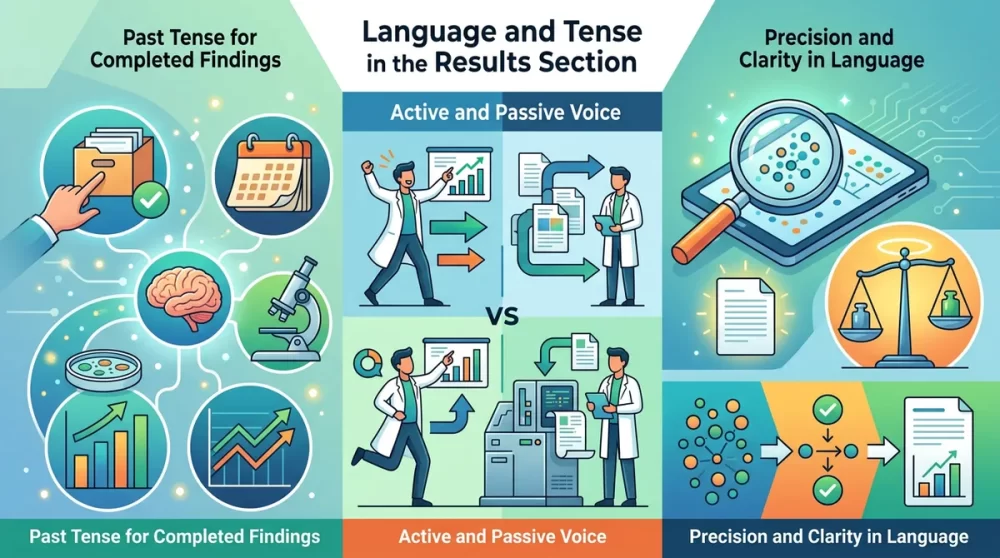
Language choices matter enormously in scientific writing. The wrong tense or tone can confuse reviewers and weaken your paper’s credibility.
| Language Rule | Correct Usage | Incorrect Usage |
|---|---|---|
| Tense | Past tense (“was observed”) | Present tense (“is observed”) |
| Voice | Passive voice (“Data were analyzed”) | Excessive first person (“I analyzed the data”) |
| Objectivity | Factual statements (“The group showed a 15% increase”) | Speculative language (“The group appears to improve”) |
| Interpretation | None — save for discussion | “This suggests that the treatment works” |
How to Present Qualitative Results
Not all research produces numerical data. Qualitative studies require a different approach to the results section. Structure qualitative results around key themes, patterns, or trends identified during data analysis. Each theme should be supported by direct evidence, such as representative quotes or observations.
Organize themes in a logical order. You might move from the most frequently mentioned theme to the least common, or follow a chronological pattern. Use subheadings to separate each theme for clarity. Even in qualitative work, maintain objective language and avoid interpretive statements.
Common Mistakes to Avoid
Even experienced researchers make errors in the results section. Here are the most frequent pitfalls — and how to avoid them.
- Including interpretation: Save all explanations for the discussion section.
- Repeating methods: Do not re-explain your methodology — simply report outcomes.
- Omitting negative results: All relevant findings must be reported, not just favorable ones.
- Inconsistent data presentation: Use the same units, decimal places, and formatting throughout.
- Poorly labeled visuals: Every table and figure must have a clear, descriptive caption.
- Ignoring journal guidelines: Each journal has specific formatting rules — always follow them precisely.
Formatting Tables and Figures Correctly
Tables and figures can make your results section far more effective. But only if they are formatted correctly. Follow these best practices.
- Number all tables and figures sequentially (Table 1, Table 2, Figure 1, etc.).
- Write captions that explain what each visual shows — without needing to read the text.
- Reference each table or figure in the relevant paragraph of the text.
- Use clean, simple designs — avoid decorative elements that distract from the data.
- Follow journal-specific guidelines, such as font size (e.g., Times New Roman 12pt) and line spacing.
How Long Should the Results Section Be?
There is no universal rule. Length depends on the complexity of your study and the volume of your data. However, brevity is always valued. Focus on representative data, not exhaustive detail. A results section can range from a few hundred words to as many as 8,000 words for large, multi-part studies. Always prioritize clarity over length.
For more guidance on manuscript length and structure, the San Francisco Edit FAQ page offers helpful answers to common questions about scientific manuscript preparation.
Results vs. Discussion vs. Conclusion: Know the Difference
Many authors blur the lines between these three sections. Understanding each one helps you write them all more effectively.
| Section | Purpose | Key Question It Answers |
|---|---|---|
| Results | Report findings objectively | What did you find? |
| Discussion | Interpret and contextualize findings | What do the findings mean? |
| Conclusion | Summarize implications and future directions | What should happen next? |
How Professional Editing Strengthens Your Results Section
Even well-structured results sections benefit from professional review. A skilled manuscript editor checks more than grammar. They ensure your findings are logically ordered, language is objective, visuals are properly referenced, and formatting meets journal standards. For non-native English authors, this level of support is especially valuable. Clear scientific English is directly linked to higher acceptance rates.
San Francisco Edit is a specialist editing service working globally with researchers, clinicians, and academics across life sciences, medicine, engineering, and social sciences. With a team of native English-speaking PhD scientists and more than 325 years of combined editing experience, the service helps authors present their results — and their entire manuscript — at the highest standard. A 98% acceptance rate among edited papers speaks for itself. You can also explore what authors say on the testimonials page.
Whether you need help with structure, language precision, or journal-specific formatting, professional language editing can be the difference between rejection and publication. Additional guidance is available through the San Francisco Edit newsletter, which offers expert writing tips for researchers at every career stage. External resources such as Scribbr’s guide on writing a results section and the UC Irvine research guides on scientific writing also offer valuable complementary advice.
Final Checklist Before Submitting Your Results Section
Before you submit, run through this checklist to make sure your results section is complete and polished.
- Results are presented in logical order, starting with primary findings.
- Subheadings are used where multiple objectives are addressed.
- All results are written in past tense with objective, factual language.
- No interpretations or explanations are included — those belong in the discussion.
- All tables and figures are numbered, captioned, and referenced in the text.
- Negative or unexpected results are included and reported honestly.
- Formatting follows the target journal’s specific guidelines.
- The section has been reviewed for clarity, grammar, and consistency.
Conclusion
Knowing how to write the results section in a research paper is a skill that directly affects your publication success. A clear, logically structured results section builds reviewer confidence and strengthens the entire manuscript. Report your findings honestly, present data visually where useful, and keep the language precise and objective. When your results section is polished and professional, your paper stands a much stronger chance of acceptance.
Ready to give your manuscript the best possible chance of publication? Submit your manuscript to San Francisco Edit and let our expert team help you present your research with clarity, precision, and professional authority.
FAQs
Q: What tense and voice should I use in the results section of a research paper?
A: The results section should be written in past tense, since you are reporting findings that have already occurred. Passive voice is generally preferred — for example, ‘Data were analyzed’ rather than ‘We analyzed the data.’ Avoid speculative or interpretive language throughout this section.
Q: Should I include negative or unexpected results in the results section?
A: Yes. All relevant findings — including null results and unexpected outcomes — must be reported in the results section. Transparency is a core principle of scientific writing, and omitting unfavorable results can undermine the credibility and reproducibility of your research.
Q: What is the difference between the results section and the discussion section?
A: The results section objectively reports what your data showed, without interpretation. The discussion section is where you explain what those findings mean, contextualize them within existing literature, and address any unexpected outcomes. Keeping these sections clearly separate is essential for a well-structured manuscript.
Q: How should I use tables and figures in the results section?
A: Tables are best suited for summary data such as means and p-values, while figures work well for illustrating trends or comparisons. Each visual element must be numbered sequentially, given a clear descriptive caption, and referenced within the text. Avoid repeating in the text every data point already shown in a table or figure.
Q: How can professional manuscript editing improve my results section?
A: A professional manuscript editor ensures your results are logically ordered, written in precise and objective language, and formatted according to the target journal’s guidelines. For non-native English authors in particular, expert editing significantly improves clarity and can directly increase the likelihood of journal acceptance.