Key Takeaways
-
Submit your dissertation to a professional editor 4-6 weeks before your defense date; waiting too long limits the editor's ability to address structural and argumentative weaknesses in a 40,000-word document.
-
Committee members form first impressions from your written manuscript before the oral defense begins; unclear writing, structural weaknesses, or formatting errors can undermine confidence in your research before you speak.
-
Choose editors with PhD-level expertise in your discipline who understand academic conventions specific to your field; this ensures your dissertation meets committee standards and reflects disciplinary best practices.
-
Ensure consistency between your written dissertation and oral presentation; committee members notice if your spoken arguments differ from the manuscript, so align your presentation slides and notes with the edited document.
-
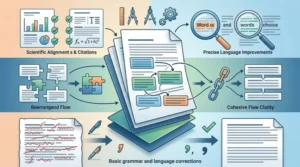
Different editing types serve different purposes—developmental editing addresses structure and flow, copyediting fixes grammar and clarity, and proofreading catches final errors; most candidates need at least copyediting and proofreading.
-
Non-native English speakers should prioritize language editing to eliminate grammatical errors and awkward phrasing that distract from research quality; professional language editors enhance clarity while preserving your unique voice and research intent.
The dissertation defense is one of the most important moments in a doctoral candidate’s academic journey. It is the final oral examination where you present your research to a committee of expert scholars. Your committee will probe your methodology, challenge your conclusions, and assess your contribution to the field. A well-prepared dissertation manuscript can make all the difference between a confident defense and a stressful one.
Many candidates underestimate how much the quality of the written dissertation affects the oral defense. Committee members read your manuscript before the examination. Unclear writing, structural weaknesses, or formatting errors can raise doubts before you even speak. Professional manuscript editing addresses these problems directly. It ensures your dissertation is polished, coherent, and academically rigorous—so your committee focuses on your research, not your writing.
This article explains how manuscript editing supports every stage of dissertation defense preparation, from refining the written document to helping you communicate your findings with clarity and confidence.

What Is a Dissertation Defense and Why Does Editing Matter?
A dissertation defense is the culminating oral examination of doctoral study. The candidate explains their research questions, methodology, findings, and contribution to the field. A committee of faculty members—and sometimes external reviewers—evaluates whether the work meets the standards for a doctoral degree. The defense is both an intellectual milestone and a formal academic requirement.
The written dissertation serves as the foundation for the entire examination. Committee members form their first impressions from the manuscript. If the document is unclear or poorly structured, committee members may question the rigor of your research. Professional editing ensures that your written work accurately reflects the quality of your thinking. It removes linguistic barriers so your ideas stand at the forefront. For a deeper look at how manuscript quality affects academic outcomes, the PubMed database offers extensive research on academic communication and publication standards.
According to industry data, dissertation manuscripts can exceed 40,000 words. Editing a document of this size requires significant expertise and time—often several days to weeks under standard conditions. Many candidates seek editing specifically to meet defense deadlines, which highlights why planning ahead is essential.

Types of Editing That Strengthen Your Dissertation Before Defense
Not all editing is the same. Different levels of editing address different aspects of your manuscript. Understanding which types of editing you need is the first step toward a successful defense.
Here are the main editing levels relevant to dissertation defense preparation:
- Developmental editing: Addresses overall structure, argument flow, and logical organization of chapters.
- Copyediting: Corrects grammar, syntax, word choice, and sentence clarity throughout the manuscript.
- Proofreading: Catches remaining spelling errors, punctuation mistakes, and formatting inconsistencies before submission.
- Formatting review: Ensures the manuscript meets your institution’s specific style and formatting requirements.
- Language editing: Refines English expression for non-native speakers without altering the author’s voice or research intent.
Each level serves a specific purpose. Most candidates preparing for a dissertation defense benefit from copyediting and proofreading at minimum. Those with structural concerns or language challenges may need developmental editing and language editing as well. The right combination depends on where your manuscript currently stands.

How Professional Editors Prepare Your Dissertation for Defense
Professional editors do more than fix grammar. They improve the overall quality of your academic argument. A skilled editor who works in your subject area will identify weaknesses in your reasoning, flag ambiguous claims, and suggest improvements that make your dissertation more defensible.
Here is how professional editing prepares your dissertation manuscript step by step:
- Initial manuscript review: The editor reads the full dissertation to understand the scope, arguments, and structure before making any changes.
- Structural assessment: The editor evaluates whether chapters flow logically and whether your argument builds effectively toward the conclusion.
- Language and clarity editing: Sentences are revised for precision and readability, ensuring your findings are communicated without ambiguity.
- Consistency check: Terminology, abbreviations, and citation style are standardized throughout the document.
- Formatting compliance: The editor verifies that the manuscript meets institutional guidelines, which is often a prerequisite for scheduling the defense.
- Final proofreading: A final review catches any remaining errors before the manuscript is submitted to the committee.
Services like scientific editing at San Francisco Edit follow a rigorous multi-step process handled by PhD-level editors who understand disciplinary conventions. This means your dissertation is evaluated by someone who speaks the same academic language as your committee.

Editing Support for Non-Native English Speakers
A significant proportion of doctoral candidates are international students or non-native English speakers. For these candidates, language quality is a critical concern before the dissertation defense. Committee members expect clear, precise academic English. Linguistic errors distract from the research and can undermine confidence in the findings.
Professional language editors work to enhance English expression while preserving the author’s unique voice and research intent. This is a careful, nuanced process. The goal is not to rewrite your ideas—it is to ensure your ideas are expressed with the clarity they deserve.
Here are the key benefits of language editing for international doctoral candidates:
- Improves grammatical accuracy across all chapters of the dissertation.
- Enhances academic tone and register appropriate for doctoral-level writing.
- Eliminates awkward phrasing that could confuse committee members during the defense.
- Ensures terminology is used consistently and correctly throughout the manuscript.
- Boosts confidence during the oral examination by ensuring the written foundation is sound.
For more guidance on this topic, explore scientific editing for non-native English speakers and how it can enhance your research communication before the defense.
Defense Presentation and Supporting Materials
The dissertation defense is not limited to the written manuscript. Most defenses require a formal presentation using slides, speaker notes, and a structured oral argument. Some professional editing services extend their support to these defense materials as well.
Editing and consulting support for defense presentations may include:
- Reviewing and refining PowerPoint slide content for clarity and conciseness.
- Editing speaker notes to align with the language and arguments in the manuscript.
- Reviewing practice scripts to ensure consistent and precise communication.
- Ensuring that terminology in the presentation matches the edited dissertation exactly.
Consistency between the written dissertation and the oral presentation is important. Committee members will notice if your spoken arguments differ from what is written in the manuscript. For tips on effective academic presentations, read about research presentation strategies for scientists and academics that can help you communicate your work with confidence.
Timing Your Editing: When to Submit Your Dissertation
One of the most common mistakes doctoral candidates make is waiting too long to seek editing support. Editing a 40,000-word dissertation takes time—even under expedited conditions. Submitting your manuscript to an editor too close to the defense deadline limits what the editor can realistically achieve.
Use this general timing guide to plan your editing submission:
| Editing Type | Recommended Lead Time Before Defense | Turnaround Estimate |
|---|---|---|
| Developmental editing | 8–12 weeks | 2–4 weeks |
| Copyediting | 4–6 weeks | 1–2 weeks |
| Proofreading | 2–3 weeks | 3–7 days |
| Rush editing | 1–2 weeks | 3–4 days |
| Language editing | 4–6 weeks | 1–2 weeks |
San Francisco Edit offers standard turnaround times of approximately 6–8 days and rush turnaround of 3–4 days for urgent needs. If your defense date is approaching, submitting your manuscript as soon as possible gives editors the best opportunity to improve your work thoroughly. You can review Pricing And Payment details and plan your submission timeline accordingly.
Choosing the Right Dissertation Editing Service
Not every editing service is equipped to handle doctoral-level academic manuscripts. The quality of editing varies widely across providers. Choosing the wrong service can result in surface-level corrections that fail to address deeper structural or argumentative weaknesses in your dissertation.
Here is what to look for when selecting a dissertation editing service for defense preparation:
- PhD-level editors: Ensure the service employs editors with doctoral-level expertise in your field. This ensures disciplinary conventions are respected.
- Subject-matter coverage: Verify the service covers your academic discipline, whether it is life sciences, medicine, engineering, social sciences, or humanities.
- Transparent process: Look for a service that provides edited documents with tracked changes and explanations, so you understand every revision made.
- Confidentiality policy: Your dissertation research is original and confidential. Choose a service that guarantees document security.
- Proven track record: Review testimonials and success rates from past clients. A service with a demonstrated history of helping candidates succeed is far more reliable.
San Francisco Edit employs PhD scientists with extensive publication experience. With a 98% publication acceptance rate for edited manuscripts and over 325 years of combined editorial staff experience, the service is positioned to support doctoral candidates at the highest level. Read what researchers say in the San Francisco Edit testimonials section to understand the real-world impact of professional editing on academic outcomes.
Post-Defense Editing: Turning Your Dissertation into a Published Article
The dissertation defense is not the end of your manuscript’s journey. Committee members often provide feedback during or after the defense. Revisions may be required before the dissertation is officially accepted. Beyond that, many doctoral graduates seek to publish their research in peer-reviewed journals.
Post-defense editing support can include:
- Incorporating committee feedback into revised dissertation chapters.
- Restructuring and condensing dissertation content for journal article submission.
- Adapting the manuscript to meet specific journal formatting and style requirements.
- Ensuring the revised manuscript maintains academic rigor and clarity throughout.
The transition from dissertation to published article is a significant undertaking. For guidance on this process, explore 11 Essential Steps to Write a Manuscript for Publication and understand how your doctoral research can reach a broader academic audience through PubMed-indexed journals and other leading publications. You may also find it helpful to review how to get a research paper published in 2026 as a next step after your defense.
Why San Francisco Edit Is the Right Choice for Dissertation Defense Preparation
San Francisco Edit is a specialist editing service that works with scientific, medical, and general manuscripts on a global scale. The team includes native English-speaking PhD scientists with deep expertise across multiple disciplines. Every manuscript is edited by humans—not AI—ensuring nuanced, high-quality revisions that reflect the complexity of doctoral-level research.
The service provides edited documents in Microsoft Word with tracked changes and detailed explanations for every revision. This transparency helps candidates understand the changes made and prepare stronger oral arguments based on the improved manuscript. Strict confidentiality is maintained throughout, and documents are handled with full security. You can learn more on the about San Francisco Edit page or browse the knowledge center for additional academic writing resources.
Also, visit the difference between a thesis and a dissertation resource to better understand the specific standards your manuscript must meet before the defense. Understanding these distinctions helps you approach editing with the right priorities.
Conclusion
A successful dissertation defense begins long before you enter the examination room. It begins with a well-written, clearly structured, and professionally edited manuscript that gives your committee confidence in your research from the first page. Professional manuscript editing improves clarity, strengthens argumentation, ensures formatting compliance, and supports candidates at every stage—from initial draft refinement to post-defense publication.
Whether you are a doctoral candidate preparing for an upcoming defense, a non-native English speaker seeking language support, or a researcher ready to convert your dissertation into a journal article, professional editing is a strategic investment in your academic success. For more resources, explore the 3 Proven Steps to Write a Dissertation Abstract and ensure every component of your manuscript is defense-ready. Learn more from the Nature journal resources on doctoral research communication and publication standards.
Take the next step toward a confident, successful dissertation defense by working with a team that understands academic excellence. Submit your dissertation manuscript today and let San Francisco Edit help you present your best work to your committee.
FAQs
Q: What is a dissertation defense and how does manuscript editing support it?
A: A dissertation defense is the final oral examination in which a doctoral candidate presents and defends their research before a faculty committee. Professional manuscript editing supports this process by refining the written dissertation for clarity, structure, and academic precision, ensuring committee members encounter a polished, credible manuscript before the examination begins.
Q: How far in advance should I submit my dissertation to an editor before my defense?
A: For comprehensive editing, submitting your dissertation at least four to six weeks before your defense date is advisable. This allows sufficient time for copyediting, proofreading, and any necessary revisions, while leaving you time to review the changes and incorporate them before submitting to your committee.
Q: Should I hire an editor who specializes in my academic field for my dissertation defense?
A: Yes, working with a subject-matter expert is strongly recommended. An editor with doctoral-level expertise in your discipline understands the methodological conventions, terminology, and argumentation standards your committee expects, and can strengthen your manuscript in ways a general editor may miss.
Q: Can professional editors help with my dissertation defense presentation and slides?
A: Some professional editing services offer support for defense materials beyond the written manuscript, including PowerPoint slide content, speaker notes, and practice scripts. Ensuring consistency between the edited manuscript and your oral presentation materials helps project academic confidence during the defense.
Q: What happens after the dissertation defense—can editors help with post-defense revisions?
A: Yes, professional editing services can assist with post-defense revisions required by committee feedback and help restructure the dissertation into a publishable journal article format. This ongoing support ensures your doctoral research reaches the broadest possible academic audience.