Key Takeaways
-
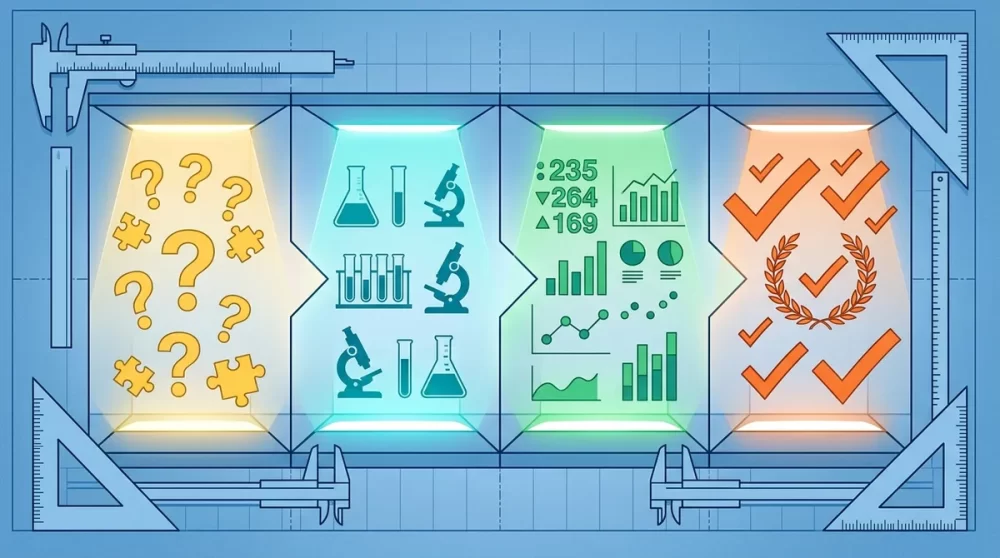
Structure your abstract with four distinct sections—Purpose, Methods, Results, and Conclusions—each with specific content requirements and recommended sentence limits to ensure clarity and meet reviewer expectations.
-
Present actual quantifiable data in the Results section using numbers, percentages, and effect sizes rather than vague statements; reviewers need specific evidence, not general impressions of your findings.
-
Always verify the exact word or character limits for your target journal or conference before writing, as limits vary widely (250-2,500 characters) and exceeding them is a common reason for rejection.
-
Avoid overstating conclusions by ensuring they are directly supported by your data and do not speculate beyond what your study warrants; conclusions unsupported by evidence are a leading cause of abstract rejection.
-
Write the abstract after completing your full manuscript to ensure it accurately reflects your final findings, rather than writing it first based on preliminary expectations that may change during research.
-
Spell out all acronyms on first use even if they seem common in your field, maintain consistent English spelling and formal academic language, and use past tense for methods and results sections.
A scientific abstract is often the first thing a journal editor or peer reviewer reads. If it is unclear, poorly structured, or too long, your manuscript may be rejected before anyone reads the full paper. Yet many researchers — including experienced ones — struggle to condense months or years of work into 250 to 500 words without losing the core message. Learning how to write a scientific abstract effectively is one of the most valuable skills any researcher can develop. This guide walks you through each step of the process, from understanding the required structure to polishing your language before submission. Whether you are writing your first journal article or preparing a conference submission, these practical steps will help you communicate your research with clarity and confidence.

What Is a Scientific Abstract and Why Does It Matter
A scientific abstract is a short summary of your research paper. It stands alone as a complete, self-contained piece of writing. Readers use it to decide whether to read the full manuscript. Journal editors use it to assign reviewers. Search databases like PubMed index abstracts to help researchers find relevant studies. A well-written abstract increases your paper’s visibility, citation rate, and chances of acceptance.
Most journals and conferences impose strict word or character limits. For example, ARVO limits abstracts to 2,500 characters including spaces, while FIP restricts submissions to 500 words. MDA and AAHB both cap abstracts at 300 words. ASE allows 2,250 characters. These limits vary, so always check the specific requirements for your target journal or conference before you begin writing.

The Four Core Sections of a Scientific Abstract
Most scientific abstracts follow a standardized four-part structure. Each section serves a specific purpose. Understanding what belongs in each section makes writing — and editing — much easier.
| Section | Purpose | Recommended Length |
|---|---|---|
| Purpose / Introduction | States the research question and knowledge gap | No more than 3 sentences |
| Methods | Describes study design, participants, and analysis | 3–5 sentences |
| Results | Presents key findings with quantifiable data | 3–5 sentences |
| Conclusions | Explains the significance of the findings | 2–3 sentences |

How to Write Each Section Step by Step
Step 1: Write the Purpose or Introduction
Begin by stating what problem your research addresses. Identify the knowledge gap clearly. Do not write a lengthy background. Keep this section to no more than three sentences. Reviewers do not need a history of the topic — they need to understand why your study was necessary.
- State the research question directly
- Identify what was unknown or underexplored before your study
- Avoid repeating information from the title
- Do not include citations in the abstract unless the journal requires them
Step 2: Describe Your Methods
The methods section tells reviewers how you conducted your study. Be specific. Include your study design, the number and type of participants or samples, how data was collected, and what analytical methods you used. Vague methods descriptions raise doubts about reproducibility. For clinical studies, mention whether the trial was randomized or controlled. For lab-based research, name the key techniques used.
- Name the study design (e.g., randomized controlled trial, cohort study, in vitro experiment)
- State participant or sample size and key characteristics
- Describe the primary data collection method
- Specify the statistical or analytical approach used
Step 3: Present Your Results
Results are the most important part of the abstract. Present actual data. Use numbers, percentages, and effect sizes rather than vague statements like “results showed improvement.” Reviewers want evidence. Avoid interpreting results here — save that for the conclusions. For non-native English authors, this section is especially important to phrase precisely. Our team at scientific editing specialists can help ensure your findings are stated with clarity and accuracy.
- Use quantifiable data wherever possible
- Report key outcomes with statistical significance if applicable
- List findings in order of importance
- Avoid subjective language like “improved dramatically” without data to support it
Step 4: Write Your Conclusions
Conclusions explain what your results mean. They should be directly supported by the data you just presented. Do not overstate your findings or make claims that go beyond your evidence. A common mistake is to write conclusions that are more ambitious than the study warrants — this can lead to rejection. Keep conclusions focused and evidence-based.
- Connect conclusions directly to your results
- State the practical or scientific significance of your findings
- Avoid introducing new ideas not discussed in the study
- Do not speculate beyond what your data supports
Common Mistakes to Avoid When Writing a Scientific Abstract
Even experienced researchers make predictable errors in abstract writing. Knowing these pitfalls in advance helps you avoid them. If you are unsure whether your abstract is ready, the knowledge center at San Francisco Edit provides extensive guidance for authors at all career stages.
- Exceeding word or character limits. Always count characters including spaces, not just words. Different journals and conferences use different measurement methods.
- Using undefined acronyms. Every acronym must be spelled out on first use, even if it seems common in your field.
- Vague or missing data in the results section. Reviewers need specific numbers, not general impressions.
- Conclusions that do not match the results. Overstating your findings is one of the most common reasons abstracts are rejected or flagged for revision.
- Poor grammar and unclear sentence structure. This is particularly common among non-native English speakers and can undermine even excellent research. Professional language editing services can resolve this effectively.
- Missing co-author information. All contributing authors must be listed according to the journal or conference requirements.
Formatting and Language Requirements
Many international journals require abstracts to be written in British English. This matters for spelling, punctuation, and phrasing. Even small inconsistencies can signal a lack of care to reviewers. Journals indexed on PubMed often apply rigorous formatting standards, so your abstract must conform precisely to the submission guidelines.
The abstract should also be written in the past tense for methods and results, since the study is complete. The introduction and conclusions may use the present tense when referring to the research question or broader implications. Always use formal, academic language. Avoid contractions and colloquial phrasing.
Abstract Word Limits at a Glance
| Conference / Journal Type | Word / Character Limit |
|---|---|
| ARVO (ophthalmology) | 2,500 characters including spaces |
| FIP (pharmacy) | 500 words excluding title and authors |
| MDA (muscular dystrophy) | 300 words / ~2,500 characters |
| AAHB (health behavior) | 300 words |
| CUR (undergraduate research) | 250–300 words |
| ASE (echocardiography) | 2,250 characters |
How to Edit and Refine Your Abstract Before Submission
Writing a first draft is only the beginning. Editing is where the abstract becomes submission-ready. Follow this process to refine your abstract effectively.
- Check the word or character count. Trim unnecessary words. Replace multi-word phrases with single precise terms where possible.
- Read for logical flow. Each section should connect naturally to the next. The abstract should tell a coherent story in miniature.
- Ask a colleague to review it. A fresh pair of eyes will catch unclear sentences you may have overlooked. Ideally, ask someone outside your immediate research area.
- Verify all formatting requirements. Confirm the required language, font, spacing, and submission format specified by the journal or conference.
- Use professional editing support. For non-native English speakers in particular, submitting to a specialist scientific editing service ensures that language issues do not stand between your research and publication.
Why Professional Editing Improves Abstract Acceptance Rates
Research consistently shows that poor English and careless preparation contribute to manuscript rejection, even when the underlying science is strong. This is especially relevant for international researchers writing in English as a second or third language. A professionally edited abstract communicates competence and precision — qualities that reviewers and editors respect.
San Francisco Edit is a specialist editing service with more than 325 years of combined staff experience in academic and scientific manuscript editing. With a 98% acceptance rate for edited manuscripts, the team — composed of native English-speaking PhD scientists — understands what journals expect. Services are available globally, with standard turnaround of 6–8 days and rush turnaround of 3–4 days. You can learn more about the team and their background on the about San Francisco Edit page, or read what clients say on the testimonials page.
If you are ready to have your abstract or full manuscript professionally reviewed, you can submit your manuscript directly and receive expert feedback from editors who have published in leading peer-reviewed journals themselves.
Final Tips for a Strong Scientific Abstract
- Write the abstract after completing the full manuscript — not before
- Never copy-paste sentences directly from the body of the paper without adapting them for the abstract format
- Make sure the abstract can be understood independently of the full paper
- Check that your title and abstract are consistent in their claims and scope
- Review the submission guidelines one final time before uploading
Conclusion
Writing an effective scientific abstract requires structure, precision, and careful attention to language. Each of the four sections — purpose, methods, results, and conclusions — must be clear, concise, and directly supported by evidence. Formatting requirements vary widely across journals and conferences, so always verify the specific guidelines before submitting. For researchers who want to maximize their chances of acceptance, professional editing support makes a measurable difference. Send your manuscript to San Francisco Edit today and let a team of expert scientific editors help your research reach the audience it deserves.
FAQs
Q: How long should a scientific abstract be?
A: Word limits vary by journal and conference, typically ranging from 250 to 500 words or 2,250 to 2,500 characters including spaces. Always check the specific submission guidelines for your target journal before writing, as exceeding the limit is a common reason for abstract rejection.
Q: What are the four main sections of a scientific abstract?
A: A scientific abstract typically includes four sections: Purpose or Introduction, Methods, Results, and Conclusions. Each section serves a distinct role — from identifying the research question to presenting data and explaining its significance. Following this structure ensures your abstract meets the expectations of peer reviewers and journal editors.
Q: Can professional editing improve the chances of abstract acceptance?
A: Yes. Research and submission data consistently show that poor grammar, unclear language, and formatting errors contribute to manuscript rejection. For non-native English speakers especially, professional scientific editing ensures that language does not obscure the quality of the research, significantly improving acceptance rates.
Q: What common mistakes should I avoid when writing a scientific abstract?
A: The most frequent errors include exceeding word limits, using undefined acronyms, presenting vague results without quantifiable data, and drawing conclusions that overstate the evidence. Careful self-review and professional editing support help eliminate these issues before submission.
Q: Should I write the abstract before or after the full manuscript?
A: It is strongly recommended to write the abstract after completing the full manuscript. This ensures the abstract accurately reflects the final content, data, and conclusions of the paper rather than preliminary expectations that may have changed during the research and writing process.