Key Takeaways
- Always review the specific abstract guidelines for your target journal or conference before writing, as requirements vary significantly between publications.
- Write your abstract last to ensure perfect alignment between the abstract content and the final manuscript, making it easier to extract key information accurately.
- Include the four essential components in your abstract: purpose/research question, methods, results (with specific data), and conclusions, allocating space proportionally.
- Lead with a strong opening statement that immediately establishes the importance of your research, avoiding generic background information and focusing on the novelty or urgency of your work.
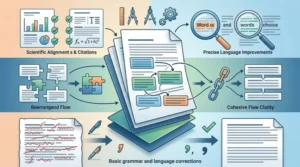
- Use precise, active language throughout the abstract, eliminating unnecessary qualifiers and choosing specific verbs that convey confidence and clarity.
- Proofread meticulously for error-free submission, as many journals will use the abstract text exactly as submitted, with no opportunity for later corrections.
Writing an abstract for your scientific manuscript is one of the most critical steps in the publication process. Your abstract serves as the gateway to your research, offering readers a concise snapshot of your work before they dive into the full paper. Whether you’re a graduate student preparing your first submission or an established researcher working on your latest findings, mastering the art of abstract writing directly impacts your publication success rate. In the competitive world of peer-reviewed journals, a well-crafted abstract can mean the difference between acceptance and rejection.
The abstract functions as both a summary and a marketing tool for your research. It’s often the only section that journal editors and reviewers read initially when deciding if your manuscript warrants full consideration. Conference organizers use abstracts to evaluate presentation proposals, and researchers scanning databases rely on abstracts to determine which papers to read in full. Given that poor language quality and unclear presentation are among the top reasons for manuscript rejection, investing time in perfecting your abstract pays significant dividends. A professional approach to abstract writing, sometimes with support from scientific editing services, ensures your research receives the attention it deserves.
This comprehensive guide walks you through nine essential steps to create abstracts that meet journal standards and maximize your publication chances. You’ll learn the structural requirements, common pitfalls to avoid, and best practices that successful researchers employ when writing abstracts for submission to peer-reviewed publications.

1. Understand Your Target Journal’s Abstract Requirements
Before you write a single word, thoroughly review the abstract submission guidelines for your target journal or conference. Requirements vary significantly across publications and disciplines. Some journals require structured abstracts with labeled sections like Background, Methods, Results, and Conclusions, while others prefer unstructured narrative formats. Word count limits typically range from 250 to 300 words, though some conferences allow up to 3,500 characters including spaces.
Character limits are particularly strict in conference submissions. For example, many major scientific conferences enforce a 2,500 to 3,500 character limit that includes your title, body text, and sometimes tables or captions. Exceeding these limits by even a single character can prevent your submission from being accepted by the online system. The system won’t allow you to proceed, so you must trim your content to fit precisely within the specified parameters.
Pay attention to formatting specifications as well. Some journals require sentence case for titles, while others mandate title case. Many conferences use blind review processes, requiring you to remove all identifying information from the abstract body, though your name appears in the submission form. Understanding these requirements upfront saves you significant revision time later and demonstrates professionalism to editors and reviewers.
Common Abstract Format Variations
Different academic disciplines favor different abstract structures. Medical and life science journals often require structured abstracts with clearly labeled sections: Objective, Methods, Results, and Conclusions. Social science publications may prefer Background, Methods, Findings, and Implications. Engineering conferences sometimes request Purpose, Design/Methodology, Results, and Practical Applications. Always match your abstract structure to the specific requirements of your target publication.

2. Write Your Abstract Last
Although the abstract appears first in your manuscript, you should write it last. This approach ensures your abstract accurately reflects the final content of your paper, including any changes made during the writing and revision process. Many researchers make the mistake of drafting their abstract early and then failing to update it as their manuscript evolves, resulting in discrepancies between the abstract and the full text.
Writing the abstract after completing your manuscript also makes the task easier. You’ll have a clear understanding of your research question, methodology, key findings, and conclusions. You can extract the most important information directly from your introduction, methods, results, and discussion sections. This method reduces the cognitive load of trying to summarize research that isn’t yet fully articulated in writing.
When you write your abstract last, you can also ensure perfect alignment between what you promise in the abstract and what you deliver in the paper. Reviewers and editors specifically look for consistency between these elements. Any mismatch raises red flags about the quality and reliability of your work. Services like San Francisco Edit often help researchers achieve this consistency through careful manuscript review and abstract refinement.

3. Include All Four Essential Components
Every strong research abstract must include four fundamental components, regardless of whether you’re writing a structured or unstructured format. These components work together to give readers a complete understanding of your research:
- Purpose or Research Question: State clearly why you conducted this research and what question you sought to answer. This section provides context and establishes the importance of your work within the broader field.
- Methods: Briefly describe your research design, approach, and key techniques. Include enough detail that readers understand how you generated your data without overwhelming them with procedural minutiae.
- Results: Present your most important findings with specific data points, statistics, or outcomes. This is the most critical section—never write an abstract that only describes what you plan to study without reporting actual results.
- Conclusions: Explain what your results mean and their significance to your field. Emphasize the novelty and contribution of your work, including practical applications or theoretical implications.
The results section deserves special emphasis because it’s where many abstracts fail. Reviewers reject abstracts that merely state “results will be presented” or “findings will be discussed.” Your abstract must include concrete outcomes with specific numbers, percentages, or statistical significance levels. For example, instead of writing “Treatment improved patient outcomes,” write “Treatment reduced symptom severity by 34% compared to placebo (p<0.001).”
Balancing Detail Across Sections
Within your word limit, allocate space proportionally to each component. Typically, the results section should receive the most space, followed by methods, then conclusions, with the purpose stated most briefly. A common distribution might be: Purpose (15%), Methods (25%), Results (40%), Conclusions (20%). Adjust these proportions based on your journal’s priorities and your research emphasis.

4. Lead With a Strong Opening Statement
Your abstract’s first sentence sets the tone and captures attention. Begin with a clear, compelling statement that immediately establishes the importance of your research. Avoid generic openings that waste precious word count on obvious background information. Instead, dive directly into what makes your research timely, necessary, or innovative.
Consider these approaches for strong openings:
- State a significant problem or gap in current knowledge that your research addresses
- Highlight a contradiction or debate in the literature that your work resolves
- Emphasize the practical importance or potential impact of your research question
- Note the novelty of your approach or methodology
For example, instead of writing “Cancer is a leading cause of death worldwide,” try “Despite advances in chemotherapy, 60% of patients with advanced melanoma still experience disease progression within two years, necessitating novel therapeutic approaches.” The second version immediately establishes both the problem and the urgency, engaging readers from the first words.
Your opening should seamlessly connect to your research purpose. The reader should understand within the first two sentences exactly what question you’re addressing and why it matters. This clarity demonstrates the thoughtfulness of your research design and helps editors quickly assess your manuscript’s potential contribution to the field.
5. Use Precise, Active Language Throughout
Abstract writing demands precision and economy of language. Every word must earn its place by conveying essential information. Use active voice whenever possible, as it’s more direct and requires fewer words than passive constructions. Compare “Data were collected by researchers using standardized protocols” (passive, 8 words) with “Researchers collected data using standardized protocols” (active, 6 words). The active version saves space while improving clarity.
Eliminate unnecessary qualifiers and hedging language. Words like “quite,” “rather,” “fairly,” and “somewhat” dilute your message without adding meaning. Similarly, avoid redundant phrases such as “it is important to note that” or “the results showed that.” These fillers consume valuable character count without enhancing understanding.
Choose specific, concrete verbs over vague ones. Instead of “The study looked at,” use “examined,” “investigated,” or “analyzed.” Rather than “Our findings suggest,” write “demonstrate,” “reveal,” or “indicate,” depending on the strength of your evidence. This precision conveys confidence in your work and respects the reader’s time by communicating clearly and efficiently.
Technical Terminology Considerations
Balance the use of technical terms with accessibility. Your abstract should be understandable to educated readers in related disciplines, not just narrow specialists. Define essential technical terms if they’re not widely known, or use more accessible alternatives when possible. However, don’t oversimplify to the point of inaccuracy. Working with language editing professionals can help you strike this balance, especially if English is not your first language.
6. Report Specific Results With Data
The results section is where your abstract gains credibility and substance. Abstract reviewers and editors expect to see actual data, not promises of future presentations. Include specific numerical findings, statistical significance levels, effect sizes, and quantitative outcomes that demonstrate what your research accomplished.
Present your most important findings first, following the principle of descending importance. If you have multiple results, prioritize those that directly answer your research question or have the greatest implications for your field. Given word count constraints, you may need to omit secondary findings that, while interesting, don’t advance your main argument.
Use precise numbers and statistical indicators:
- Report percentages or proportions: “Response rate increased from 42% to 67%”
- Include confidence intervals: “Mean difference was 15.3 points (95% CI: 12.1-18.5)”
- State statistical significance: “p<0.001” or “p=0.023”
- Provide effect sizes when relevant: “Cohen’s d=0.82, indicating a large effect”
- Specify sample sizes: “Among 243 participants…”
Avoid vague statements like “results were significant” or “substantial improvements were observed.” These phrases tell readers nothing concrete about what you discovered. Specific data points transform your abstract from a promotional piece into a credible summary of scientific work. This specificity is crucial for researchers scanning abstracts to decide which papers warrant full reading.
7. Proofread Meticulously for Error-Free Submission
Your abstract must be absolutely perfect before submission. Many journals and conferences use the submitted abstract text exactly as you provide it in their publications and programs. They won’t edit, correct, or improve your language. Any grammatical errors, spelling mistakes, or punctuation problems will appear in print, potentially embarrassing you and undermining your professional credibility.
Proofreading an abstract requires careful attention because errors are easy to overlook in short texts. Read your abstract aloud to catch awkward phrasing and missing words. Read it backward, sentence by sentence, to focus on grammar rather than content. Check every number, statistic, and abbreviation for accuracy. Verify that your abstract matches the terminology and data in your full manuscript.
Common errors to watch for include:
- Subject-verb agreement problems
- Inconsistent verb tenses (generally use past tense for completed research)
- Undefined abbreviations or acronyms
- Misplaced or missing commas
- Incorrectly formatted statistical notations
- HTML codes or special characters that don’t display correctly
Many researchers find that professional editing services catch errors they repeatedly miss themselves. San Francisco Edit specializes in polishing scientific manuscripts and abstracts, ensuring that language quality never becomes a barrier to publication. Their experienced editors understand the specific requirements of peer-reviewed journals and can refine your abstract to meet the highest professional standards. With a 98% acceptance rate for edited papers, professional editing demonstrably improves publication success.
8. Follow Formatting and Submission Rules Exactly
Technical compliance with submission rules is non-negotiable. Conference and journal submission systems are often strict about formatting requirements, and failure to follow them can result in automatic rejection before your abstract even reaches human reviewers. Pay attention to these commonly specified requirements:
Title formatting varies by venue. Some require sentence case (only the first word capitalized), while others mandate title case (major words capitalized). Check whether your title counts toward your character limit. Verify whether you should include author names and affiliations in the abstract body or only in designated form fields.
Many conferences prohibit images, graphics, tables, or figures in abstracts unless explicitly allowed. If tables are permitted, they typically count heavily against your character limit—sometimes as much as 800 characters per table, regardless of actual content. Calculate carefully whether including a table provides enough value to justify this substantial cost in available space.
For blind review submissions, remove all identifying information from the abstract body. Don’t mention your institution’s name, your lab, or your previous publications. References to “our prior work” can identify you. The submission system will collect your identity information separately, ensuring anonymity during the review process. Failing to properly blind your submission may result in rejection.
Special Characters and Formatting Codes
Avoid using special characters, subscripts, superscripts, or formatting codes unless the submission system explicitly supports them. Greek letters, mathematical symbols, and special scientific notation may not display correctly. When in doubt, spell out terms or use standard ASCII characters. For example, write “beta” rather than using the β symbol, or write “10^6” instead of 10⁶. Some systems strip out HTML or special formatting, potentially garbling your abstract.
9. Seek Professional Feedback Before Final Submission
Before submitting your abstract, get feedback from knowledgeable colleagues or professional editors. Fresh eyes catch errors and unclear passages that you’ve become blind to after multiple revisions. A colleague in your field can confirm that your results are presented accurately and that your conclusions follow logically from your data. Someone from a related but different discipline can verify that your abstract is accessible to a broader scientific audience.
Ask reviewers to evaluate several aspects:
- Is the research question clear and compelling from the opening sentences?
- Does the methods section provide enough information to understand the research design?
- Are the results specific, data-driven, and convincing?
- Do the conclusions follow logically from the reported results?
- Is every sentence necessary, or is there redundancy to eliminate?
- Does the abstract stay within the required word or character limit?
- Are there grammatical, spelling, or punctuation errors?
Professional editing services offer particular value for non-native English speakers, who may struggle with linguistic precision required for successful journal submission. San Francisco Edit provides editing by native English-speaking PhD scientists who understand both the language requirements and the scientific content of your work. Their editors have extensive experience with peer-reviewed journal standards and can help position your abstract for maximum impact. Many researchers find that professional editing significantly improves their acceptance rates, particularly when submitting to competitive international journals.
Consider the turnaround time when planning your submission. Professional editing services typically require 6-8 days for standard projects or 3-4 days for rush work. Build this time into your submission timeline to avoid last-minute stress and ensure your abstract receives the attention it deserves.
Maximize Your Publication Success
Writing an effective abstract requires attention to detail, precise language, and thorough understanding of your target publication’s requirements. By following these nine essential steps, you’ll create abstracts that accurately represent your research, capture editor and reviewer attention, and increase your chances of publication success. Remember that your abstract is often your only opportunity to make a first impression—make it count by investing the time and care this critical component deserves.
The difference between an accepted and rejected manuscript often comes down to presentation quality rather than research quality. Don’t let poor abstract writing undermine months or years of careful research. Whether you’re preparing your first submission or your fiftieth, applying these principles will strengthen your abstracts and enhance your professional reputation. Clear, precise, error-free abstracts demonstrate the same careful attention to detail that characterizes excellent scientific research.
If you’re preparing a manuscript for submission to a peer-reviewed journal and want to ensure your abstract meets the highest professional standards, consider working with experienced editors who understand the publication process. Submit your manuscript to San Francisco Edit for expert review and refinement. Their team of PhD scientists will polish your language, strengthen your structure, and help you navigate journal-specific requirements, significantly improving your publication prospects. With their proven track record of 98% acceptance rates, professional editing represents a valuable investment in your research career and scholarly impact.
FAQs
Q: What is the standard word count for a scientific research abstract?
A: Most scientific journals require abstracts between 250-300 words, though requirements vary. Conference abstracts often use character limits instead, typically 2,500-3,500 characters including spaces. Always check your target journal’s specific guidelines, as exceeding the limit can prevent submission. The references section is typically not counted toward the total word limit.
Q: Should I write my abstract before or after completing my manuscript?
A: Always write your abstract after completing your full manuscript. This ensures the abstract accurately reflects your final content, methodology, and findings. Writing it last also makes the task easier since you can extract key information directly from your completed sections. Many researchers mistakenly draft abstracts early, leading to inconsistencies that editors notice during review.
Q: What are the most common mistakes that cause abstract rejection?
A: The most frequent rejection reasons include failing to report actual results, exceeding word or character limits, poor grammar and spelling, lack of specific data or statistics, and inconsistency with the full manuscript. Many abstracts also fail by using vague language instead of precise findings, or by not following the required structure for the target journal. Professional editing services help authors avoid these pitfalls.
Q: Do I need to include statistical significance in my abstract?
A: Yes, including statistical significance strengthens your abstract considerably. Report specific p-values, confidence intervals, effect sizes, and concrete numerical results rather than vague statements about findings. For example, state “symptom reduction of 34% (p<0.001)” instead of “significant improvement observed.” This specificity demonstrates rigor and helps readers assess the strength of your conclusions.
Q: Can professional editing services help improve abstract acceptance rates?
A: Professional manuscript editing services significantly improve publication success rates, particularly for non-native English speakers. Services like San Francisco Edit employ native English-speaking PhD scientists who refine language quality, ensure structural compliance, and verify that abstracts meet journal-specific requirements. Their 98% acceptance rate for edited papers demonstrates the value of professional editing in the competitive peer-review process.