Key Takeaways
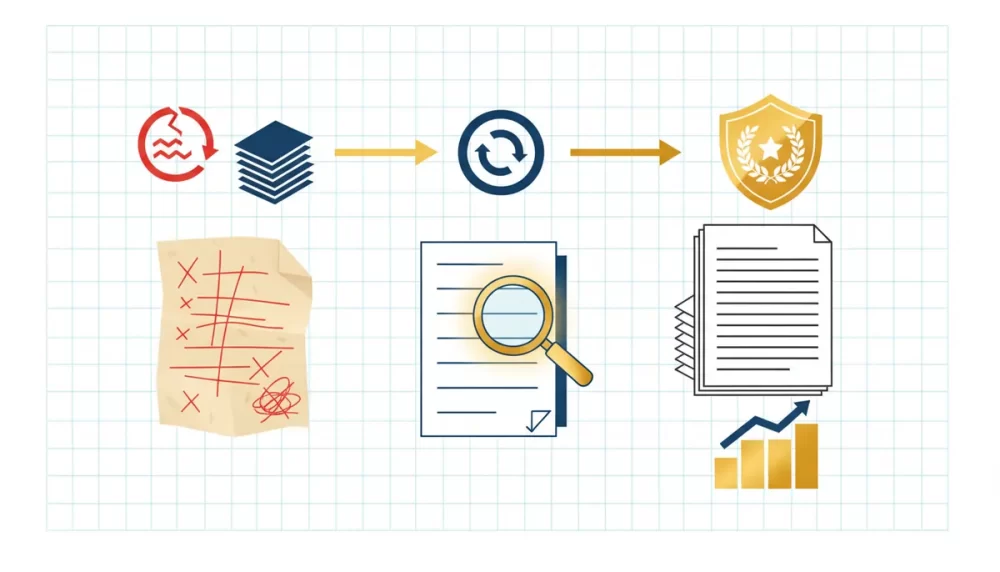
- Professional editing dramatically improves manuscript acceptance rates, with edited papers showing success rates up to 90-98%.
- Editors with advanced degrees provide specialized technical review ensuring clarity, accuracy, and adherence to journal-specific requirements.
- Professional services go beyond grammar correction, offering comprehensive manuscript enhancement including developmental editing, copyediting, and formatting compliance.
- Human editors bring critical contextual understanding that AI tools cannot replicate, particularly in complex scientific and technical manuscripts.
- Non-native English speakers benefit most from professional editing, overcoming language barriers that can lead to manuscript rejection.
- Selecting the right editing service requires evaluating editor qualifications, subject expertise, communication transparency, and confidentiality policies.
- Manuscript editing is a strategic investment that saves time and increases publication chances by preventing multiple rejection-revision cycles.
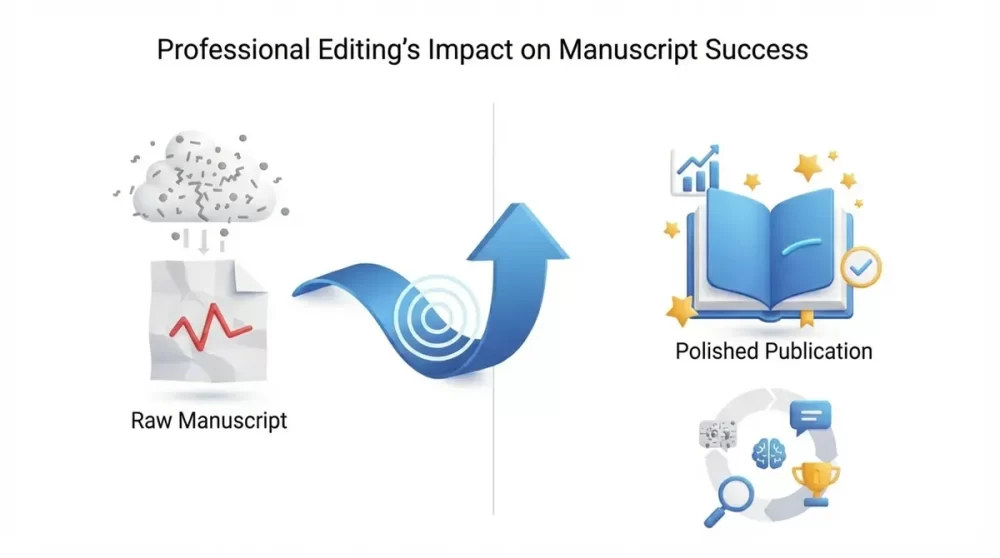
In the competitive landscape of academic and scientific publishing, the difference between manuscript acceptance and rejection often hinges on one critical factor: professional editing. Research shows that poorly written or carelessly prepared manuscripts face rejection rates exceeding 60% in peer-reviewed journals, with language quality cited as a primary concern. For researchers, scientists, and medical professionals investing months or years into groundbreaking work, professional editing services represent more than polish—they are the bridge between brilliant research and successful publication.
Professional editing services transform manuscripts into publication-ready documents that meet the exacting standards of peer-reviewed journals. Whether you’re a PhD candidate preparing your first submission or an established researcher navigating the complexities of international publication, understanding what professional editing services offer can dramatically improve your publication success rate. This comprehensive guide explores the essential components, benefits, and selection criteria for professional editing services in the manuscript editing industry.
Understanding Professional Editing Services in Academic Publishing
Professional editing services in the manuscript editing field encompass a specialized range of support designed specifically for academic, scientific, and medical documents. Unlike general editing, these services require editors with advanced degrees and deep subject-matter expertise who understand both the technical content and the publication process.
The global book editing services market reached $271 million in 2025 and continues experiencing robust growth, driven primarily by the expanding self-publishing sector and increasing demand from international researchers seeking publication in English-language journals. This growth reflects the critical need for expert editing support in an increasingly competitive publishing environment.
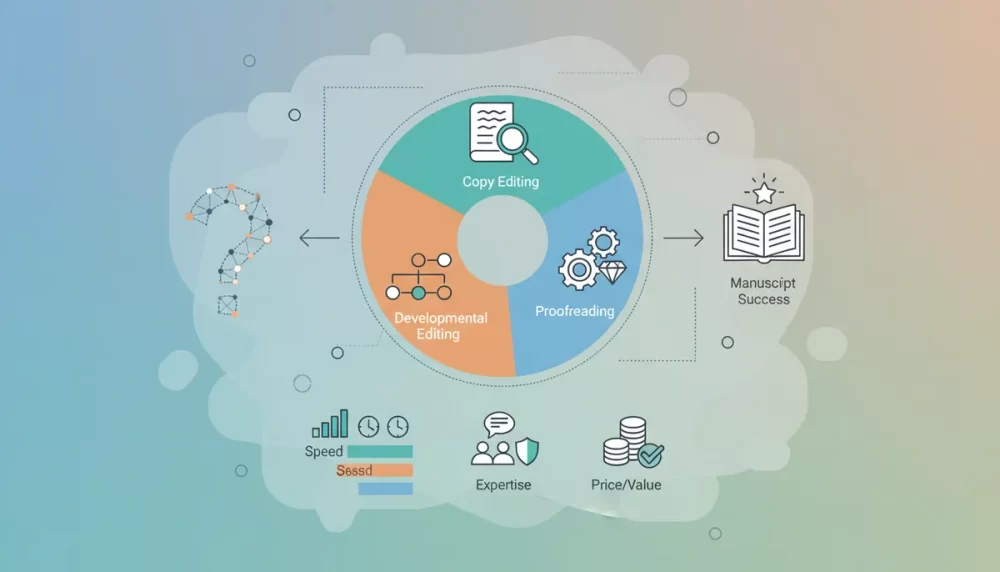
Professional editing services typically include three primary types of manuscript enhancement:
- Developmental editing focuses on the overall structure, organization, and flow of your manuscript, ensuring that your research narrative is compelling and logically presented
- Copyediting addresses grammar, syntax, word choice, and adherence to style guides while maintaining technical accuracy and scientific precision
- Proofreading provides final-stage review to catch any remaining errors in spelling, punctuation, formatting, and references before submission
Leading services employ editors with PhD or Master’s degrees who average nearly 20 years of experience in their respective fields. For example, top-tier providers support researchers across more than 1,600 subject areas, ensuring that your manuscript is reviewed by someone who truly understands your specialized research domain. This expertise proves invaluable when navigating complex terminology, methodology descriptions, and field-specific conventions that general editors might miss.
The distinction between professional editing services and basic proofreading cannot be overstated. Professional manuscript editors provide substantive improvements that enhance clarity, strengthen arguments, and ensure compliance with journal-specific requirements—factors that directly impact acceptance rates. According to PubMed research publications, clear English and proper manuscript preparation significantly influence editorial decisions, particularly for non-native English speakers whose excellent research may be overlooked due to language barriers.

Core Services Offered by Professional Manuscript Editors
Professional editing services extend far beyond simple grammar correction, offering comprehensive support that addresses every aspect of manuscript preparation. Understanding these services helps researchers select the appropriate level of assistance for their specific needs and publication goals.
Language and Technical Editing
Language editing forms the foundation of professional services, ensuring that your manuscript communicates research findings with precision and clarity. Professional editors refine sentence structure, eliminate ambiguity, and improve readability while preserving your intended meaning and technical accuracy. This service proves especially valuable for non-native English speakers whose research excellence may be undermined by language barriers.
Technical editing goes deeper, verifying that methodologies are clearly explained, results are accurately presented, and conclusions logically follow from your data. Editors check for consistency in terminology, proper use of scientific notation, and adherence to field-specific conventions. They also ensure that figures, tables, and equations are correctly formatted and properly referenced throughout the text.
Journal-Specific Formatting and Style Compliance
Each academic journal maintains unique formatting requirements, citation styles, and structural preferences that can be overwhelming to navigate. Professional editing services include formatting assistance that ensures your manuscript meets specific journal guidelines before submission. This attention to detail prevents desk rejections—immediate rejections based on formatting non-compliance that never reach peer review.
Services typically cover:
- Reference formatting according to required citation styles (APA, MLA, Chicago, Vancouver, or journal-specific formats)
- Structural organization matching journal requirements for abstract, introduction, methods, results, and discussion sections
- Figure and table preparation meeting resolution, labeling, and caption requirements
- Word count adjustments and section length optimization
- Cover letter and response to reviewers preparation for revision submissions
Comprehensive Manuscript Review and Enhancement
Beyond technical corrections, professional services provide substantive feedback that strengthens your manuscript’s overall impact. Editors evaluate argument flow, identify gaps in logic or methodology, and suggest improvements to enhance clarity and persuasiveness. This developmental feedback helps transform good research into compelling publications that capture editor and reviewer attention.
Many services also offer specialized support for specific document types beyond journal articles. These include scientific editing for research papers, grant application editing to improve funding success rates, thesis and dissertation editing for graduate students, and business editing for white papers and professional documents.
| Service Type | Focus Areas | Ideal For | Typical Turnaround |
|---|---|---|---|
| Developmental Editing | Structure, organization, argument flow, content gaps | Early-stage manuscripts, first-time authors | 7-10 days |
| Copyediting | Grammar, syntax, terminology consistency, technical accuracy | Near-complete manuscripts needing language polish | 6-8 days |
| Proofreading | Spelling, punctuation, formatting, final error check | Final pre-submission review | 3-4 days |
| Journal Formatting | Style guide compliance, reference formatting, structural requirements | Manuscripts ready for specific journal submission | 4-6 days |

The Human Advantage in Professional Manuscript Editing
While artificial intelligence tools have entered the editing landscape, professional editing services maintain their competitive advantage through human expertise that AI cannot replicate. The nuanced understanding required for scientific manuscripts demands experience, subject knowledge, and contextual awareness that automated systems lack.
Human editors bring critical capabilities that distinguish professional services from AI alternatives:
- Deep subject-matter expertise enabling accurate evaluation of technical content and methodology
- Understanding of field-specific conventions, terminology, and citation practices
- Ability to recognize and preserve author voice while improving clarity
- Contextual judgment for ambiguous situations where multiple correct options exist
- Experience with journal requirements and reviewer expectations
- Capacity to provide substantive feedback on argument strength and manuscript organization
The industry has evolved to balance efficiency and expertise by integrating AI tools for preliminary checks while maintaining human editors for final review and substantive improvements. This hybrid approach allows professional services to deliver faster turnaround times without sacrificing quality—a critical consideration when facing submission deadlines.
Research productivity increasingly depends on publication success, making the investment in professional editing services a strategic decision rather than an optional expense. For non-native English speakers, the statistics are particularly compelling: manuscripts edited by professional services show acceptance rates exceeding 90% in many cases, compared to substantially lower rates for unedited submissions. San Francisco Edit, for instance, reports a 98% acceptance rate for edited papers—a testament to the value that expert human editing provides.
Selecting the Right Professional Editing Service
Choosing a professional editing service requires careful evaluation of several factors that directly impact the quality of editing you receive and the ultimate success of your manuscript. Not all editing services offer the same level of expertise, and understanding these differences helps ensure you invest in the right support for your needs.
Editor Qualifications and Subject Expertise
The most critical factor in selecting professional editing services is editor qualification. Look for services that employ editors with advanced degrees (PhD or Master’s level) in relevant scientific fields. This ensures that your editor understands the technical content, can evaluate methodology descriptions for clarity and accuracy, and recognizes field-specific conventions that general editors might miss.
Top services match manuscripts with editors based on subject specialization. For example, a molecular biology paper should be edited by someone with molecular biology expertise, not just general science knowledge. This subject-specific matching ensures that technical terminology is used correctly, methodologies are clearly explained, and results are accurately interpreted throughout the editing process.
Service Transparency and Communication
Professional services should provide clear information about their editing process, turnaround times, and pricing structure. Transparent communication prevents misunderstandings and ensures you receive the level of service you expect. Look for services that offer:
- Detailed explanations of editing levels and what each includes
- Sample edits or portfolio examples demonstrating editing quality
- Clear pricing based on word count or page length
- Defined turnaround times with options for rush service
- Direct communication channels for questions or concerns
Many reputable services provide free sample editing of abstracts or introduction sections, allowing you to evaluate editing quality before committing to full manuscript editing. This trial approach reduces risk and helps ensure the editing style matches your expectations and needs.
Confidentiality and Intellectual Property Protection
Research manuscripts often contain unpublished data and novel findings that require strict confidentiality protection. Professional editing services should maintain robust confidentiality policies, including non-disclosure agreements and secure document handling procedures. Verify that services destroy manuscripts if quotes are not accepted and never share your work with third parties without explicit permission.
Reputable services like San Francisco Edit prioritize confidentiality as a core business principle, understanding that protecting intellectual property is essential for researcher trust and long-term relationships. This commitment to privacy ensures your groundbreaking research remains secure throughout the editing process.
Professional Editing Service Pricing and Value
Understanding pricing structures for professional editing services helps researchers budget appropriately and evaluate the value proposition of different providers. Pricing typically varies based on manuscript length, editing level, turnaround time, and subject complexity.
| Service Provider | Price for 3,000 Words | Turnaround Options | Special Features |
|---|---|---|---|
| Premium Academic Editing | $270 | Standard: 7 days, Rush: 3 days | Subject-specialist PhD editors |
| Mid-Range Service | $121-$217 | 7-day to 24-hour options | Multiple service tiers |
| Economy Option | $78-$159 | 5-day to 8-hour rush | Basic editing focus |
| San Francisco Edit | $396 (approximately) | 6-8 days standard, 3-4 days rush | 98% acceptance rate, PhD editors |
San Francisco Edit charges $33.00 per 250 words, which includes comprehensive editing and proofreading by native English-speaking PhD scientists, tracked changes in Microsoft Word, detailed explanations of edits, and suggested additions where appropriate. Importantly, references are excluded from word count calculations, providing additional value compared to services that count all text.
When evaluating pricing, consider the return on investment rather than just the upfront cost. A professionally edited manuscript that achieves first-round acceptance saves substantial time compared to multiple rejection-revision cycles. For many researchers, especially those facing publication pressure or working in competitive fields, the investment in professional editing services pays dividends through faster publication timelines and improved journal placement.
Specialized Editing for Different Research Fields
Professional editing services recognize that scientific disciplines have unique requirements, conventions, and communication styles. Specialized editing ensures that your manuscript meets field-specific standards while communicating effectively with your target audience.
Scientific and Medical Manuscript Editing
Scientific and medical editing requires editors who understand complex methodologies, statistical analyses, and field-specific terminology. These editors verify that methods sections provide sufficient detail for replication, results are presented clearly with appropriate statistical support, and discussions accurately interpret findings within the context of existing literature.
Medical manuscripts demand additional scrutiny regarding patient privacy, ethical considerations, and clinical terminology. Professional editors ensure compliance with reporting guidelines like CONSORT for clinical trials or PRISMA for systematic reviews, which many journals require for submission. This specialized knowledge proves invaluable when preparing manuscripts for high-impact medical journals with stringent requirements.
San Francisco Edit specializes in scientific editing services that address these complex needs, employing editors with extensive research experience who understand the publication process from firsthand involvement in peer-reviewed publishing.
Editing for Non-Native English Speakers
For international researchers, professional editing services provide essential support in overcoming language barriers that might otherwise prevent publication of excellent research. Language editing for non-native speakers goes beyond grammar correction to address idiomatic expressions, sentence structure patterns, and stylistic conventions that characterize professional scientific English.
These services help researchers from non-English-speaking countries compete on equal footing with native speakers, ensuring that language quality never obscures research quality. The impact is substantial: clear, professionally edited English significantly improves acceptance rates for international authors, with some studies showing acceptance rate improvements of 30-40% compared to unedited submissions.
Grant Application and Proposal Editing
Research funding depends on compelling, clearly written grant applications that effectively communicate project significance, methodology, and expected outcomes. Professional editing services for grant applications help researchers craft persuasive narratives that capture reviewer attention and demonstrate project feasibility.
Grant editing focuses on clarity of aims, justification of methodology, realistic budget alignment with proposed work, and compliance with funding agency requirements. Editors with grant review experience bring valuable insight into what reviewers seek and how to present your project competitively. Given funding success rates often below 20% for major agencies, professional editing represents a strategic investment in securing research support.
The Professional Editing Process Explained
Understanding how professional editing services work helps researchers prepare manuscripts effectively and maximize the value they receive from editing support. While processes vary by service, most follow a structured approach that ensures thorough, consistent editing quality.
Initial Manuscript Submission and Assessment
The process typically begins with manuscript submission through a secure online portal where you provide your document, specify your target journal or document type, and indicate any specific concerns or areas requiring attention. Professional services review your manuscript to assess length, complexity, and editing requirements, then provide a quote and estimated turnaround time.
Many services allow you to specify preferred turnaround times, with rush options available for urgent submissions. Standard turnaround for comprehensive editing typically ranges from 6-8 days, while rush services can deliver edited manuscripts in 3-4 days. Clear communication during this initial phase ensures that expectations align and that editors understand your specific needs and goals.
The Editing Phase
Once you approve the quote, your manuscript is assigned to a qualified editor with relevant subject expertise. The editor performs comprehensive review and editing, typically using Microsoft Word’s track changes feature so you can see exactly what modifications were made and why. This transparency allows you to learn from the editing process and potentially improve your writing for future manuscripts.
Professional editors provide:
- Tracked changes showing all edits to text, with clear visibility of additions, deletions, and modifications
- Margin comments explaining rationale for significant changes or suggesting alternatives
- Query responses addressing specific questions or concerns you raised during submission
- Formatting corrections ensuring consistency throughout the document
- Reference list verification checking for completeness and proper formatting
Review and Revision
After editing is complete, you receive the edited manuscript for review. Professional services encourage questions about edits and often include a brief consultation period where you can discuss changes with your editor. This dialogue ensures you understand the rationale behind edits and feel confident about the revised manuscript.
If you need additional revisions after reviewing the edited manuscript, many services offer limited revision support to address any concerns or implement alternative approaches to edited sections. This collaborative process results in a final manuscript that maintains your voice and intent while meeting publication standards for clarity and professionalism.
Maximizing the Value of Professional Editing Services
While professional editing services provide substantial value, researchers can optimize results by preparing manuscripts thoughtfully and engaging effectively with the editing process. Strategic preparation ensures editors can focus on substantive improvements rather than basic corrections.
Pre-Editing Preparation Strategies
Before submitting your manuscript for professional editing, take time to review and refine the content yourself. Run spell-check, verify that references are complete and properly formatted, and ensure figures and tables are clearly labeled and referenced in text. This preliminary work allows editors to concentrate on improving clarity, flow, and technical communication rather than catching basic errors.
Additionally, clearly identify your target journal and provide any specific guidelines or requirements when submitting for editing. This information helps editors tailor their work to match journal expectations, increasing the likelihood of acceptance. If you have specific concerns about particular sections or terminology choices, communicate these to your editor to ensure they receive appropriate attention.
Learning from Professional Edits
Viewing edited manuscripts as learning opportunities improves your writing skills over time, potentially reducing future editing needs. Review track changes carefully to understand why specific edits were made. Common patterns in edits—such as consistent changes to sentence structure or terminology usage—highlight areas where your writing can improve.
Many researchers find that after several manuscripts are professionally edited, they internalize editing principles and produce cleaner initial drafts. This progression demonstrates the educational value embedded in professional editing services beyond immediate manuscript improvement.
Why San Francisco Edit Represents Excellence in Manuscript Editing
When selecting professional editing services, researchers benefit from understanding what distinguishes truly exceptional providers from adequate alternatives. San Francisco Edit exemplifies the qualities that mark superior manuscript editing support through several distinguishing characteristics.
The service employs only native English-speaking PhD scientists with extensive publication experience, ensuring that editors understand both the technical content and the publication process. This dual expertise proves invaluable when editing complex research manuscripts that require both scientific accuracy and clear communication. With more than 325 years of combined experience among staff members, San Francisco Edit brings unparalleled depth of knowledge to manuscript editing.
The proven track record speaks volumes: 98% of manuscripts edited by San Francisco Edit achieve publication acceptance. This exceptional success rate reflects the comprehensive nature of their editing approach, which addresses everything from technical accuracy to stylistic polish to journal-specific formatting requirements. For researchers facing publication pressure, this success rate represents confidence and reliability in an uncertain process.
San Francisco Edit’s global reach ensures accessibility for researchers worldwide, with support for diverse scientific fields including life sciences, medicine, engineering, social sciences, and humanities. The service covers various document types beyond journal articles, providing editing for grant applications, theses, dissertations, business documents, and professional correspondence—comprehensive support for all research communication needs.
The commitment to confidentiality and professional integrity distinguishes San Francisco Edit as a trusted partner in research publication. Strict document handling procedures and willingness to destroy manuscripts if quotes are not accepted demonstrate respect for intellectual property and researcher concerns. This professional approach has earned San Francisco Edit recognition from researchers globally, as evidenced by their extensive testimonials from satisfied clients.
The Future of Professional Manuscript Editing Services
Professional editing services continue evolving to meet changing researcher needs and leverage technological advances while maintaining the human expertise that ensures quality. Understanding these trends helps researchers anticipate how editing support may develop and what capabilities to expect from leading services.
The integration of AI tools for preliminary screening and basic error detection allows human editors to focus on substantive improvements requiring expertise and judgment. This hybrid approach increases efficiency without compromising quality, potentially reducing turnaround times while maintaining thorough review. However, the consensus among leading services remains clear: AI augments but cannot replace human editors for complex scientific manuscripts.
Increasing specialization represents another significant trend, with services expanding subject-area coverage and developing niche expertise in emerging fields. As research becomes more interdisciplinary and specialized, editing services must provide editors with cutting-edge knowledge in specific domains. This specialization ensures that editors can evaluate technical content accurately and provide substantive feedback beyond language correction.
The growth of open-access publishing and preprint servers is changing manuscript submission patterns, creating new opportunities for editing services to support researchers at various publication stages. Services increasingly offer editing for preprint submissions, revision support after peer review, and formatting for open-access journal requirements. This flexibility helps researchers navigate an evolving publication landscape.
Making the Decision: Investing in Professional Editing
The decision to engage professional editing services represents a strategic investment in research impact and career advancement. For many researchers, particularly early-career scientists and non-native English speakers, professional editing makes the difference between publication success and frustrating rejection cycles.
Consider professional editing essential when:
- Submitting to highly competitive journals where acceptance rates fall below 20%
- English is not your native language and you want to ensure clarity and professionalism
- Preparing your first manuscript for peer-reviewed publication
- Facing tight submission deadlines with limited time for extensive self-editing
- Submitting grant applications with funding amounts justifying the editing investment
- Previous submissions have been rejected with language or clarity concerns noted
The return on investment becomes clear when considering the time saved through faster acceptance, the career benefits of publication in prestigious journals, and the learning value gained from working with expert editors. For academic researchers, publication record directly influences tenure decisions, grant funding success, and professional reputation—making editing services a career investment rather than merely an expense.
San Francisco Edit’s comprehensive approach addresses all aspects of manuscript preparation, from developmental feedback on structure and content to final proofreading before submission. The service’s extensive experience working with referees of top-tier journals provides invaluable insight into what reviewers seek and how to present research compellingly. This reviewer perspective, combined with scientific expertise, creates editing support that genuinely improves acceptance probability.
Taking Action: Your Path to Publication Success
Professional editing services transform research manuscripts into polished, publication-ready documents that meet the exacting standards of peer-reviewed journals. The combination of subject expertise, editing experience, and understanding of the publication process provides value that extends far beyond basic proofreading—it represents partnership in achieving your research communication goals.
For researchers serious about publication success, selecting the right editing service requires evaluating editor qualifications, service transparency, confidentiality protections, and proven track records. Services employing PhD-level editors with relevant subject expertise, like San Francisco Edit, offer the comprehensive support necessary for competitive manuscript preparation. The 98% acceptance rate achieved by San Francisco Edit demonstrates what exceptional editing can accomplish when combined with quality research.
Whether you’re preparing your first journal submission, seeking publication in a high-impact journal, or working to overcome language barriers, professional editing services provide the support necessary to compete effectively in today’s demanding publication environment. The investment in expert editing pays dividends through faster publication timelines, improved journal placement, and enhanced research visibility—outcomes that advance both individual careers and scientific progress.
Ready to experience the difference that professional, PhD-level editing makes in your manuscript success? Submit your manuscript to San Francisco Edit today and join the 98% of authors whose edited papers achieve publication acceptance. With standard turnaround times of 6-8 days and rush options available, you’ll receive comprehensive editing support that positions your research for success in peer-reviewed journals. Don’t let language barriers or presentation issues prevent your excellent research from reaching its intended audience—invest in professional editing that delivers results.
FAQs
Q: What is the difference between copyediting and proofreading for manuscripts?
A: Copyediting focuses on improving grammar, syntax, word choice, technical accuracy, and adherence to style guides while maintaining scientific precision throughout the manuscript. Proofreading is the final review stage that catches remaining errors in spelling, punctuation, formatting, and references before submission. Professional services often include both as part of comprehensive manuscript editing to ensure publication readiness.
Q: How much do professional manuscript editing services typically cost?
A: Professional editing services typically range from $78 to $396 for a 3,000-word manuscript, depending on editing level, turnaround time, and editor expertise. San Francisco Edit charges $33 per 250 words, which includes comprehensive editing by PhD scientists, tracked changes, detailed explanations, and a 98% publication acceptance rate. Premium services with subject-specialist editors generally cost more but provide superior results for competitive journal submissions.
Q: Why should I choose human editors over AI editing tools for my research manuscript?
A: Human editors provide critical capabilities that AI cannot replicate, including deep subject-matter expertise, understanding of field-specific conventions, ability to evaluate technical content accuracy, and experience with journal requirements and reviewer expectations. Professional editors with PhD qualifications bring contextual judgment and can provide substantive feedback on argument strength and manuscript organization—essential for competitive scientific publishing where nuanced communication determines acceptance.
Q: How long does professional manuscript editing typically take?
A: Standard professional editing typically requires 6-8 days for comprehensive manuscript review and editing. Rush services can deliver edited manuscripts in 3-4 days for urgent submissions, though this often incurs additional fees. The turnaround time depends on manuscript length, complexity, and the level of editing required, with proofreading services generally completing faster than developmental editing.
Q: What qualifications should I look for in a professional manuscript editing service?
A: Look for editing services that employ editors with advanced degrees (PhD or Master’s level) in relevant scientific fields, ensuring they understand technical content and field-specific conventions. The best services match manuscripts with subject-specialist editors who have publication experience in peer-reviewed journals. Additionally, verify that the service maintains strict confidentiality policies, provides transparent pricing and turnaround times, and demonstrates a strong track record of publication success for edited manuscripts.