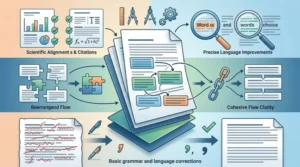
Key Takeaways
- Professional academic editing significantly improves publication chances by addressing language quality, structure, and journal-specific requirements.
- Developmental editing enhances manuscript organization, logical flow, and argument coherence before detailed copy editing.
- Copy editing ensures grammatical precision and readability, especially crucial for non-native English speaking researchers.
- Proper citation verification prevents plagiarism and demonstrates scholarly rigor in academic manuscripts.
- Journal guideline compliance reduces the risk of desk rejection and shows professionalism to editors.
- Consistent technical terminology and precise scientific language are essential for communicating research findings effectively.
- Native English-speaking PhD-level editors provide the most comprehensive editing, understanding both linguistic and scientific conventions.
- Abstract and title optimization improves manuscript discoverability and increases potential citation rates.
Academic editing has become essential for researchers seeking publication success in peer-reviewed journals. With rejection rates exceeding 70% at top-tier journals, the quality of your manuscript’s presentation directly impacts your chances of acceptance. This comprehensive guide explores twelve critical academic editing services that help transform raw research into polished, publication-ready manuscripts. Whether you’re a PhD candidate preparing your first submission or an established researcher managing multiple projects, understanding these editing services will significantly improve your manuscript quality and publication success rate.
The landscape of academic publishing has grown increasingly competitive, with journals receiving thousands of submissions annually. Clear, error-free English has become a prerequisite for serious consideration by journal editors and peer reviewers. For non-native English speakers and early-career researchers, professional academic editing bridges the gap between solid research and successful publication. Studies published in PubMed consistently show that manuscripts with poor language quality face higher rejection rates, regardless of scientific merit.

Understanding Academic Editing for Manuscript Success
Academic editing encompasses comprehensive review and refinement of scholarly documents to meet rigorous publication standards. This specialized service goes far beyond basic spell-checking, addressing structure, clarity, coherence, grammar, citations, and adherence to journal-specific guidelines. For researchers in scientific and medical fields, academic editing ensures your groundbreaking findings receive the attention they deserve rather than being dismissed due to presentation issues.
The editing process typically involves multiple stages, each designed to enhance different aspects of your manuscript. From developmental editing that strengthens your argument flow to final proofreading that catches typographical errors, each stage contributes to creating a publication-ready document. Scientific editing specifically focuses on technical accuracy and discipline-specific conventions that journal editors expect.
The Critical Role of Language Quality in Publication
Research quality alone does not guarantee publication success. Journal editors and reviewers consistently cite poor English and unclear presentation as primary reasons for manuscript rejection. This reality particularly affects international researchers whose first language is not English. Even brilliant scientific discoveries can be overlooked when language barriers prevent clear communication of findings and methodology.
Professional academic editing services address this challenge by employing native English-speaking editors with PhD-level expertise. These specialists understand both the linguistic requirements and the scientific conventions of academic publishing. They can identify ambiguous phrasing, improve technical descriptions, and ensure your manuscript communicates ideas with precision and clarity expected in peer-reviewed literature.

12 Essential Academic Editing Services for Research Papers
1. Developmental Editing for Structure and Logic
Developmental editing focuses on the big-picture elements of your manuscript, including overall organization, logical flow, and argument coherence. This service examines whether your introduction adequately sets up the research question, whether your methods section provides sufficient detail for replication, and whether your discussion effectively interprets your findings. Editors evaluate paragraph transitions, section organization, and the logical progression of ideas throughout the document.
For early-career scientists and graduate students, developmental editing provides invaluable guidance on manuscript structure. Editors may suggest reorganizing sections, strengthening your hypothesis statement, or clarifying the relationship between your results and conclusions. This type of editing typically occurs early in the manuscript preparation process, before investing time in detailed copy editing.
2. Copy Editing for Grammar and Syntax
Copy editing addresses sentence-level issues including grammar, punctuation, spelling, word choice, and syntax. This service ensures your manuscript adheres to standard English conventions while maintaining scientific precision. Copy editors correct grammatical errors, fix awkward phrasing, eliminate redundancy, and improve sentence structure for better readability.
This editing level is crucial for non-native English authors who may struggle with articles, prepositions, verb tenses, and idiomatic expressions. Professional copy editors familiar with scientific writing understand how to maintain technical accuracy while improving linguistic clarity. They ensure your writing meets the professional standards expected in academic publications.
3. Proofreading for Final Error Detection
Proofreading represents the final quality check before manuscript submission, catching typographical errors, formatting inconsistencies, and minor language mistakes that survived earlier editing rounds. This service examines every detail, including spacing, punctuation, capitalization, and number formatting. Proofreaders verify that all elements follow journal guidelines precisely.
Many researchers underestimate the importance of professional proofreading, assuming they can catch all errors themselves. However, familiarity with your own work creates blind spots that make error detection difficult. Fresh expert eyes identify issues that authors invariably miss after multiple revisions. San Francisco Edit employs experienced proofreaders who specialize in scientific manuscripts, ensuring every detail meets publication standards.
4. Citation and Reference Verification
Academic editing services verify that all citations appear correctly formatted according to required style guides such as APA, MLA, Chicago, or journal-specific formats. Editors check that every in-text citation corresponds to a reference list entry and vice versa. They verify DOI numbers, publication years, author names, and journal titles for accuracy.
Proper citation formatting demonstrates scholarly rigor and prevents plagiarism accusations. Editors familiar with various citation styles save researchers countless hours of tedious reference checking. They identify missing citations, duplicate references, and formatting inconsistencies that could raise red flags during peer review.
5. Journal Guideline Compliance
Each academic journal maintains specific manuscript guidelines covering formatting, structure, length, figure requirements, and citation styles. Professional editors ensure your manuscript adheres to these guidelines precisely, reducing the risk of desk rejection before peer review even begins. They verify word counts, heading hierarchy, abstract length, keyword inclusion, and section organization match journal requirements.
Understanding and implementing diverse journal guidelines represents a significant time investment for researchers. Academic editing services maintain databases of journal requirements and apply this knowledge to format manuscripts appropriately. This attention to detail increases acceptance likelihood and demonstrates professionalism to journal editors.
6. Technical Terminology Consistency
Scientific manuscripts require consistent use of technical terminology throughout the document. Editors ensure that abbreviations are defined at first use, that terminology remains consistent across sections, and that discipline-specific conventions are followed. They verify that you use accepted nomenclature, standard units of measurement, and appropriate technical vocabulary.
Subject-matter expertise proves essential for this editing level. Editors with backgrounds in your research field understand the nuances of terminology and can identify inappropriate word choices or inconsistent usage. They ensure your manuscript speaks the language of your discipline accurately and professionally.
7. Figure and Table Integration
Academic editing includes reviewing how figures and tables integrate with manuscript text. Editors verify that all visual elements are referenced in the text, that captions are clear and informative, and that figures follow journal specifications. They ensure that tables present data logically and that statistical information is reported accurately.
Effective visual presentation of data significantly impacts manuscript quality and reader comprehension. Professional editors suggest improvements to table organization, figure labeling, and caption wording that enhance clarity. They verify that visual elements support your argument and meet publication standards for quality and formatting.
8. Abstract and Title Optimization
Your abstract and title represent the first impression journal editors and potential readers receive. Academic editing services optimize these critical elements for clarity, completeness, and impact. Editors ensure abstracts contain all required components: background, methods, results, and conclusions. They verify that titles accurately reflect manuscript content while remaining concise and engaging.
Well-crafted abstracts and titles improve discoverability and increase citation rates. Editors familiar with database indexing and search optimization help researchers choose keywords strategically. They ensure these elements communicate your research contribution effectively within strict word limits.
9. Methodology Section Clarity
Clear, detailed methodology sections enable replication and demonstrate research rigor. Academic editors review methods sections for completeness, logical organization, and clarity. They verify that experimental procedures are described with sufficient detail, that statistical methods are appropriate and clearly explained, and that all materials and equipment are properly identified.
Methodology clarity particularly matters for manuscripts describing novel techniques or complex experimental designs. Editors help researchers communicate their approaches in ways that reviewers can understand and evaluate. They identify gaps in procedural descriptions and suggest improvements that strengthen reproducibility.
10. Discussion and Conclusion Strengthening
The discussion section interprets your findings, relates them to existing literature, and explains their significance. Academic editors strengthen these sections by ensuring claims are supported by data, limitations are addressed appropriately, and conclusions follow logically from results. They verify that you adequately acknowledge alternative interpretations and situate your work within the broader field.
Effective discussion sections demonstrate critical thinking and scholarly maturity. Editors help researchers avoid overstating conclusions, address potential weaknesses thoughtfully, and highlight the true contribution of their work. This guidance proves especially valuable for early-career scientists developing their scholarly voice.
11. Plagiarism Detection and Prevention
Academic integrity requires that manuscripts present original work with proper attribution of others’ ideas. Professional editing services often include plagiarism checking using specialized software that compares your manuscript against published literature. Editors identify sections requiring additional citations, help paraphrase content appropriately, and ensure quotations are properly marked and attributed.
Unintentional plagiarism can occur when researchers struggle with English phrasing or citation conventions. Academic editors help prevent this serious issue by reviewing how you incorporate and cite source material. They ensure your manuscript meets ethical standards for original scholarship.
12. Language Polishing for Non-Native Speakers
For international researchers whose primary language is not English, specialized language editing addresses the unique challenges of communicating complex scientific ideas in a second language. This service goes beyond basic grammar correction to improve naturalness, clarity, and professional tone. Editors refine word choice, improve sentence rhythm, and eliminate non-standard phrasing while preserving your intended meaning.
Native English-speaking editors with scientific backgrounds understand how to maintain technical precision while improving linguistic quality. They help international researchers communicate their findings with the clarity and professionalism that increases publication success. This support proves invaluable for researchers whose groundbreaking work deserves recognition regardless of their native language.

Choosing the Right Academic Editing Service
Selecting an appropriate editing service requires considering several factors that impact manuscript quality and publication success. The editor’s subject-matter expertise should align with your research field. PhD-level scientists understand discipline-specific conventions, terminology, and publication standards that generalist editors may miss. Verify that editors possess both linguistic skills and scientific credentials relevant to your work.
Turnaround time represents another critical consideration. Standard editing typically requires 6-8 days, though rush services can complete manuscripts in 3-4 days when deadlines loom. Balance speed against thoroughness – extremely fast turnaround may compromise editing quality. Reputable services provide realistic timelines that allow for careful, comprehensive review.
Evaluating Service Quality and Credentials
Professional editing services should transparently share editor qualifications, subject expertise, and quality assurance processes. Look for services employing native English speakers with advanced degrees in relevant fields. Review client testimonials and success rates – services with high publication success rates demonstrate consistent quality. San Francisco Edit maintains a 98% publication success rate for edited manuscripts, reflecting the expertise and thoroughness of their editing team.
Request sample edits to evaluate editing style and depth. Quality services provide detailed explanations of changes, suggest improvements beyond simple corrections, and demonstrate understanding of your research content. Avoid services that merely correct obvious errors without addressing deeper issues of clarity, structure, and argument strength.

The Academic Editing Process Explained
Understanding the editing workflow helps researchers prepare manuscripts appropriately and maximize service value. The process typically begins with manuscript submission and initial assessment. Editors evaluate document length, complexity, and required editing level to provide accurate quotes and timelines. They identify the manuscript type, target journal, and any special requirements affecting the editing approach.
After accepting a project, editors conduct comprehensive review according to the requested editing level. For developmental editing, they focus on structure, logic, and argument flow. Copy editing addresses language, grammar, and style throughout the manuscript. Proofreading provides final quality assurance before submission. Many services offer multiple editing passes to address different aspects progressively.
Reviewing Edited Manuscripts
Professional editing services return manuscripts with tracked changes showing all modifications. Detailed comments explain editing decisions, suggest alternative phrasing, and highlight areas requiring author attention. This transparency allows researchers to learn from the editing process and understand improvements made to their work.
Review edited manuscripts carefully to ensure changes preserve your intended meaning. While editors strive to maintain accuracy, you remain the expert on your research content. Accept or reject changes as appropriate, and request clarification about editing decisions you don’t understand. Quality services encourage author questions and provide additional explanation when needed.
Cost Considerations for Academic Editing
Academic editing represents an investment in publication success and research visibility. Pricing typically depends on manuscript length, editing level required, turnaround time, and document complexity. Standard rates often range from $30-40 per page for comprehensive editing. Rush services command premium pricing due to expedited scheduling requirements.
Consider editing costs within the broader context of research investment. After spending months or years conducting research, investing in professional editing significantly increases publication likelihood. Failed submissions waste time, delay career advancement, and potentially lose priority on important findings. San Francisco Edit charges $33.00 per 250 words, providing transparent pricing that includes comprehensive editing, detailed explanations of changes, and suggested improvements.
Maximizing Value from Editing Services
To get the most value from academic editing, submit well-organized manuscripts that you have already reviewed and revised. Editors work most efficiently with content that reflects your best effort. Provide clear instructions about target journals, specific concerns, and any unusual aspects of your manuscript. The more context you provide, the more tailored and effective the editing becomes.
View editing as a collaborative process rather than a one-time fix. Many researchers develop ongoing relationships with editing services, submitting multiple manuscripts as their research programs progress. This continuity allows editors to understand your writing patterns, research focus, and specific needs, resulting in more efficient and effective editing over time.
Academic Editing for Different Document Types
While journal articles represent the most common edited documents, academic editing services support various scholarly communications. Thesis and dissertation editing helps graduate students meet institutional requirements and present research clearly. These extensive documents require careful attention to consistency, organization, and adherence to university formatting guidelines across hundreds of pages.
Grant applications benefit from editing that strengthens clarity, persuasiveness, and alignment with funding agency priorities. Editors ensure proposals communicate research significance, methodology rigor, and expected impact effectively. Conference abstracts, poster presentations, and book chapters each require specialized editing approaches tailored to their format and audience.
Supporting Diverse Academic Needs
Beyond research manuscripts, academic editing extends to curriculum vitae preparation, tenure packets, and professional correspondence. Clear, professional English in these materials impacts career advancement and professional reputation. Editors help researchers present their accomplishments effectively and communicate professionally with colleagues worldwide.
Business editing services support researchers who need to communicate findings beyond academic audiences, including white papers, press releases, and educational materials. This diverse support helps researchers maximize the impact of their work across multiple channels and audiences.
Subject-Matter Expertise in Academic Editing
Generic editing services cannot match the value provided by editors with subject-matter expertise in your research field. Specialist editors understand your discipline’s conventions, terminology, and publication standards. They recognize when technical descriptions lack necessary detail, identify inappropriate terminology usage, and suggest improvements that strengthen scientific rigor.
PhD-level editors bring research experience that informs their editing approach. They understand the peer review process, know what reviewers look for, and can anticipate potential concerns. This insight helps strengthen manuscripts proactively, addressing weaknesses before they become reviewer criticisms. Subject experts provide valuable feedback on argument strength, methodological appropriateness, and result interpretation.
Technology and Human Expertise in Editing
While artificial intelligence tools have emerged in recent years, professional academic editing remains fundamentally a human endeavor requiring expertise and judgment. AI cannot understand complex scientific concepts, evaluate argument logic, or make nuanced language choices that preserve technical accuracy while improving clarity. Human editors bring contextual understanding and critical thinking that automated tools cannot replicate.
Reputable editing services emphasize their use of human editors rather than AI-based solutions. San Francisco Edit explicitly states that all editing is performed by humans, not artificial intelligence, ensuring that manuscripts receive the careful, expert attention that publication success requires. This human touch makes the difference between mechanical correction and thoughtful improvement.
Global Support for International Researchers
Academic editing services operate globally, supporting researchers worldwide in achieving publication success. This international reach proves essential as research becomes increasingly collaborative and authors from non-English-speaking countries contribute significantly to scientific literature. Professional editing helps level the playing field, ensuring that language barriers do not prevent deserving research from reaching publication.
Editors experienced in working with international researchers understand common challenges faced by non-native English speakers. They recognize patterns of language transfer from other languages and know how to address these issues effectively. This specialized support helps international researchers communicate their important findings with the clarity and professionalism expected in English-language journals.
Building Long-Term Relationships with Editors
Many successful researchers develop ongoing relationships with editing services, creating partnerships that support their publication programs over time. Regular collaboration allows editors to understand your research focus, writing style, and typical challenges. This familiarity results in more efficient editing, as editors recognize your patterns and anticipate your needs.
Long-term relationships also provide continuity as you progress through your career. The same editing service that helped with your dissertation can support your first faculty publications, grant applications, and eventually your more senior research communications. This consistency creates a supportive editorial partnership that contributes to career success.
Common Questions About Academic Editing
When Should Manuscripts Be Submitted for Editing?
Submit manuscripts for editing after completing all revisions and ensuring all content is finalized. Editing works most effectively on completed manuscripts rather than rough drafts. However, consider developmental editing early in the process if you need guidance on structure and organization before investing time in detailed writing.
How Does Academic Editing Differ from Peer Review?
Academic editing focuses on language quality, clarity, formatting, and presentation, while peer review evaluates scientific merit, methodology, and contribution to knowledge. Editing prepares manuscripts for peer review by eliminating language barriers that might prevent reviewers from fairly evaluating your research. Both processes are essential but serve different purposes in the publication pipeline.
Conclusion: Investing in Publication Success
Academic editing has become an essential component of successful research publication in competitive academic environments. Professional editing services transform solid research into polished, publication-ready manuscripts that communicate findings clearly and professionally. From developmental editing that strengthens argument structure to final proofreading that catches every minor error, comprehensive editing addresses multiple aspects of manuscript quality.
For researchers seeking to maximize their publication success, professional editing represents a strategic investment with measurable returns. The expertise provided by PhD-level editors who understand both language and science significantly increases acceptance likelihood while saving time and reducing revision cycles. International researchers particularly benefit from native English-speaking editors who can bridge language gaps and ensure clear communication of important findings.
Whether you are preparing your first journal submission or managing multiple research projects, partnering with experienced academic editors provides the support needed to navigate today’s competitive publishing landscape successfully. Quality editing demonstrates professionalism, respects reviewers’ time, and ensures your research receives the attention it deserves based on scientific merit rather than presentation issues.
Ready to transform your research manuscript into a publication-ready document? Submit your manuscript to San Francisco Edit today and experience the difference that expert academic editing makes in achieving publication success. Our team of PhD-level scientists provides comprehensive editing services with a 98% publication success rate, helping researchers worldwide communicate their important findings clearly and professionally.
FAQs
Q: What is the difference between academic editing and proofreading?
A: Academic editing is a comprehensive process that addresses structure, clarity, argument flow, grammar, and style throughout your manuscript. Proofreading is the final stage that catches typographical errors, formatting inconsistencies, and minor language mistakes. Professional editing typically includes multiple passes addressing different aspects, with proofreading serving as the final quality check before submission.
Q: How long does academic editing typically take?
A: Standard academic editing usually requires 6-8 days for thorough review and revision of research manuscripts. Rush services can complete editing in 3-4 days when deadlines are tight, though this expedited timeline may increase costs. The exact timeframe depends on manuscript length, complexity, and the editing level required for your specific document.
Q: Do non-native English speakers need academic editing more than native speakers?
A: While non-native English speakers benefit significantly from professional editing to address language barriers, native speakers also gain value from expert review. Even experienced native English writers produce clearer, more polished manuscripts after professional editing. The service helps all researchers improve clarity, consistency, and adherence to publication standards regardless of their first language.
Q: Will academic editing guarantee my manuscript gets published?
A: Academic editing significantly improves your publication chances by eliminating language barriers and presentation issues, but it cannot guarantee acceptance. Publication decisions depend on scientific merit, methodology, originality, and fit with journal scope. However, professional editing ensures your research receives fair evaluation based on content rather than being rejected for poor presentation or unclear writing.
Q: What qualifications should academic editors have?
A: Quality academic editors should be native English speakers with advanced degrees, ideally PhDs, in relevant scientific fields. They need both excellent language skills and subject-matter expertise to understand technical content, recognize discipline-specific conventions, and provide meaningful feedback. Look for editors with publication experience who understand the peer review process and journal requirements in your field.