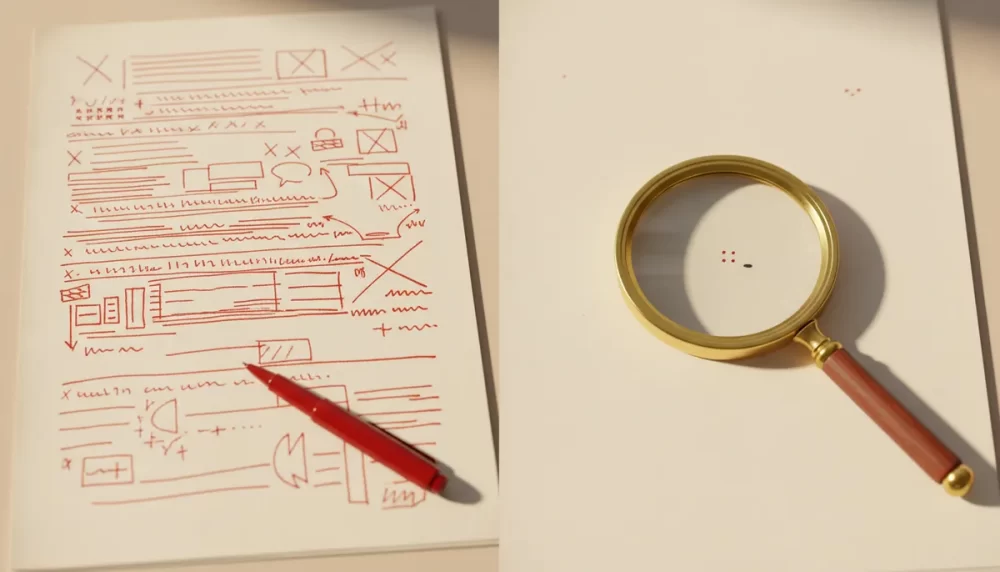
Key Takeaways
- Copy editing focuses on comprehensive language improvements like grammar, style, and clarity to enhance manuscript readability and publication chances.
- Proofreading is the final quality check that catches surface-level errors like typos, formatting inconsistencies, and minor mechanical mistakes before submission.
- Non-native English speakers particularly benefit from professional copy editing to meet international publication standards and eliminate language barriers.
- Different editing stages happen at specific manuscript preparation points: copy editing occurs after content completion, while proofreading happens just before journal submission.
- Both copy editing and proofreading are essential for scientific manuscripts, with copy editing addressing language quality and proofreading ensuring technical accuracy.
- High-impact journals have strict language standards, making professional editing critical to prevent desk rejection and allow reviewers to focus on research content.
- Researchers should view editing as a sequential process, with copy editing preceding proofreading to systematically improve manuscript quality and presentation.
If you are preparing a scientific manuscript for publication, you need to understand the difference between copy editing and proofreading. These two editing stages serve distinct purposes in manuscript preparation, and knowing which service you need can save time and improve your chances of journal acceptance. Copy editing focuses on improving clarity, consistency, and style throughout your document, while proofreading serves as the final quality check before submission.
Many researchers, especially non-native English speakers, struggle to determine which editing service their manuscript requires. Understanding the role of each editing type helps you make informed decisions about your manuscript preparation timeline and budget. This guide explains the specific differences between copy editing vs proofreading in academic and scientific publishing, helping you choose the right service for your research paper.
Both editing stages are essential for manuscript success, but they happen at different points in the publication process. Copy editing occurs after you complete your substantive revisions, while proofreading represents the final step before journal submission. Let’s explore how these services differ and why both matter for your research publication.

What Is Copy Editing in Manuscript Preparation
Copy editing is a comprehensive review process that improves the overall quality and readability of your manuscript. A copy editor examines your document for grammar errors, spelling mistakes, punctuation problems, and inconsistencies in style and formatting. This editing stage goes beyond simple error correction to enhance sentence structure, word choice, and logical flow throughout your research paper.
During copy editing, your editor ensures your manuscript follows the appropriate style guide, such as the Chicago Manual of Style or APA format. They check that your citations are formatted correctly, your references are complete, and your terminology remains consistent from introduction to conclusion. Copy editors also identify unclear passages that might confuse reviewers or readers.
The copy editing process typically addresses these key areas:
- Grammar, spelling, and punctuation corrections throughout the document
- Sentence structure improvements for better clarity and readability
- Consistent terminology and scientific notation across all sections
- Proper formatting according to target journal requirements
- Elimination of wordiness and redundant phrases
- Logical transitions between paragraphs and sections
Copy editing is particularly valuable for researchers whose first language is not English. A professional copy editor transforms technically accurate content into clear, precise scientific writing that meets international publication standards. Scientific editing services provide this level of detailed language refinement.
Most manuscripts benefit from copy editing after developmental or substantive editing is complete. At this stage, your research findings and organizational structure are finalized, allowing the copy editor to focus on language-level improvements. The copy editor works through your manuscript systematically, often making hundreds of small changes that collectively enhance your paper’s professional quality.

The Role of Proofreading in Academic Publishing
Proofreading is the final review stage before you submit your manuscript to a journal. Unlike copy editing, proofreading focuses exclusively on catching surface-level errors that may have been missed in earlier editing rounds. A proofreader examines the laid-out manuscript for typos, formatting inconsistencies, spacing problems, and other minor mechanical errors.
Proofreading typically occurs after your manuscript has been formatted according to journal specifications. The proofreader reviews the document as it will appear to reviewers and readers, checking elements like page numbers, heading levels, figure placements, and table formatting. This final quality check ensures your submission looks polished and professional.
The proofreading process concentrates on these specific elements:
- Identifying and correcting any remaining typos or spelling errors
- Checking punctuation consistency and proper usage
- Verifying correct spacing between words, sentences, and paragraphs
- Ensuring page numbers, headers, and footers are accurate
- Confirming figure and table placements match the text references
- Reviewing reference list formatting for accuracy
- Checking that all corrections from copy editing were properly implemented
Proofreading requires fresh eyes and meticulous attention to detail. Even after thorough copy editing, small errors can slip through, especially when authors make final revisions. A professional proofreader catches these overlooked mistakes before they reach journal reviewers, protecting your manuscript’s credibility.
For scientific manuscripts, proofreading is essential because technical accuracy extends to every detail. A misplaced decimal point, an incorrect reference number, or a formatting error can raise questions about your research quality. Proofreading ensures these preventable errors do not distract reviewers from your scientific contributions.

Key Differences Between Copy Editing and Proofreading
Understanding the distinctions between copy editing and proofreading helps you determine which service your manuscript needs at different preparation stages. While both processes improve manuscript quality, they differ in scope, timing, and the specific changes they address.
Scope and Depth of Changes
Copy editing involves substantial revisions to improve language quality and readability. Copy editors rewrite sentences, reorganize paragraphs for better flow, and make significant changes to enhance clarity. They actively improve your writing style while maintaining your voice and scientific message. This process can result in hundreds of tracked changes throughout a typical research paper.
Proofreading involves minimal changes focused on error correction only. Proofreaders mark typos, fix obvious mistakes, and ensure consistency but do not restructure sentences or rewrite content. They work with the assumption that copy editing is complete and focus solely on catching overlooked errors in the near-final version.
Timing in the Publication Process
Copy editing occurs after you complete your substantive revisions but before final formatting. This stage happens relatively early in manuscript preparation, allowing time for you to review suggested changes and make additional revisions if needed. Most researchers schedule copy editing when their content is complete but language refinement is still required.
Proofreading occurs at the end of the publication preparation process, typically after formatting is complete. You should schedule proofreading just before submission to catch any final errors introduced during formatting or last-minute changes. Some researchers also use proofreading services after receiving reviewer comments to ensure their revised manuscript remains error-free.
Types of Issues Addressed
Copy editors address grammar, style, consistency, tone, word choice, sentence structure, paragraph organization, and logical flow. They ensure your manuscript adheres to style guides and journal requirements while improving overall readability. Copy editors also fact-check citations and verify that references are complete and properly formatted.
Proofreaders focus on typos, spelling errors, punctuation mistakes, spacing issues, formatting inconsistencies, page numbering problems, and layout errors. They verify that headings are consistent, figures and tables are correctly placed, and the final document matches submission requirements. Proofreaders do not revise content or restructure sentences.
| Aspect | Copy Editing | Proofreading |
|---|---|---|
| Timing | After content completion, before formatting | Final stage before submission |
| Scope | Comprehensive language improvements | Surface-level error correction |
| Changes Made | Sentence restructuring, style enhancement | Typo fixes, formatting checks |
| Focus | Clarity, consistency, readability | Accuracy, presentation quality |
| Document Version | Pre-formatted manuscript | Formatted, near-final version |

When Your Manuscript Needs Copy Editing
Several indicators suggest your manuscript would benefit from professional copy editing before proofreading. Recognizing these signs helps you invest in the appropriate editing service at the right time, improving your publication success rate.
If you are a non-native English speaker, copy editing is essential for bringing your manuscript to publication standards. Even researchers with excellent English skills often need copy editing to eliminate subtle language errors that can affect journal acceptance. According to PubMed studies, poor English is a common reason for manuscript rejection, making professional copy editing a worthwhile investment.
Your manuscript needs copy editing if:
- English is not your first language and you want to eliminate language barriers
- You receive feedback that your writing lacks clarity or is difficult to follow
- Your sentences are often long, complex, or grammatically incorrect
- You struggle with consistent terminology or style throughout the document
- Your manuscript has undergone multiple revisions with inconsistent changes
- You need to meet specific journal style guide requirements
- Reviewers previously commented on language quality or readability issues
Copy editing is particularly important for first-time authors who are still developing their scientific writing skills. Graduate students and early-career researchers often benefit significantly from copy editing, as it helps them understand how to structure clear, professional scientific communications. The tracked changes and editorial comments provide valuable learning opportunities for future manuscripts.
Researchers submitting to high-impact journals should always consider copy editing. These prestigious publications maintain strict language and style standards, and even minor language imperfections can lead to desk rejection before peer review. Copy editing ensures your manuscript meets these rigorous requirements and allows reviewers to focus on your scientific contributions rather than language issues.
At San Francisco Edit, we provide comprehensive language editing services that transform your research into publication-ready manuscripts. Our PhD-level editors understand scientific communication standards and help you present your findings with clarity and precision.
When Your Manuscript Needs Proofreading
Proofreading becomes necessary at specific points in your manuscript preparation journey. Understanding when to schedule proofreading ensures you catch final errors without unnecessary editing rounds or delays in submission.
Your manuscript needs proofreading when you have completed all content revisions and formatting according to journal requirements. This final review catches errors that inevitably appear during the formatting process or when implementing copy editor suggestions. Even carefully edited manuscripts can contain overlooked typos or formatting inconsistencies that proofreading identifies.
Schedule proofreading in these situations:
- After completing copy editing and implementing all suggested changes
- When your manuscript is formatted according to target journal specifications
- Before submitting your manuscript to the journal for the first time
- After making revisions in response to reviewer comments
- When resubmitting to a different journal with new formatting requirements
- After translating your manuscript from another language
Many researchers underestimate the value of proofreading, assuming their manuscript is error-free after copy editing. However, the process of implementing editorial changes often introduces new typos or formatting errors. Authors naturally focus on content when making revisions and may not notice when a word is accidentally duplicated or a reference number becomes incorrect.
Proofreading is especially important for manuscripts with complex elements like mathematical equations, chemical formulas, or extensive data tables. These components are prone to formatting errors during document preparation, and a proofreader verifies that every element appears correctly. Small errors in these technical components can significantly impact how reviewers perceive your research quality.
For researchers on tight submission deadlines, professional proofreading provides peace of mind that your manuscript meets quality standards. Rather than rushing through a final self-review when you are tired or pressed for time, a professional proofreader brings fresh eyes and systematic attention to detail. This investment protects against embarrassing errors that could delay acceptance or require corrections after publication.
How Copy Editing and Proofreading Work Together
Copy editing and proofreading function as complementary stages in manuscript preparation rather than competing services. Most successful manuscripts undergo both processes, with each addressing different quality aspects at appropriate times in the publication workflow.
The typical manuscript editing sequence follows this pattern:
- Complete your research and write the first draft with all content
- Perform substantive or developmental editing to refine organization and arguments
- Submit for professional copy editing to improve language and clarity
- Review and accept copy editor suggestions, making any necessary content changes
- Format the manuscript according to target journal requirements
- Submit for professional proofreading to catch final errors before submission
- Submit your polished manuscript to the journal with confidence
This sequential approach ensures your manuscript receives appropriate attention at each quality level. Attempting to proofread before copy editing is complete wastes resources, as copy editing changes will require another proofreading round. Similarly, skipping copy editing and proceeding directly to proofreading leaves substantial language issues unaddressed.
Some manuscripts require multiple copy editing rounds, particularly for complex research or authors developing their English writing skills. In these cases, light proofreading between copy editing rounds can verify that implemented changes are error-free. However, final proofreading should always occur after all content and formatting are complete.
San Francisco Edit understands the importance of proper editing sequences in academic publishing. Our team of PhD-level editors has helped thousands of researchers navigate the manuscript preparation process, with a 98 percent publication success rate for edited papers. We guide you in selecting the appropriate editing services for your manuscript’s current stage, ensuring efficient preparation without unnecessary editing rounds.
Cost Considerations for Copy Editing and Proofreading
Understanding the cost differences between copy editing and proofreading helps you budget appropriately for manuscript preparation. These services differ in complexity, time requirements, and pricing structures.
Copy editing typically costs more than proofreading because it involves more extensive work and requires greater editorial expertise. Copy editors spend more time on each page, making numerous changes to improve clarity, consistency, and style. They must understand scientific writing conventions, style guides, and subject matter to provide valuable improvements to your manuscript.
Proofreading costs less because it focuses on error detection rather than content improvement. Proofreaders work more quickly through formatted documents, marking obvious errors without restructuring sentences or rewriting passages. This narrower scope allows for lower pricing while still providing essential quality control.
| Service | Typical Scope | Time Investment | Relative Cost |
|---|---|---|---|
| Copy Editing | Comprehensive language improvement | Higher (more changes per page) | Higher |
| Proofreading | Final error detection | Lower (faster review process) | Lower |
| Combined Package | Both services in sequence | Highest (two separate reviews) | Highest (but best value) |
Many editing services offer package pricing that includes both copy editing and proofreading at a discounted rate compared to purchasing services separately. These packages provide the best value for manuscript preparation while ensuring your document receives comprehensive attention. At San Francisco Edit, we charge $33.00 per 250 words for editing and proofreading services, with standard turnaround times of 6-8 days and rush options available in 3-4 days.
When budgeting for manuscript preparation, consider the potential return on investment. Professional editing significantly improves your chances of journal acceptance, potentially saving months of revision time and resubmission efforts. The cost of editing is modest compared to the time and resources invested in your research, and it protects that investment by maximizing publication success.
For detailed information about our services and transparent pricing, visit our Pricing And Payment page. We provide quotes quickly and maintain strict confidentiality throughout the editing process.
Common Mistakes in Copy Editing vs Proofreading
Researchers often make preventable mistakes when working with copy editors and proofreaders. Avoiding these common errors improves the efficiency and effectiveness of the editing process.
Submitting Manuscripts Too Early
Many authors submit manuscripts for copy editing before their content is finalized. This premature submission wastes editing resources because substantial content changes after copy editing require additional editing rounds. Complete all substantive revisions before copy editing to maximize the value of language-level improvements.
Similarly, authors sometimes request proofreading before copy editing is complete or before formatting is finalized. Proofreading an unformatted document or one that still needs copy editing does not provide the intended value. Reserve proofreading for the final pre-submission stage when no further content or formatting changes are planned.
Rejecting Valid Editorial Suggestions
Some researchers reject copy editor suggestions without careful consideration, assuming their original writing is preferable. However, copy editors are trained professionals who understand scientific communication standards and reader expectations. While you should maintain your voice and scientific accuracy, most editorial suggestions improve clarity and readability.
Review each suggested change thoughtfully and accept improvements that enhance your message. If you disagree with a suggestion, consider whether the editor identified a genuine clarity issue that could be addressed differently. Productive collaboration between authors and editors produces the strongest manuscripts.
Skipping Professional Services
Budget-conscious researchers sometimes attempt to skip professional editing entirely, relying on colleague reviews or personal proofreading. While peer feedback is valuable, it does not replace professional editing expertise. Colleagues focus on scientific content rather than language quality, and authors struggle to identify their own writing errors due to familiarity with the text.
Professional editing services provide objective, expert review that significantly improves manuscript quality. The investment in editing pays dividends through higher acceptance rates and reduced revision rounds. Poor language quality is a common rejection reason that professional editing prevents.
Making Changes After Final Proofreading
Some authors make last-minute content changes after proofreading is complete, potentially introducing new errors or formatting problems. These post-proofreading changes undermine the value of the proofreading service and may require additional quality checks before submission.
If you must make changes after proofreading, carefully proofread those specific sections yourself or request additional proofreading services. Even small changes can introduce typos or formatting inconsistencies that reflect poorly on your manuscript quality.
Choosing the Right Editing Service for Your Manuscript
Selecting an appropriate editing service requires understanding your manuscript’s current state and specific needs. Different editing services provide distinct value depending on your manuscript’s preparation stage and your goals.
Assess your manuscript honestly before selecting editing services. If your document contains numerous grammar errors, inconsistent terminology, or unclear sentences, copy editing is essential. If your manuscript has already been copy edited and formatted but needs a final quality check, proofreading is appropriate.
Consider these factors when choosing editing services:
- Your English language proficiency and confidence in scientific writing
- Whether your manuscript has been professionally edited before
- The complexity of your research and technical terminology
- Your target journal’s language and formatting requirements
- Your submission timeline and available budget
- Previous reviewer feedback about language quality
For researchers new to scientific publishing or those who primarily write in languages other than English, comprehensive copy editing provides the greatest value. This service transforms technically accurate content into clear, professional scientific communication that meets international standards. The detailed editorial feedback also helps improve your writing skills for future manuscripts.
Established researchers who have strong writing skills may need lighter copy editing or may proceed directly to proofreading for manuscripts they have carefully self-edited. However, even experienced authors benefit from professional review, as it is difficult to identify errors in your own writing. Fresh editorial perspective catches issues that familiarity blinds authors to seeing.
San Francisco Edit offers specialized business editing services in addition to scientific manuscript editing, supporting researchers across diverse document types. Our experienced editors understand the unique requirements of scientific, medical, and academic publishing, providing tailored services that match your specific needs.
The Impact of Quality Editing on Publication Success
Professional copy editing and proofreading significantly influence your manuscript’s journey from submission to publication. Quality editing affects how reviewers perceive your research and directly impacts acceptance rates.
Manuscripts with clear, error-free language allow reviewers to focus on your scientific contributions rather than being distracted by language issues. Poor grammar, unclear sentences, or formatting errors create negative impressions that can bias reviewers against your research, even when the science is sound. Professional editing ensures language quality supports rather than undermines your scientific message.
Research published in peer-reviewed journals demonstrates that language quality affects manuscript acceptance rates. Studies show that poorly written manuscripts are rejected more frequently, and non-native English speakers face particular challenges in meeting journal language standards. Professional editing levels the playing field, allowing your research quality to determine acceptance rather than language proficiency.
The benefits of professional editing extend beyond initial acceptance. Well-edited manuscripts typically require fewer revision rounds, accelerating the publication process. Clear, precise writing also increases your paper’s impact after publication, as readers more easily understand and cite well-written research.
San Francisco Edit has achieved a 98 percent publication success rate for edited manuscripts, demonstrating the powerful impact of quality editing on journal acceptance. Our clients consistently report that professional editing was essential to their publication success, particularly for researchers whose first language is not English.
Read our testimonials to learn how our editing services have helped researchers worldwide achieve publication success in leading journals. Our commitment to quality and scientific accuracy has earned us the trust of academic authors across diverse disciplines.
Preparing Your Manuscript for Editing Services
Proper manuscript preparation before submitting for copy editing or proofreading maximizes the value of these services and ensures efficient processing. Taking time to prepare your document properly saves costs and produces better results.
Before submitting for copy editing, complete all substantive revisions to your manuscript. Ensure your research findings are finalized, your organizational structure is set, and your content is complete. Copy editors work most effectively when they can focus on language improvements rather than questioning incomplete or unclear content.
Prepare your manuscript for copy editing by:
- Completing all content sections including introduction, methods, results, and discussion
- Adding all figures, tables, and supplementary materials with proper references
- Including your complete reference list with all citations properly formatted
- Performing a self-edit to catch obvious errors and improve clarity where possible
- Identifying your target journal and any specific style guide requirements
- Noting any sections where you have particular concerns or questions
Before submitting for proofreading, ensure your manuscript is completely formatted according to journal requirements. The proofreader should review the document exactly as it will be submitted, including proper page layouts, heading styles, figure placements, and reference formatting. Making formatting changes after proofreading defeats the purpose of this final quality check.
Provide clear instructions to your editor or proofreader about any specific concerns or requirements. If your target journal has unusual formatting rules or terminology preferences, communicate these details upfront. The more information you provide, the better your editor can tailor services to your specific needs.
San Francisco Edit makes manuscript submission simple through our online portal. Visit our Submit Manuscript page to upload your document and receive a detailed quote. We respond quickly to submission requests and maintain clear communication throughout the editing process.
Why Choose San Francisco Edit for Your Manuscript
San Francisco Edit provides comprehensive editing services specifically designed for scientific, medical, and academic manuscripts. Our expertise in scholarly publishing and commitment to quality make us the ideal partner for your manuscript preparation needs.
Our editing team consists entirely of PhD-level scientists who understand research methodology, technical terminology, and scientific communication standards. Unlike general editing services, our editors have published their own research in peer-reviewed journals and understand the challenges researchers face in manuscript preparation. This specialized expertise ensures your manuscript receives expert attention from professionals who understand your field.
We have served researchers worldwide for years, helping authors from diverse linguistic and cultural backgrounds achieve publication success. Our editors have extensive experience working with non-native English speakers and understand the specific language challenges these authors face. We transform technically accurate content into clear, precise scientific communication that meets international publication standards.
San Francisco Edit offers several advantages for manuscript preparation:
- Editing by native English-speaking PhD scientists with publication experience
- 98 percent publication success rate for edited manuscripts
- Fast turnaround times: 6-8 days standard, 3-4 days for rush projects
- Transparent pricing at $33.00 per 250 words including comprehensive editing
- Detailed tracked changes showing all editorial modifications
- Explanatory comments explaining changes and suggesting improvements
- Strict confidentiality with secure document handling
Our comprehensive editing includes both copy editing and proofreading elements, ensuring your manuscript receives thorough attention to language quality, consistency, and presentation. We provide the document in Microsoft Word with tracked changes, allowing you to review every modification and understand the reasoning behind editorial suggestions. This educational approach helps improve your writing skills for future manuscripts.
Learn more about our services and expertise on our about page. We are committed to helping researchers communicate their findings effectively and achieve publication success in peer-reviewed journals.
Transform Your Manuscript with Professional Editing
Understanding the difference between copy editing and proofreading empowers you to make informed decisions about manuscript preparation. These complementary services address different quality aspects at appropriate stages of the publication process, working together to produce polished, professional manuscripts that meet journal standards.
Copy editing improves clarity, consistency, and readability through comprehensive language refinement. Proofreading provides the final quality check before submission, catching overlooked errors that could undermine your manuscript’s credibility. Together, these services significantly improve your chances of journal acceptance and reduce revision time.
Investing in professional editing protects your research investment and maximizes your publication success. San Francisco Edit provides expert editing services tailored to scientific and medical manuscripts, with a proven track record of helping researchers achieve publication in leading journals. Our PhD-level editors understand the challenges of scientific communication and provide the specialized expertise your manuscript deserves.
Do not let language barriers or preventable errors delay your publication success. Submit your manuscript today for a detailed quote and discover how professional editing can transform your research communication. Join thousands of successful authors who have trusted San Francisco Edit to prepare their manuscripts for publication in peer-reviewed journals worldwide.
FAQs
Q: What is the main difference between copy editing and proofreading?
A: Copy editing improves language quality, clarity, and consistency throughout your manuscript, while proofreading is the final check for typos and formatting errors. Copy editing involves substantial revisions to sentence structure and style, whereas proofreading focuses only on catching surface-level mistakes in the near-final version.
Q: Should I get copy editing or proofreading first?
A: Copy editing always comes before proofreading in the manuscript preparation process. Complete all content revisions, then get copy editing to improve language quality, and finally use proofreading as the last quality check before journal submission. This sequence ensures efficient editing without unnecessary repeated reviews.
Q: How much does copy editing cost compared to proofreading?
A: Copy editing typically costs more than proofreading because it requires more time and involves comprehensive language improvements. At San Francisco Edit, we charge $33.00 per 250 words for editing services, which includes both copy editing and proofreading elements to provide complete manuscript preparation support.
Q: Can the same person do both copy editing and proofreading?
A: While one editor can perform both services, they should happen at different times in the manuscript preparation process. Copy editing occurs after content completion but before formatting, while proofreading happens after formatting is complete. Some editing services offer combined packages that include both sequential reviews for comprehensive quality assurance.
Q: Do I need both copy editing and proofreading for my scientific manuscript?
A: Most scientific manuscripts benefit from both copy editing and proofreading to maximize publication success. Copy editing ensures clear, consistent scientific writing that meets journal standards, while proofreading catches final errors before submission. Non-native English speakers particularly benefit from comprehensive editing that includes both services to eliminate language barriers.