Key Takeaways
-
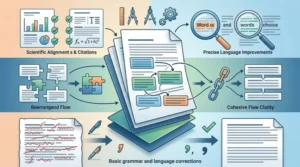
Poor manuscript preparation accounts for nearly 30% of journal rejections; professional editing addresses structural improvements, clarity enhancement, and journal-specific requirements to dramatically increase publication success rates.
-
Professional manuscript editing costs $600-800 for a standard research article but saves 6-12 months of publication delays, prevents career setbacks, and protects grant funding opportunities—making it a sound financial investment.
-
Editors with PhD-level scientific training identify field-specific terminology errors, verify citation accuracy, and ensure technical rigor that general editors miss, directly improving acceptance rates.
-
Effective abstracts must establish context, state objectives, summarize methods, present key findings with specific results, and articulate implications within strict word limits while incorporating searchable keywords naturally.
-
Journal-specific formatting requirements including word counts, citation styles, figure specifications, and author declarations must be met precisely to avoid desk rejection before peer review, regardless of scientific merit.
-
Discussion sections require interpreting findings, acknowledging limitations, contextualizing within existing literature, and articulating implications without overstating conclusions—the most challenging writing task where professional editing adds substantial value.
-
Professional editors restructure disorganized manuscripts by evaluating introduction framing, methods completeness, results clarity, discussion interpretation, and conclusion synthesis to guide reviewers logically from question to answer.
-
Select manuscript editing services based on PhD-level editors in relevant disciplines, native English speakers with academic publishing experience, transparent pricing, reasonable turnaround times, and demonstrated publication success rates.
Every researcher has faced the frustration of manuscript rejection. After months of painstaking research, data analysis, and writing, a single email can dash publication hopes. While groundbreaking research forms the foundation of academic success, the reality is that poor manuscript preparation accounts for nearly 30% of journal rejections according to studies published on PubMed. Professional manuscript editing bridges the gap between solid research and publication success, transforming unclear prose into compelling scientific narratives that meet rigorous peer-review standards.
Manuscript editing involves far more than correcting grammar and spelling errors. It encompasses structural improvements, clarity enhancement, adherence to journal-specific requirements, and ensuring your research communicates effectively to international audiences. For non-native English speakers and early-career researchers, professional editing services like scientific editing provide the expertise needed to navigate the complex landscape of academic publishing. Understanding the essential components of effective manuscript editing can dramatically increase your publication success rate.

Understanding the Critical Role of Professional Manuscript Editing
Professional manuscript editing serves as the crucial final step before journal submission. While many researchers possess deep subject matter expertise, translating complex findings into clear, concise academic prose requires specialized skills. Scientific journals maintain exacting standards for clarity, structure, and presentation, and even minor deficiencies can trigger desk rejections before manuscripts reach peer reviewers.
The editing process addresses multiple dimensions of manuscript quality. Language clarity ensures that reviewers and readers grasp your methodology and conclusions without confusion. Structural coherence guides readers through your argument logically, from hypothesis to conclusion. Technical accuracy in terminology, citations, and data presentation demonstrates scientific rigor. Format compliance with journal-specific guidelines shows professionalism and attention to detail.
Research published in major academic journals shows that manuscripts edited by professional services experience significantly higher acceptance rates. This advantage stems from editors’ deep familiarity with journal expectations, their ability to identify common pitfalls, and their expertise in crafting compelling scientific narratives. San Francisco Edit specializes in this exact transformation, with a 98% publication success rate for edited manuscripts.
The Economics of Professional Editing Investment
Many researchers question whether professional editing justifies the investment. Consider the alternative costs: repeated rejections waste months of your career, delay your publication record, and may require additional experiments to strengthen weak papers. Grant applications suffer when your publication list stagnates. Meanwhile, a professionally edited manuscript that achieves first-submission acceptance saves time, advances your career, and establishes credibility.
Professional editing typically costs between $30-40 per page, depending on manuscript complexity and turnaround requirements. For a standard 6,000-word research article, this represents an investment of approximately $600-800. Compare this to the opportunity cost of a 6-12 month publication delay, potential grant funding losses, and career advancement setbacks. The return on investment becomes clear when viewed through this comprehensive lens.

Seven Essential Elements of Effective Manuscript Editing
1. Structural Organization and Logical Flow
Effective manuscripts follow a clear narrative arc that guides readers from question to answer. Professional editors restructure content to ensure each section serves its purpose: introductions establish context and rationale, methods provide sufficient detail for replication, results present findings objectively, and discussions interpret significance appropriately. Poorly organized manuscripts confuse reviewers and trigger requests for major revisions.
Editors evaluate whether your introduction establishes the research gap effectively, whether your methods section contains all necessary details, whether results appear in logical order, and whether your discussion interprets findings without overstating conclusions. They identify redundancies, strengthen transitions between sections, and ensure that figures and tables appear at appropriate points in the narrative.
Common structural problems include:
-
Insufficient background in the introduction that fails to establish research significance
-
Methods sections that omit critical procedural details necessary for replication
-
Results that present data without clear organization or hierarchy
-
Discussions that merely repeat results rather than interpreting their broader implications
-
Conclusions that introduce new information rather than synthesizing findings
2. Language Clarity and Precision for International Audiences
Scientific writing demands precision and clarity above all else. Ambiguous phrasing, convoluted sentence structures, and imprecise terminology create confusion that reviewers interpret as conceptual weakness. Professional editors eliminate wordiness, clarify complex ideas, and ensure that every sentence communicates its intended meaning unambiguously. This proves especially valuable for non-native English speakers whose excellent research may suffer from linguistic barriers.
Editors address multiple language dimensions simultaneously. They correct grammatical errors that undermine credibility, restructure awkward phrases that obscure meaning, replace imprecise vocabulary with appropriate scientific terminology, and ensure verb tenses follow disciplinary conventions. They also eliminate colloquialisms, reduce passive voice overuse, and strengthen word choice throughout.
The goal extends beyond grammatical correctness to achieving the concise, direct style that characterizes strong scientific writing. Editors transform verbose explanations into crisp statements, eliminate redundant phrasing, and ensure that complex ideas remain accessible to international readers. This language editing expertise separates adequate manuscripts from exceptional ones.
3. Adherence to Journal-Specific Requirements
Each scientific journal maintains unique formatting requirements, citation styles, figure specifications, and structural expectations. Manuscripts that ignore these guidelines face immediate desk rejection regardless of scientific merit. Professional editors possess extensive familiarity with requirements across major journals, ensuring your submission meets every technical specification before reviewers see it.
Key journal-specific elements include:
-
Word count limits for abstracts, main text, and individual sections
-
Citation format requirements (Vancouver, APA, Chicago, journal-specific styles)
-
Figure and table formatting specifications including resolution, file types, and labeling conventions
-
Reference list formatting including author limits, abbreviation conventions, and required elements
-
Supplementary material preparation and submission requirements
-
Author contribution statements, funding disclosures, and conflict of interest declarations
Editors review the author guidelines for your target journal thoroughly, checking every element against specifications. This attention to detail demonstrates professionalism and increases the likelihood that your manuscript advances to peer review rather than facing administrative rejection.
4. Technical Accuracy in Scientific Terminology and Citations
Scientific manuscripts must employ precise terminology consistently throughout. Editors verify that you use technical terms correctly, maintain consistent nomenclature for genes, proteins, and species, and follow disciplinary conventions for abbreviations and symbols. They ensure that statistical terminology appears accurately and that you report numerical values with appropriate precision and units.
Citation accuracy presents another critical dimension. Editors verify that all in-text citations appear in the reference list, that reference list entries include all required elements, that citation formats match journal requirements precisely, and that you cite primary sources appropriately. They identify instances where additional citations would strengthen claims and flag potential over-reliance on secondary sources.
This technical rigor extends to mathematical notation, chemical formulas, gene nomenclature, and specialized terminology across all scientific disciplines. Professional editing services employ PhD-level scientists who understand field-specific conventions and can identify technical errors that general editors miss.
5. Data Presentation and Figure Optimization
Effective data presentation transforms complex results into comprehensible insights. Professional editors evaluate whether your figures and tables communicate findings clearly, whether you’ve chosen appropriate visualization methods, and whether figure legends provide sufficient detail. They identify opportunities to combine redundant figures, split overcrowded panels, and improve visual clarity.
Strong figures possess several characteristics:
-
Clear, readable axis labels with appropriate units and scale markers
-
Legends that fully explain symbols, colors, and abbreviations without requiring readers to consult the main text
-
Appropriate statistical indicators showing significance levels and error bars
-
High resolution and professional appearance that reproduces well in print and digital formats
-
Logical organization that guides the eye through results systematically
Editors also ensure that you reference all figures and tables in the text at appropriate points, that figure numbering follows journal conventions, and that figures contain no proprietary information or copyright violations. This comprehensive review transforms adequate data presentation into publication-quality visualization.
6. Abstract Optimization for Discoverability and Impact
Your abstract serves as the gateway to your research, appearing in database searches and influencing whether readers access the full manuscript. Professional editors optimize abstracts for maximum impact, ensuring they communicate key findings concisely while incorporating searchable keywords naturally. Abstracts must follow strict word limits while conveying background, methods, results, and conclusions effectively.
Effective abstracts achieve multiple objectives simultaneously. They establish research context briefly, state objectives clearly, summarize methods sufficiently for readers to assess appropriateness, present key findings with specific results, and articulate broader implications concisely. Each sentence carries substantial weight, requiring precise language and strategic information selection.
Editors restructure abstracts to improve flow, eliminate unnecessary details, strengthen results statements, and ensure conclusions align with presented findings. They verify that structured abstracts include all required subheadings and that word counts fall within journal limits. This optimization increases the likelihood that your research reaches its intended audience through database searches.
7. Discussion Section Strengthening and Contextualization
The discussion section presents researchers’ greatest writing challenge. This section must interpret findings, acknowledge limitations, contextualize results within existing literature, and articulate broader implications without overstating conclusions. Many manuscripts suffer from discussions that merely repeat results, fail to address limitations adequately, or make unsupported claims that trigger reviewer skepticism.
Professional editors strengthen discussions by:
-
Ensuring clear interpretation of results that connects findings to research questions
-
Adding appropriate context by suggesting relevant literature comparisons
-
Identifying unsupported claims that require qualification or additional evidence
-
Balancing enthusiasm for findings with appropriate acknowledgment of limitations
-
Strengthening concluding statements to articulate research significance clearly
-
Eliminating repetition between results and discussion sections
-
Identifying opportunities to suggest future research directions
The discussion represents your opportunity to demonstrate sophisticated understanding of your research context and implications. Editors with subject matter expertise, like those at San Francisco Edit, provide invaluable guidance for strengthening this critical section.

Choosing the Right Manuscript Editing Service
Not all editing services deliver equivalent value. Selecting the right partner requires evaluating several critical factors that distinguish professional academic editing from general language correction. The quality of editing directly impacts your publication success, making this decision crucial for career advancement.
Essential criteria for selecting a manuscript editing service include:
-
Editors with PhD-level scientific training in relevant disciplines who understand field-specific conventions and terminology
-
Native English speakers with academic publishing experience who grasp nuances of scientific communication
-
Transparent pricing structures that clearly outline costs without hidden fees
-
Reasonable turnaround times that accommodate journal deadlines without compromising quality
-
Confidentiality guarantees that protect your unpublished research
-
Sample editing services or testimonials that demonstrate quality and expertise
The San Francisco Edit Advantage
San Francisco Edit distinguishes itself through specialized expertise in scientific, medical, and academic manuscript editing. All editing is performed by native English-speaking PhD scientists with extensive publication experience in peer-reviewed journals. This combination ensures that editors understand both the linguistic requirements of clear scientific writing and the technical content of your research.
The service provides comprehensive editing that addresses language clarity, structural organization, technical accuracy, and journal-specific formatting requirements. Editors deliver manuscripts with tracked changes showing all modifications, plus explanatory comments clarifying edits and suggesting improvements. This transparent approach helps researchers understand editing decisions and improve their writing skills over time.
With standard turnaround times of 6-8 days and rush options completing in 3-4 days, San Francisco Edit accommodates urgent journal deadlines without sacrificing quality. The service covers broad subject areas including life sciences, medicine, engineering, social sciences, and humanities, making it suitable for researchers across disciplines. Most importantly, the 98% publication success rate for edited manuscripts demonstrates tangible value that justifies the investment.

Common Manuscript Editing Pitfalls to Avoid
Many researchers undermine their manuscripts through preventable errors that professional editing eliminates. Understanding these common pitfalls helps you appreciate editing’s value and improve your writing skills. Even experienced researchers benefit from objective editorial review that identifies blind spots and strengthens weak areas.
Tense Inconsistencies and Voice Problems
Scientific writing follows specific conventions for verb tense usage that many researchers violate inconsistently. Generally, present tense describes established facts and general principles, past tense reports your specific experimental procedures and results, and present perfect connects past research to current understanding. Mixing these tenses inappropriately confuses readers and suggests conceptual uncertainty.
Excessive passive voice represents another common problem. While some passive constructions prove necessary in scientific writing, overuse creates wordiness and obscures agency. Editors strengthen manuscripts by converting inappropriate passive constructions to active voice, improving clarity and reducing word count simultaneously.
Citation and Reference Errors
Citation problems undermine manuscript credibility and trigger reviewer frustration. Common errors include missing references for cited works, citation format inconsistencies, incomplete reference information, outdated sources when recent research exists, and over-reliance on review articles rather than primary sources. Professional editors systematically verify citations and correct these problems before submission.
Proper citation practices require acknowledging prior work appropriately while avoiding excessive self-citation or citation bias. Editors help balance citation strategies to strengthen your argument without appearing to inflate citation counts artificially or neglect relevant competing research.
Figure and Table Integration Failures
Many manuscripts suffer from poor integration between text and visual elements. Researchers sometimes reference figures inadequately, fail to discuss key findings visible in figures, or include figures that duplicate information presented in text. Editors ensure that every figure serves a clear purpose, that text discussions reference visual elements appropriately, and that legends provide sufficient detail.
Table design frequently requires improvement as well. Overly complex tables confuse rather than clarify, while poorly formatted tables with inconsistent decimal places or missing units appear unprofessional. Editors restructure tables for clarity and ensure they follow journal specifications precisely.
The Editing Process: What to Expect
Understanding the professional editing workflow helps you prepare manuscripts appropriately and maximize editing value. The process typically involves multiple stages that address different aspects of manuscript quality, ensuring comprehensive improvement before journal submission.
Initial Assessment and Quote Generation
Most professional services begin with manuscript assessment to determine editing requirements and provide accurate quotes. This involves evaluating manuscript length, complexity, current quality, and target journal requirements. Services may offer different editing levels from basic language correction to comprehensive developmental editing, with pricing reflecting service depth.
At San Francisco Edit, researchers submit manuscripts through a secure online portal for initial review. The service provides transparent pricing at $33 per 250 words, with costs calculated based on total word count excluding references. This straightforward approach eliminates surprise charges and helps researchers budget appropriately.
Comprehensive Editing and Review
Once you approve the quote and timeline, editors begin comprehensive manuscript review. This involves multiple passes addressing different quality dimensions: structural organization, language clarity, technical accuracy, citation verification, figure evaluation, and journal compliance. Editors work in Microsoft Word using track changes to show all modifications clearly.
The editing process includes:
-
Initial read-through to understand research scope and identify major structural issues
-
Detailed editing pass addressing language, clarity, and technical accuracy
-
Citation and reference verification ensuring format compliance and completeness
-
Figure and table review checking quality, clarity, and journal specifications
-
Final quality control pass verifying consistency and completeness
Throughout this process, editors add comments explaining significant changes, suggesting additional improvements, and flagging areas requiring author attention. This educational approach helps researchers understand editing decisions and strengthen future manuscripts.
Delivery and Author Review
Upon completion, edited manuscripts are delivered with tracked changes showing all modifications and comments explaining significant edits. This transparency allows you to review changes, understand the rationale, and learn from the editing process. Most services encourage questions about specific edits and provide clarification as needed.
You should review the edited manuscript carefully, accepting or rejecting changes as appropriate. While professional editors rarely make errors, you possess the deepest understanding of your research and should verify that edits maintain your intended meaning. This collaborative approach produces the strongest final manuscripts.
Maximizing Your Editing Investment
To derive maximum value from professional editing, prepare manuscripts thoughtfully before submission to editors. While editors transform weak writing into strong prose, providing clean, complete drafts allows them to focus on refinement rather than basic correction. These preparation steps optimize editing outcomes and may reduce costs by minimizing required editing intensity.
Pre-Editing Preparation Strategies
Before submitting to professional editors, researchers should:
-
Complete all experimental work and finalize results to avoid editing outdated drafts
-
Perform self-editing to eliminate obvious errors and strengthen weak sections
-
Verify that figures and tables are final, properly formatted, and clearly labeled
-
Compile complete reference lists with all required information
-
Select target journals and review author guidelines thoroughly
-
Obtain coauthor feedback and incorporate suggested revisions
These preparation steps ensure editors work with mature drafts ready for final refinement rather than preliminary versions requiring major restructuring. This efficiency benefits both quality and timeline, allowing faster turnaround without compromising thoroughness.
Implementing Editorial Feedback Effectively
Professional editing provides learning opportunities that improve future manuscript quality. Researchers should study editorial changes carefully, noting recurring corrections that indicate systematic weaknesses. Common patterns like tense inconsistencies, unclear phrasing, or structural problems reveal areas for focused improvement in subsequent manuscripts.
Many researchers maintain editing checklists based on feedback from previous manuscripts, using these to self-edit more effectively before professional review. This iterative improvement strengthens writing skills over time, potentially reducing editing requirements for later manuscripts. The investment in professional editing thus yields compounding returns through skill development.
Special Considerations for Non-Native English Speakers
Non-native English speakers face unique challenges in academic publishing, as linguistic barriers can obscure strong research. Studies consistently show that manuscripts from non-native speakers experience higher rejection rates due to language issues rather than scientific weakness. Professional editing proves especially valuable for international researchers navigating English-language publication requirements.
Beyond Translation: Cultural and Stylistic Adaptation
Effective editing for non-native speakers extends beyond correcting grammatical errors to adapting cultural and stylistic elements. Scientific English employs specific rhetorical patterns, argument structures, and stylistic conventions that vary from other languages. Direct translation often produces technically correct but stylistically awkward prose that signals non-native authorship.
Professional editors familiar with common non-native speaker errors can transform technically correct but awkward writing into natural, fluent English that reads as if written by native speakers. This involves restructuring sentences to follow English word order preferences, replacing literal translations with idiomatic expressions, and adapting argument structures to match Anglo-American academic conventions.
Key improvements include:
-
Eliminating word-by-word translation artifacts that create unnatural phrasing
-
Strengthening logical connectors and transitions between ideas
-
Simplifying overly complex sentence structures common in some languages
-
Replacing false cognates and imprecise vocabulary with appropriate terms
-
Adjusting formality levels to match scientific writing conventions
Building Long-Term Language Skills
Working with professional editors provides non-native speakers valuable learning opportunities. By studying editorial changes and explanatory comments, researchers identify persistent language patterns that require attention. Many non-native speakers find that after several editing cycles, they internalize corrections and produce cleaner initial drafts requiring less extensive editing.
San Francisco Edit has extensive experience working with international researchers, having collaborated with scientists outside the United States and helped them publish in top-tier English-language journals. This specialized expertise in cross-cultural scientific communication produces exceptional results for non-native speakers seeking publication success.
Manuscript Editing for Grant Applications and Theses
While journal article editing receives primary attention, professional editing services benefit other critical academic documents as well. Grant applications and dissertations represent high-stakes documents where clarity, precision, and professionalism directly impact career outcomes. Investing in professional editing for these documents yields substantial returns.
Grant Application Editing Strategies
Grant applications demand exceptional clarity because reviewers evaluate numerous proposals rapidly, spending limited time on each. Unclear writing causes reviewers to miss key points or lose patience, resulting in poor scores regardless of scientific merit. Professional editors strengthen grant applications by eliminating wordiness, highlighting significant findings prominently, and ensuring strict adherence to format requirements.
Grant-specific editing considerations include:
-
Maximizing information density within strict page limits
-
Frontloading key information so reviewers grasp significance immediately
-
Strengthening preliminary data presentation to demonstrate feasibility
-
Clarifying methodology descriptions to address technical concerns preemptively
-
Optimizing specific aims statements for clarity and impact
-
Ensuring budget justifications align with proposed activities
The competitive grant environment makes professional editing particularly valuable. Small improvements in clarity and presentation can mean the difference between funding and rejection, with implications for entire research programs.
Thesis and Dissertation Editing
Doctoral dissertations represent culminating academic achievements that demonstrate research competence and writing ability. While thesis committees evaluate scientific content primarily, unclear writing or persistent errors undermine credibility and may require revisions that delay graduation. Professional editing ensures theses meet institutional standards while showcasing research effectively.
Thesis editing addresses the unique challenges of long-form academic writing, including maintaining consistency across hundreds of pages, ensuring logical flow between chapters, creating effective chapter transitions, and adhering to university formatting requirements. Editors verify that introductory chapters establish appropriate context, that methodology chapters provide replicable detail, and that discussion chapters synthesize findings effectively.
The Future of Manuscript Editing in Academic Publishing
As academic publishing evolves, manuscript editing adapts to new challenges and opportunities. Understanding emerging trends helps researchers make informed decisions about editing services and publication strategies. While technology advances rapidly, human expertise remains essential for nuanced scientific communication.
Technology-Assisted Editing Tools
Automated editing tools and artificial intelligence systems increasingly promise faster, cheaper manuscript improvement. However, these technologies currently lack the sophisticated understanding necessary for scientific manuscript editing. While spelling checkers and basic grammar tools provide value, they cannot evaluate argument logic, assess technical accuracy, or adapt content to specific journal requirements.
Professional editing services employ technology strategically to enhance human expertise rather than replace it. Plagiarism detection software, reference management systems, and readability analyzers complement expert judgment without substituting for PhD-level scientific understanding. San Francisco Edit emphasizes that all editing is performed by humans, not AI, ensuring the nuanced judgment that scientific manuscripts require.
Open Access and Preprint Considerations
The growth of open access publishing and preprint servers has transformed academic dissemination. While preprints allow rapid research sharing, they also broadcast poorly edited work that damages author reputation. Professional editing before preprint posting ensures that preliminary versions meet quality standards while accelerating research availability.
Open access journals maintain the same rigorous standards as traditional subscription journals, requiring equivalent editing quality. As publication options proliferate, the need for professional editing that adapts to various journal requirements and formats increases rather than diminishes.
Taking Action: Your Path to Publication Success
Professional manuscript editing represents a strategic investment in your academic career. The 98% publication success rate achieved by San Francisco Edit clients demonstrates the tangible value that expert editing provides. Rather than viewing editing as an optional expense, successful researchers recognize it as essential infrastructure for academic advancement.
The choice between attempting multiple revisions independently versus securing professional assistance initially determines whether your research reaches its audience promptly or languishes in revision cycles. Time represents researchers’ most precious resource, and professional editing accelerates publication timelines while increasing acceptance likelihood. This efficiency compounds over careers, enabling more research, more publications, and greater impact.
For early-career researchers, establishing publication records quickly proves crucial for grant applications, tenure reviews, and career advancement. Professional editing provides the expertise needed to compete effectively in challenging publication environments where acceptance rates continue declining and competition intensifies. The knowledge gained through working with expert editors strengthens future manuscripts, creating lasting value beyond individual projects.
Do not allow preventable editing issues to undermine years of careful research. Whether you are preparing your first manuscript, seeking to publish in competitive journals, or working to overcome language barriers, professional editing transforms good research into published research. The investment in quality editing today accelerates your scientific career and amplifies your research impact for years to come. Submit your manuscript to San Francisco Edit today and join the 98% of researchers whose edited work achieves publication success.
FAQs
Q: How much does professional manuscript editing typically cost?
A: Professional manuscript editing typically costs between $30-40 per page, with San Francisco Edit charging $33 per 250 words. For a standard 6,000-word research article, expect to invest approximately $600-800. This investment delivers substantial returns through higher acceptance rates, faster publication timelines, and reduced revision cycles that save months of career time.
Q: What is the difference between proofreading and manuscript editing?
A: Proofreading focuses solely on correcting surface errors like spelling, grammar, and punctuation, while manuscript editing addresses deeper issues including structural organization, argument clarity, technical accuracy, and journal compliance. Professional manuscript editing provides comprehensive improvement that transforms content quality, whereas proofreading only polishes final drafts without substantive changes.
Q: How long does professional manuscript editing take?
A: Standard manuscript editing typically requires 6-8 days for thorough review and improvement. Rush services can complete editing in 3-4 days for urgent journal deadlines. Timeline depends on manuscript length, complexity, and current quality. San Francisco Edit provides clear turnaround estimates upfront, allowing researchers to plan submission schedules confidently.
Q: Do I need manuscript editing if I am a native English speaker?
A: Yes, even native English speakers benefit significantly from professional manuscript editing. Scientific writing requires specialized skills beyond general language proficiency, including precise terminology, appropriate structure, and field-specific conventions. Expert editors provide objective review that identifies blind spots, strengthens arguments, and ensures journal compliance that authors commonly overlook regardless of language background.
Q: Will editors change the scientific content of my manuscript?
A: No, professional editors focus on improving clarity, structure, and presentation without altering your scientific findings or interpretations. Editors use tracked changes to show all modifications transparently, allowing you to review and approve changes. They may suggest areas requiring clarification or flag potential concerns, but you maintain complete control over scientific content and final decisions.