Key Takeaways
-
Incorrect scientific name formatting is a leading cause of journal rejection and revision requests; mastery of these rules is mandatory for publication success, not optional.
-
Always use binomial nomenclature with the genus name capitalized and species epithet lowercase, both fully italicized on first mention, then abbreviate genus to initial letter in subsequent mentions.
-
Italicization is mandatory for genus and species names but not for taxonomic categories above genus level (family, order, class); inconsistent italics are frequently flagged during peer review.
-
For unidentified species, use sp., spp., cf., or aff. abbreviations in roman (non-italic) text to accurately indicate the level of identification and signal familiarity with taxonomic standards.
-
Subspecies require three-part italicized names with all lowercase except the genus initial; for plants, include 'var.' or 'subsp.' in roman text between species epithet and variety name.
-
Always consult target journal author guidelines for section-specific requirements—abstracts, tables, and figure captions often mandate full scientific names even after introduction in main text.
Incorrect scientific names are one of the most common reasons peer-reviewed journals request revisions. For researchers in biology, ecology, medicine, and related fields, knowing how to write a scientific name correctly is not optional — it is a core manuscript requirement. A single formatting error can signal poor attention to detail and reduce your credibility with reviewers.
Whether you are writing about a bacterial pathogen, a plant species, or a mammalian model organism, the rules governing scientific names follow internationally recognized standards. These standards apply across journals, disciplines, and regions. Getting them right improves readability, signals professionalism, and helps your manuscript clear editorial review more smoothly.
This guide covers the 6 essential rules every author should follow when formatting scientific names in a manuscript. These rules apply to graduate students, postdoctoral researchers, clinicians, and established faculty alike. If you want your manuscript to meet publication standards, mastering these formatting principles is a necessary first step. You can also explore the Manuscript Formatting Guide for Authors for broader formatting context.

Rule 1: Use Binomial Nomenclature Correctly
The binomial nomenclature system is the foundation of how to write a scientific name in any manuscript. Developed by Carl Linnaeus, this system gives every organism a two-part Latin name. The first part is the genus name. The second part is the species epithet.
The rules for binomial nomenclature are straightforward:
- The genus name always begins with a capital letter
- The species epithet is always written in lowercase
- Both parts are italicized throughout the manuscript
- The full name must appear on first mention in the text
- Common names should accompany the scientific name on first use
For example, the domestic cat is written as Felis catus. The house mouse used in laboratory research is Mus musculus. The bacterium responsible for tuberculosis is Mycobacterium tuberculosis. These are universally accepted formats based on the International Code of Nomenclature.
Non-native English authors sometimes struggle with italicization because word processors do not always apply it automatically. Reviewing your manuscript carefully before submission is essential. For professional support, scientific editing services can ensure every species name in your paper meets journal standards.

Rule 2: Abbreviate the Genus Name After First Use
Once you have introduced the full scientific name, you do not need to repeat it in full every time. After first mention, the genus name is abbreviated to its first letter, followed by a period. The species epithet remains in full, and both parts remain italicized.
Follow this sequence:
- First mention: Write the full genus and species name, e.g., Mycobacterium tuberculosis
- Subsequent mentions: Abbreviate the genus, e.g., M. tuberculosis
- In abstracts: Always write the full name, even if abbreviated in the main text
- In tables and figure captions: Follow individual journal guidelines — many require the full name to appear again
- When ambiguity arises: Spell out the genus name in full again to avoid confusion
This rule saves space and improves readability, but it requires consistent application throughout the manuscript. Inconsistencies are frequently flagged during peer review. If your manuscript discusses multiple species with genera that share the same initial letter, spell out the genus name each time to avoid confusion. For example, Staphylococcus aureus and Streptococcus pyogenes cannot both be abbreviated to S. in the same passage without risking ambiguity.
Early-career scientists preparing their first manuscripts often overlook this rule. For comprehensive guidance on manuscript preparation, review these 11 Essential Steps to Write a Manuscript for Publication.

Rule 3: Apply Italics Consistently and Correctly
Italics are not optional when writing scientific names. They are a mandatory formatting requirement that signals taxonomic nomenclature to readers and reviewers. Inconsistent use of italics is a common error that professional manuscript editors encounter regularly.
Here is a summary of when to italicize and when not to:
| Taxonomic Level | Italicized? | Example |
|---|---|---|
| Genus | Yes | Panthera |
| Species epithet | Yes | Panthera leo |
| Subspecies | Yes | Panthera leo persica |
| Family | No (except bacteria, fungi, viruses) | Felidae |
| Order | No | Carnivora |
| Class | No | Mammalia |
Taxonomic categories above the genus level — such as family, order, class, phylum, and kingdom — are written in roman (non-italic) text for most organisms. However, bacteria, fungi, and viruses follow slightly different conventions where italics may extend to the family level. Always confirm this with the target journal’s author guidelines.
Italics must also be preserved when scientific names appear in headings, parentheses, or within compound terms. Word processors sometimes strip formatting during file conversions. Always check your final submission file carefully. The knowledge center at San Francisco Edit contains additional resources on manuscript formatting and style.
Rule 4: Format Subspecies and Varieties Correctly
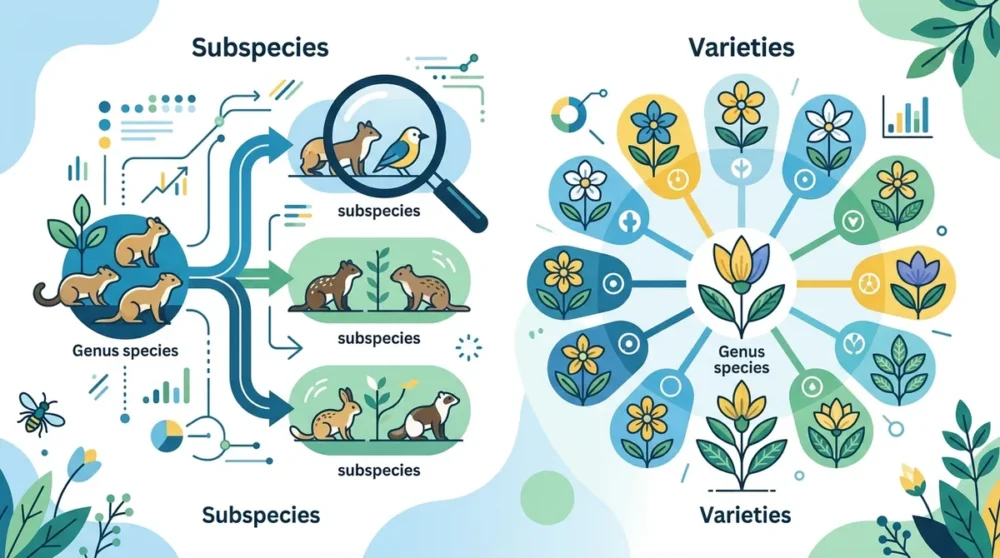
Many manuscripts, especially those in ecology, zoology, botany, and conservation biology, refer to subspecies or botanical varieties. Knowing how to write a scientific name at this level of precision is important for taxonomic accuracy.
The key rules for subspecies formatting are:
- Subspecies names are written as a third italicized term following the species epithet
- All three parts of the name are italicized and lowercase except the genus initial
- No additional designator (such as “subsp.” or “var.”) is needed for animal subspecies
- For plants, the abbreviation “var.” or “subsp.” appears in roman text between the species epithet and the varietal name
- Always confirm subspecies conventions with the relevant nomenclature code for your organism group
For example, the Asiatic lion is written as Panthera leo persica. In botany, a variety might be written as Rosa canina var. inermis, where “var.” is roman and the variety name is italicized. Errors in subspecies formatting are especially common in manuscripts submitted from fields where researchers may not be fully familiar with nomenclature conventions.
Manuscripts dealing with genetics research require particular precision in this area. For guidance tailored to that field, review this resource on genetics manuscript editing and publication.
Rule 5: Handle Unidentified Species and Abbreviations Properly
Field studies, environmental surveys, and microbiome research often involve organisms that have not been identified to the species level. Manuscripts in these areas must use specific abbreviations to indicate this accurately. Using these abbreviations correctly is part of knowing how to write a scientific name at a professional level.
The standard abbreviations are:
- sp. — used when referring to a single unidentified species within a known genus, e.g., Aspergillus sp.
- spp. — used when referring to multiple unidentified species within a genus, e.g., Aspergillus spp.
- cf. — used when the identification is uncertain, e.g., Trichoderma cf. viride
- aff. — used when the organism is related to but distinct from a named species
The abbreviations “sp.” and “spp.” are written in roman (non-italic) text even though they follow an italicized genus name. The full word “species” should never be abbreviated informally (e.g., do not write “spec.” unless your journal requires it). These small details matter to reviewers and signal your familiarity with taxonomic standards.
Medical professionals writing about microbial pathogens often need these abbreviations when discussing clinical isolates. For guidance on medical manuscript preparation, explore resources on how to write a medical paper for high-impact journals.
Rule 6: Follow Journal-Specific Guidelines and Maintain Consistency
The rules described above are internationally consistent, but individual journals may have their own requirements for how to write a scientific name in specific sections of a manuscript. Author guidelines are the final authority, and failing to follow them is one of the most cited reasons why scientific manuscripts are rejected by journals.
Key journal-specific considerations include:
- Whether the abstract requires the full scientific name even if already introduced in the main text
- Whether tables and figure legends require full scientific names regardless of prior mention
- Whether the journal uses a specific nomenclature database (such as PubMed MeSH terms for medical journals)
- Whether common names must always accompany the scientific name on every mention
- Whether three-letter genus abbreviations are permitted (most journals do not allow these)
Consistency within your manuscript is just as important as following journal rules. If you introduce a species as Homo sapiens in the introduction and later refer to it inconsistently, reviewers will notice. Inconsistencies create doubt about the rigor of your work.
Maintaining consistency is especially challenging in longer manuscripts with multiple authors, such as multi-site clinical studies or collaborative research papers. A systematic review of all scientific names before submission is strongly recommended. Resources like those available from the NCBI Taxonomy database can help you verify correct species names and current taxonomic status.
Why Accurate Scientific Name Formatting Matters for Publication
Scientific name formatting is not merely cosmetic. Errors in this area can cause real problems during the peer review process. Reviewers who see inconsistent italics, missing abbreviation rules, or incorrect subspecies notation may question the overall precision of the research.
Here is what poor scientific name formatting can cost you:
- Requests for major revisions that delay publication timelines
- Reduced credibility with specialist reviewers who recognize nomenclature errors
- Rejection based on poor manuscript preparation, even when the research itself is sound
- Confusion for readers trying to reproduce or cite your work
For non-native English authors, these formatting challenges compound the linguistic difficulties already present in the writing process. A professional editing team that understands both scientific conventions and language precision can make a significant difference. San Francisco Edit provides expert manuscript editing by native English-speaking PhD scientists who review scientific name formatting as part of every editing engagement. With a 98% acceptance rate for edited papers, the team has the track record to support your publication goals. You can learn more at the about San Francisco Edit page.
For researchers working across multiple disciplines or submitting to journals with strict formatting requirements, professional scientific editing support is a practical investment. The Nature author resources for manuscript preparation also provide useful supplementary guidance on formatting standards in high-impact journals.
Quick Reference: Scientific Name Formatting Rules
The table below summarizes the core formatting rules covered in this article. Use it as a checklist before submitting your manuscript.
| Rule | Requirement | Common Error to Avoid |
|---|---|---|
| Binomial format | Genus capitalized + species lowercase, both italicized | Capitalizing the species epithet |
| First mention | Full name + common name in parentheses | Skipping the common name on first use |
| Abbreviation | Genus to initial letter after first mention | Abbreviating in abstract or figure captions |
| Italics scope | Genus and species (not family and above) | Italicizing family-level names for animals |
| Subspecies | Three-part name, all italicized | Missing italics on the third term |
| Unidentified species | Use sp. or spp. in roman text | Italicizing the abbreviation |
| Journal guidelines | Follow target journal author instructions | Assuming rules are identical across journals |
Conclusion
Learning how to write a scientific name correctly is one of the most practical skills an author can bring to manuscript preparation. The rules are clear, internationally standardized, and consistently enforced by peer-reviewed journals. Applying them precisely demonstrates scientific rigor and helps your manuscript progress through editorial review without unnecessary delays.
Whether you are a PhD candidate submitting your first paper, a medical professional translating clinical research into publishable form, or a faculty member managing multiple research outputs, these six rules provide a reliable framework. Pair them with careful proofreading, thorough journal guideline review, and professional editing support for the best results.
San Francisco Edit’s team of PhD-level scientists and editors reviews every aspect of manuscript formatting — including scientific name conventions — to give your paper the best possible chance of acceptance. With over 325 years of combined editorial experience and a 98% publication success rate, the team is equipped to support authors at every career stage, working globally across all scientific and medical disciplines. Read what authors around the world say on the San Francisco Edit testimonials page.
Ready to strengthen your manuscript before submission? Submit your manuscript to San Francisco Edit and receive expert editing that covers formatting, language, clarity, and journal compliance from start to finish.
FAQs
Q: What are the basic rules for italicizing scientific names in a research paper?
A: The genus name and species epithet are always italicized when writing a scientific name in a manuscript. Taxonomic categories above the genus level, such as family, order, and class, are written in roman (non-italic) text for most organisms, though bacteria, fungi, and viruses may follow slightly different conventions.
Q: How do you abbreviate a genus name after the first mention in a manuscript?
A: After the first full mention of a scientific name, the genus is abbreviated to its initial letter followed by a period, while the species epithet remains in full and both parts stay italicized. For example, after introducing Mycobacterium tuberculosis, subsequent references use M. tuberculosis. Always write the full genus name again if two species in the same manuscript share the same initial letter.
Q: Do abstracts and figure captions require the full scientific name?
A: Yes, most journals require the full scientific name to be written out in the abstract, even if it has already been introduced and abbreviated in the main text. Many journals also require full scientific names in tables and figure captions. Always consult the target journal’s author guidelines to confirm these requirements before submitting.
Q: How do you format subspecies names in a scientific manuscript?
A: Subspecies names are written as a three-part italicized name following the species epithet, with all parts lowercase except the genus initial. For animal subspecies, no additional designator is required. For plants, the abbreviation ‘var.’ or ‘subsp.’ appears in roman text between the species epithet and the varietal name, while the variety name itself is italicized.
Q: Why does incorrect scientific name formatting lead to manuscript rejection?
A: Journals enforce strict formatting standards because inconsistent or incorrect scientific names undermine the taxonomic precision required in peer-reviewed research. Errors in italics, capitalization, or abbreviations signal a lack of attention to detail, which can cause reviewers to question the overall rigor of the work and request revisions or reject the manuscript outright.