Key Takeaways
-
Most peer-reviewed journals require abstracts between 150-300 words, with 250 words being the most common limit; exceeding this can result in automatic rejection or required revision.
-
Structured abstracts (with labeled sections like Background, Methods, Results, Conclusions) typically range 250-300 words in biomedical fields, while unstructured abstracts range 150-250 words across other disciplines.
-
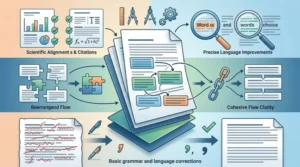
Remove unnecessary background information, cut filler phrases like 'very' and 'clearly,' and use precise language to trim your abstract effectively without losing essential content or impact.
-
Always verify the exact word count requirement and format (structured vs. unstructured) in your target journal's author guidelines before submission, as policies vary significantly across publications.
-
The abstract is read first by peer reviewers and determines whether they evaluate your full paper; a well-crafted, properly-sized abstract improves discoverability in databases like PubMed and citation rates.
-
Thesis and dissertation abstracts generally require 200-300 words per most universities, though some impose strict limits; check your institution's specific graduate school guidelines for precise requirements.
You have spent months on your research. Now you need to write an abstract. But how long should it be? Getting the word count right matters more than most authors realize. A too-long abstract may be rejected outright by a journal’s submission system. A too-short one may fail to communicate your findings clearly. Understanding how many words is an abstract — and why those limits exist — is essential for any researcher preparing a manuscript for publication.
This guide breaks down abstract word counts by document type, journal category, and formatting structure. Whether you are submitting a journal article, a thesis, or a conference paper, you will find clear, practical guidance here. We also cover how to trim your abstract without losing impact — a skill that can significantly improve your chances of acceptance.

The Standard Word Count for a Journal Abstract
For most peer-reviewed journals, the standard abstract word count falls between 150 and 300 words. The most commonly cited range is 150 to 250 words. This applies across fields including medicine, life sciences, engineering, and social sciences.
Many journals set a firm upper limit of 250 words. Some allow up to 300 words for longer or more complex studies. A small number of journals permit extended abstracts, but these are exceptions, not the rule.
Before submitting any manuscript, always check the specific journal’s author guidelines. Word limits vary, and exceeding them can result in automatic rejection or required revision. Resources like PubMed index thousands of journals, and their submission portals often enforce strict word count rules automatically.

Abstract Word Counts by Document Type
Different document types carry different expectations. The table below summarizes the most common word count ranges you are likely to encounter:
| Document Type | Typical Word Count Range | Notes |
|---|---|---|
| Journal Article (Structured) | 250–300 words | Includes Background, Methods, Results, Conclusions |
| Journal Article (Unstructured) | 150–250 words | Single paragraph, no subheadings |
| Thesis / Dissertation | 200–300 words | University guidelines vary; check your institution |
| Conference Abstract | 150–300 words | Some conferences allow up to 500 words |
| Review Article | 200–300 words | May allow more detail due to broader scope |
| Editorial / Viewpoint | 100–450 words | JMIR Publications allows up to 450 words for unstructured |
These ranges are guidelines. Always verify against the actual submission requirements of the target publication or institution.

Structured vs. Unstructured Abstracts
Abstract format affects word count expectations. There are two main types of abstracts used in scientific and medical manuscripts.
Structured Abstracts
Structured abstracts use labeled sections. These sections typically include Background, Objectives, Methods, Results, and Conclusions. This format is common in clinical and biomedical journals. The clear organization helps readers and peer reviewers quickly locate key information.
Structured abstracts tend to be slightly longer. Most journals cap them at 250 to 300 words. Each section must be concise, which makes editing more challenging.
Unstructured Abstracts
Unstructured abstracts are written as a single continuous paragraph. They are more common in humanities, social sciences, and some basic science journals. The absence of labeled sections means the author must guide the reader through the content using sentence flow alone.
Unstructured abstracts generally range from 150 to 250 words. Some journals that publish editorials or opinion pieces, such as JMIR Publications, allow up to 450 words for this format.

Does the Abstract Count Toward the Manuscript Word Limit?
This is a common question among first-time submitters. In most cases, the abstract is counted separately from the main manuscript body. The abstract has its own dedicated word limit, and the main text word count begins after the abstract ends.
Front matter elements — such as the title, author affiliations, and keywords — are typically excluded from both counts. References are also usually excluded from the main word count. However, journal policies differ, so reviewing the author guidelines carefully is essential.
For detailed guidance on manuscript structure and submission standards, the knowledge center at San Francisco Edit offers practical resources tailored for academic and scientific authors.
How to Write an Abstract Within a Word Limit
Writing a concise, impactful abstract is a skill. Many authors struggle to reduce their abstract without losing essential content. Here is a step-by-step approach to writing within your target word count:
- Draft freely first. Write your abstract without worrying about length. Include all key points — background, objectives, methods, results, and conclusions.
- Count your words. Compare your draft against the journal’s stated limit. Identify how many words you need to cut.
- Remove unnecessary background. Readers do not need extensive context. One to two sentences of background is usually enough.
- Cut adverbs and filler phrases. Words like “very,” “clearly,” and “it is important to note that” add length without adding meaning.
- Use precise language. Replace vague phrases with specific terms. “The intervention significantly reduced symptoms” is stronger and shorter than “The intervention was found to have a significant effect on symptom reduction.”
- Review each sentence. Ask: does this sentence add new information? If not, cut or merge it.
- Check your final count. Recount after edits. Make sure you are within the required range.
Common Mistakes Authors Make With Abstract Length
Even experienced researchers make abstract-related errors that hurt their submission. Here are the most frequent problems:
- Exceeding the journal’s word limit without realizing it
- Including too much background information that crowds out results
- Omitting the conclusions or key findings entirely
- Using vague language that fails to communicate the study’s value
- Copying sentences directly from the manuscript body without adaptation
- Ignoring the structured format required by specific journals
These errors are avoidable. A professional editor with scientific expertise can identify these issues quickly and help you craft an abstract that meets journal standards while communicating your work effectively.
Why Abstract Word Count Matters for Publication Success
The abstract is the first thing peer reviewers and editors read. In many cases, it determines whether a reviewer agrees to evaluate the full paper. A well-crafted abstract can increase citation rates and improve discoverability in academic databases.
Research indexed on platforms like PubMed is often discovered through abstract searches. If your abstract is unclear, too long, or poorly structured, it may not surface in the right searches — or worse, it may create a negative first impression that affects the review outcome.
For non-native English-speaking authors, abstract quality is especially important. Language issues are more visible in a 250-word summary than in a full 6,000-word manuscript. Editors who specialize in scientific editing can help ensure your abstract reads fluently and professionally.
Thesis and Dissertation Abstract Length
Thesis and dissertation abstracts follow somewhat different rules than journal abstracts. Most universities require abstracts between 200 and 300 words. Some institutions impose strict limits — for example, exactly 300 words or a maximum of 350 words.
A thesis abstract must cover the following core elements:
- The research problem or question being addressed
- The methodology used in the study
- The key findings or results
- The significance or implications of the research
Unlike journal abstracts, thesis abstracts are often written for a slightly broader audience. They need to communicate the value of the work to examiners who may be outside your specific subfield. Clarity and accessibility are key.
Abstract Word Count Across Disciplines
Word count norms also vary by academic discipline. Here is a general overview:
- Biomedical and Clinical Sciences: Structured abstracts, 250–300 words. High-impact journals like those indexed in PubMed often enforce this strictly.
- Physical and Life Sciences: Unstructured abstracts, 150–250 words. Conciseness is highly valued.
- Social Sciences and Humanities: Unstructured abstracts, 100–250 words. More narrative in tone but still concise.
- Engineering and Technology: 150–250 words, often structured or semi-structured depending on the journal.
- Conference Proceedings: Varies widely — from 150 words for short abstracts to 500 words for extended abstracts submitted for review.
How Professional Editing Improves Your Abstract
An abstract that exceeds the word limit or lacks clarity can undermine months of research work. Professional manuscript editors do more than correct grammar. They evaluate structure, remove redundancy, sharpen language, and ensure your core message is communicated within the allowed word count.
San Francisco Edit offers expert manuscript editing by native English-speaking PhD scientists. With a 98% publication acceptance rate across edited papers and more than 325 combined years of editing experience on staff, the team understands what peer reviewers and journal editors expect. Whether you need help with a full manuscript or just your abstract, professional editing is one of the most effective investments you can make for publication success.
You can explore language editing services for abstracts and full manuscripts, or visit the Pricing and Payment page to understand service costs. Editing is charged at US$33.00 per 250 words, and references are excluded from the word count.
Quick Reference: Abstract Word Count Guidelines
Use the checklist below before submitting your abstract:
- Check the target journal’s author guidelines for the exact abstract word limit
- Confirm whether a structured or unstructured format is required
- Ensure your abstract covers background, methods, results, and conclusions
- Count words using your word processor or a dedicated tool
- Remove filler phrases and redundant background information
- Have a native English speaker or professional editor review the final version
Conclusion
Understanding how many words is an abstract — and meeting that target precisely — is a critical part of manuscript preparation. For most journals, the answer is 150 to 300 words. Structured abstracts in biomedical fields often sit at the upper end of that range, while unstructured abstracts in other disciplines tend to be shorter. Thesis abstracts generally follow university-specific limits between 200 and 300 words.
Every word in your abstract must earn its place. A well-written, correctly sized abstract increases your visibility in academic databases like PubMed, improves peer reviewer impressions, and ultimately supports higher citation rates. If you are unsure whether your abstract meets professional standards, expert editing can make all the difference.
Ready to give your manuscript the best possible chance of acceptance? Submit your manuscript to San Francisco Edit today and work with experienced PhD scientists who understand what leading journals require.
FAQs
Q: What is the standard word count for a journal abstract?
A: Most peer-reviewed journals require abstracts between 150 and 300 words. The most commonly cited limit is 250 words, though structured abstracts in biomedical fields may be permitted up to 300 words. Always check the specific author guidelines for your target journal before submitting.
Q: Do abstracts count toward the main manuscript word limit?
A: In most cases, the abstract is counted separately from the main manuscript body. Journals typically assign the abstract its own dedicated word limit, distinct from the total word count for the full text. However, policies vary by journal, so reviewing the submission guidelines carefully is essential.
Q: How many words should a structured abstract be?
A: Structured abstracts — which include labeled sections such as Background, Methods, Results, and Conclusions — are typically capped at 250 to 300 words. Each section should be written concisely to cover all required elements within the allowed limit.
Q: How long is a thesis or dissertation abstract?
A: Thesis and dissertation abstracts are generally 200 to 300 words in length. Some universities impose strict limits, such as exactly 300 words or a maximum of 350 words. Authors should consult their institution’s graduate school guidelines for the precise requirement.
Q: How can I shorten my abstract to meet a word limit without losing key information?
A: Start by removing excessive background context and filler phrases such as ‘it is important to note that.’ Replace vague language with precise terms, combine overlapping sentences, and ensure every sentence contributes new information. A professional manuscript editor can help identify redundancies and improve conciseness while preserving the scientific integrity of your abstract.