Key Takeaways
-
Use the 'inverted funnel' structure: start with specific findings, then broaden to wider implications, comparing with literature and discussing practical/theoretical significance before acknowledging limitations.
-
Interpret your results rather than repeating them—explain what findings mean, why they matter, and how they relate to existing research; avoid verbatim copying from your results section.
-
Apply the Seven C's Framework as a self-review checklist: Context, Concise, Compare, Clarify, Connect, Critique, and Conclude to systematically improve your discussion before submission.
-
Acknowledge study limitations honestly and directly, explaining how they affect result interpretation; this demonstrates intellectual honesty and builds reviewer confidence rather than weakening your manuscript.
-
Be specific about implications by describing concrete theoretical and practical significance; avoid generic statements and explain what your research means for clinical practice, policy, or industry.
-
Plan for multiple revision drafts, seek pre-peer review feedback from colleagues, and have native speakers review your work—clear writing significantly increases acceptance rates at competitive journals.
The discussion section is one of the most important parts of any scientific manuscript. It is where you explain what your results mean. Yet, many authors struggle to write it well. Poorly written discussion sections are a leading reason manuscripts get rejected by peer-reviewed journals.
Whether you are submitting to a medical journal, a life sciences publication, or a social science review, your discussion must be clear, structured, and compelling. It needs to connect your findings to the broader field. This guide walks you through exactly how to write a discussion section that strengthens your manuscript and improves your chances of acceptance.
For additional writing guidance, visit the knowledge center at San Francisco Edit, where you will find practical resources for researchers at every stage of publication.
What Is the Discussion Section?
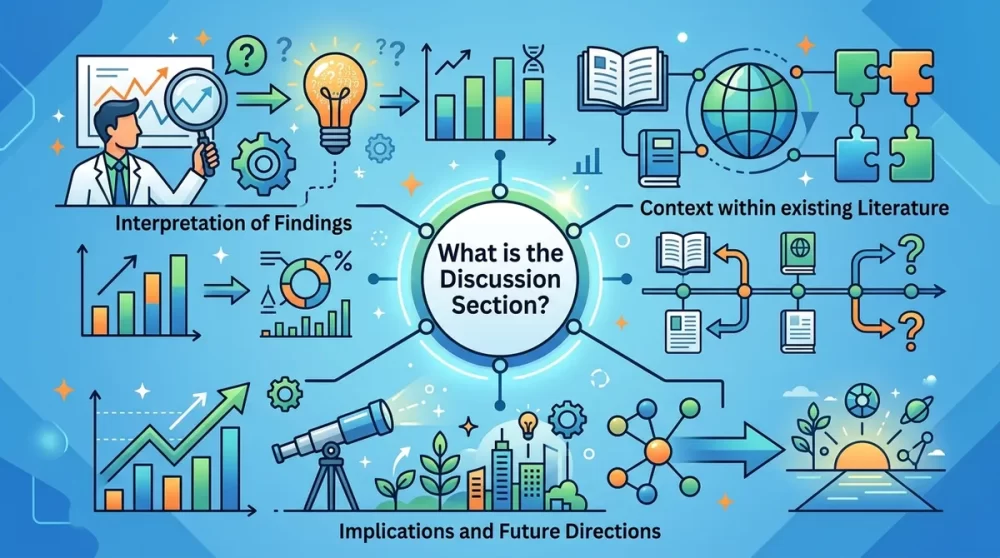
The discussion section interprets your results. It does not repeat them. Instead, it explains what your findings mean, why they matter, and how they relate to existing research. A strong discussion also acknowledges the limitations of your study and suggests directions for future research.
Think of it this way. Your results section tells readers what happened. Your discussion tells them why it matters.
Many researchers searching for guidance on how to write a discussion section make the mistake of simply restating their data. This approach weakens the manuscript significantly. Journals want interpretation, not repetition.

The Core Structure of a Discussion Section
A well-organized discussion follows a clear flow. Experienced editors and publication specialists often refer to this as the “inverted funnel” structure. You begin with your specific findings and gradually broaden to wider implications.
Here is the recommended order for structuring your discussion:
- Open with a summary of key findings — State your main results concisely. Do not copy text from your results section word for word.
- Interpret the findings — Explain what the results mean. Address unexpected outcomes honestly.
- Compare with existing literature — Relate your findings to prior studies published in sources such as PubMed and other peer-reviewed databases.
- Discuss implications — Explain the practical or theoretical significance of your work.
- Acknowledge limitations — Be transparent about the boundaries of your study.
- Suggest future research — Identify what questions remain unanswered.
- Conclude strongly — Summarize the contribution of your study to the field.
Following this structure consistently makes your manuscript easier to read and easier to evaluate during peer review.
The Seven C’s Framework for Discussion Writing
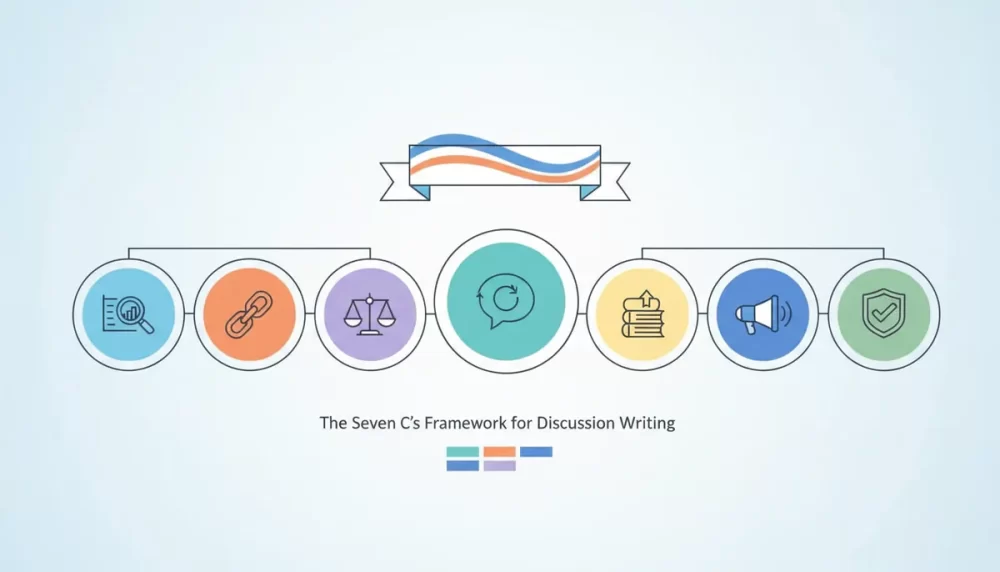
One highly effective approach used by expert manuscript editors is the seven C’s framework. This method provides a simple checklist for writing and reviewing your discussion section.
| C Element | What It Means | Purpose in Discussion |
|---|---|---|
| Context | Establish relevance of the study | Grounds the reader in the problem |
| Concise | Summarize key findings briefly | Avoids repeating the results section |
| Compare | Relate results to prior literature | Shows awareness of the field |
| Clarify | Explain unexpected or complex results | Builds credibility and transparency |
| Connect | Link findings to broader implications | Demonstrates significance |
| Critique | Address strengths and limitations | Shows intellectual honesty |
| Conclude | Offer recommendations and future directions | Closes the discussion purposefully |
Using this framework as a self-review checklist after drafting your discussion can dramatically improve the quality of your manuscript before submission.

Step-by-Step: How to Write Each Part
Step 1 — Start with a Strong Opening
Begin your discussion by stating your most important finding. Keep this opening paragraph focused and direct. Avoid vague language like “this study attempted to show.” Instead, write with confidence: “This study demonstrates that…”
Your first paragraph sets the tone for the entire discussion. Reviewers form impressions quickly, so make your opening count.
Step 2 — Interpret Your Results
After your opening summary, move into interpretation. Answer the question your study was designed to address. If your results were unexpected, explain possible reasons. This is not the place for new data. It is the place for thoughtful analysis.
Use precise language. Avoid hedging excessively, but also avoid overstating your conclusions. Phrases like “these findings suggest” or “this evidence supports” strike the right balance.
Step 3 — Compare Your Findings with the Literature
A strong discussion always situates findings within the existing body of research. Ask yourself:
- Do your results confirm previous studies?
- Do they contradict existing findings?
- Do they fill a gap in the literature?
- Do they extend a previous line of inquiry?
Cite relevant studies carefully. Use authoritative databases such as Google Scholar to find current peer-reviewed literature in your field. Proper citation demonstrates your command of the subject and builds reviewer confidence.
Step 4 — Discuss Implications
This is where many authors miss an opportunity. Implications show why your research matters beyond your own dataset. Consider both:
- Theoretical implications — What does this mean for current models or frameworks?
- Practical implications — What does this mean for clinical practice, policy, or industry?
Be specific. Generic statements like “this research has important implications” add little value. Instead, describe the implications in concrete terms.
Step 5 — Acknowledge Limitations Honestly
Every study has limitations. Ignoring them does not make your manuscript stronger. It makes reviewers suspicious. Address limitations directly and objectively. Explain how they affect the interpretation of your results.
Common limitations include sample size constraints, measurement tools, study design, and time frame. Acknowledge them, but also explain the steps you took to minimize their impact.
Step 6 — Suggest Future Research
Identify the next logical questions your study raises. This shows reviewers that your work is part of an ongoing scientific conversation. Keep suggestions realistic and specific rather than vague.
Step 7 — Write a Purposeful Conclusion
Close your discussion with a brief, confident conclusion. Summarize the main takeaway of your research. Reinforce why this study matters. Avoid introducing entirely new ideas at this stage.
Common Mistakes to Avoid
Understanding how to write a discussion section also means knowing what not to do. Even experienced researchers make these errors:
- Repeating the results verbatim — The discussion is for interpretation, not repetition.
- Introducing new data — All data must appear in the results section.
- Overinterpreting findings — Draw conclusions your data actually supports.
- Ignoring contradictory evidence — Acknowledge studies that conflict with your findings.
- Undervaluing your own work — Excessive hedging undermines reader confidence.
- Ignoring journal-specific guidelines — Always check reporting standards like CONSORT or STROBE for your discipline.
Avoiding these pitfalls requires careful revision. Most authors need multiple drafts before a discussion section reaches publication quality.
Reporting Standards and Journal Guidelines
Different journals and disciplines follow different reporting standards. For clinical research, CONSORT and STROBE provide structured guidance on what to include in each manuscript section. For systematic reviews, PRISMA standards apply. Familiarize yourself with the standards relevant to your field before writing.
You can also consult the EQUATOR Network for a comprehensive library of reporting guidelines across health research disciplines. Following these standards is not optional — reviewers check for compliance, and editors flag deviations.
For authors who need expert support navigating these requirements, scientific editing services from San Francisco Edit are available globally. Our team of native English-speaking PhD scientists understands journal standards across disciplines and can help your manuscript meet the mark.
Tips for Non-Native English Authors
For researchers whose first language is not English, writing a discussion section presents additional challenges. Clarity, precision, and tone all affect how reviewers evaluate your manuscript. Even technically excellent research can be rejected because of language barriers.
Here are practical tips for non-native English authors:
- Write in simple, direct sentences. Avoid long, complex structures that risk grammatical errors.
- Use consistent terminology throughout. Do not switch between synonyms for the same concept.
- Have a native English speaker or professional editor review your draft before submission.
- Read published articles in your target journal to understand the expected writing style.
Professional language editing support can make a significant difference for non-native authors. Research consistently shows that clear English writing increases acceptance rates — especially in competitive, high-impact journals.
Revision and Pre-Peer Review
Writing a strong discussion section is rarely a one-draft process. Plan to revise multiple times. After completing your draft, review it against the seven C’s checklist above. Then set it aside for a day and read it again with fresh eyes.
Seek feedback from colleagues before submission. Pre-peer review from trusted peers in your field can identify gaps in logic, unclear language, or missing references before reviewers see them. This step is especially valuable for early-career scientists preparing their first manuscripts.
When you are ready to take your manuscript to the next level, consider submitting it through our professional editing workflow. You can send your manuscript for expert review and receive detailed, constructive feedback from experienced editors who have published their own research in top-tier journals.
Conclusion
Knowing how to write a discussion section is a skill that develops with practice and guidance. A well-structured discussion interprets your findings clearly, positions them within the literature, acknowledges limitations honestly, and makes a compelling case for the significance of your research.
Follow the seven C’s framework. Use the inverted funnel structure. Avoid common pitfalls. And always revise carefully before submission.
San Francisco Edit has helped thousands of researchers across the globe improve their manuscripts and achieve publication in peer-reviewed journals. With a 98% publication acceptance rate among edited manuscripts and a team with over 325 combined years of editing experience, we are ready to help you succeed. Visit our testimonials page to see what researchers around the world say about our service, or explore our pricing and payment options to get started.
Ready to strengthen your manuscript’s discussion section? Submit your manuscript today and let our expert team help you publish with confidence.
FAQs
Q: What is the difference between the results section and the discussion section?
A: The results section presents your data objectively without interpretation. The discussion section explains what those results mean, how they relate to existing research, and why they matter. Confusing the two is one of the most common reasons manuscripts receive reviewer criticism.
Q: How long should a discussion section be in a scientific manuscript?
A: There is no universal word count, but the discussion section should be proportional to the complexity of your findings. Most journal articles contain a discussion of 600 to 1,200 words. Always check your target journal’s author guidelines for specific length requirements.
Q: What are the most common mistakes in writing a discussion section?
A: The most common mistakes include repeating results verbatim, introducing new data, overinterpreting findings, ignoring contradictory literature, and failing to acknowledge study limitations. Addressing these issues during revision significantly strengthens a manuscript before journal submission.
Q: Should I mention study limitations in the discussion section?
A: Yes, absolutely. Acknowledging limitations demonstrates intellectual honesty and strengthens your credibility with reviewers. Describe each limitation clearly, explain how it affects interpretation of your results, and note any steps taken to minimize its impact.
Q: How can professional editing improve my discussion section?
A: Professional editors trained in scientific writing can identify structural weaknesses, unclear arguments, unsupported claims, and language issues that authors often overlook. Expert editing ensures your discussion meets journal standards, communicates your findings precisely, and improves your overall chances of acceptance.