Key Takeaways
-
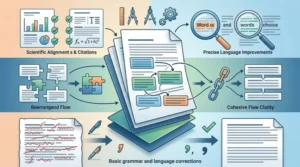
Poor presentation triggers desk rejection even with sound science; focus on clear structure, transparency, and precise language to improve publication chances significantly.
-
Your abstract is often the only section editors read before deciding on peer review; make every sentence count by summarizing background, methods, results, and conclusions compactly.
-
Methods must be detailed enough for replication and results sections should report findings objectively without interpretation; these sections face the most scrutiny during editorial review.
-
Use consistent terminology throughout your manuscript and avoid passive voice overuse; inconsistent language weakens credibility and confuses reviewers about your scientific meaning.
-
Professional scientific editing addresses structure, logic, and reporting quality—not just grammar—and can significantly reduce desk rejections and revision requests before journal submission.
-
Verify all journal formatting requirements, reference styles, and reporting standards like CONSORT or PRISMA before submitting; non-compliance signals carelessness and risks outright rejection.
You have done the research. You have the data. But is your manuscript telling that story clearly? For many researchers, the gap between strong science and a published paper comes down to one thing: scientist presentation. How you present your findings in a manuscript matters just as much as the findings themselves. Journals with rejection rates of 75% or greater are not just filtering out weak science. They are also filtering out papers that are unclear, poorly structured, or hard to follow. Whether you are submitting your first paper or your fiftieth, improving how you present your research can make the difference between acceptance and rejection. This article covers 10 practical ways to sharpen your manuscript’s scientific presentation and give your work the best possible chance of publication.

What Is Scientist Presentation in a Manuscript?
Scientist presentation refers to how a researcher communicates their findings in written form. It covers structure, clarity, logic, and reporting quality. A well-presented manuscript makes it easy for editors and reviewers to understand your methods, results, and conclusions. Poor presentation, on the other hand, can trigger desk rejection even when the underlying research is sound. You can learn more about the building blocks of a well-structured paper by reviewing 10 Key Sections Every Research Paper Must Have in 2026.
10 Ways to Strengthen Your Manuscript’s Scientific Presentation
1. Start With a Clear and Focused Title
Your title is the first thing an editor sees. It should be specific, accurate, and informative. A vague title signals a vague paper. Use precise terms that reflect your study design, main variable, and key outcome. Avoid overly long or jargon-heavy titles. For guidance on this, see How to Write a Good Research Paper Title.
2. Write an Abstract That Captures the Full Study
A strong abstract summarizes your background, methods, results, and conclusions in a compact format. It is often the only section a busy editor reads before deciding whether to send your paper for review. Every sentence must earn its place. Visit How to Write an Abstract That Gets Your Paper Published for a step-by-step approach.
3. Build a Logical Introduction
Your introduction should move from broad context to a narrow research gap, then clearly state your objective. Reviewers need to understand why your study matters before they evaluate how you conducted it. Weak introductions create doubt early. A focused, well-argued introduction builds confidence in your work from the start. See How To Write A Great Introduction To A Scientific Paper for practical tips.
4. Report Your Methods Completely and Transparently
Reproducibility is a cornerstone of scientific integrity. Your methods section must include enough detail for another researcher to replicate your study. Incomplete methods raise red flags during peer review. A scientific editor can help identify gaps that you may have overlooked after working closely with your own data. Explore 11 Expert Tips for Writing a Strong Methods Section to strengthen this section.
5. Present Results Without Interpretation
The results section should report what you found, not what it means. Many authors blur the line between results and discussion, which confuses reviewers. Use clear, direct language. Support every claim with data. Figures and tables should be clearly labeled and referred to in the text. Learn more at How To Write A Results Section For A Scientific Paper.
6. Write a Discussion That Connects Findings to the Field
Your discussion should interpret your results in the context of existing literature. It should explain what your findings mean, acknowledge limitations, and suggest future directions. A weak discussion fails to position your work meaningfully. A strong one shows reviewers that you understand your field and your study’s place in it. For help, visit 7 Key Steps to Write a Strong Discussion Section.
7. Use Clear and Consistent Scientific Language
Inconsistent terminology confuses readers and weakens your paper’s credibility. Use the same term for the same concept throughout your manuscript. Avoid synonyms that may carry different meanings in your field. For non-native English authors especially, precise language is critical. Language editing services can resolve these issues efficiently and reliably.
8. Optimize Figures, Tables, and Legends
Visual elements are a key part of scientist presentation. Figures and tables must be publication-ready, properly formatted, and supported by clear legends. A legend should allow a reader to understand the figure without reading the full text. Poor visual presentation can lead to reviewer frustration, even when the data is strong. Read more about this at Enhanced Scientific Figure Legends: How Clarity in Figures Can Boost Your Paper’s Impact.
9. Align Your Manuscript With Journal Requirements
Every journal has specific formatting and reporting standards. Ignoring them is a common and avoidable reason for rejection. Check word limits, reference styles, section order, and any required reporting checklists such as CONSORT or PRISMA. Submitting a non-compliant manuscript signals a lack of care. Review Manuscript Formatting: A Complete Guide for Authors to avoid these pitfalls.
10. Get Expert Scientific Editing Before You Submit
Professional scientific editing goes far beyond grammar and proofreading. It addresses structure, logic, reporting quality, and scientific clarity. An experienced editor acts as an author advocate, reviewing your work through the eyes of a peer reviewer. This step can catch weaknesses early and significantly reduce the risk of desk rejection or revision requests. Researchers who use expert editing services often report faster acceptance and fewer revision rounds.

How Scientific Editing Improves Manuscript Presentation
Scientific editing is a specialized process. It is different from general copyediting or proofreading. A scientific editor evaluates whether your manuscript communicates its findings accurately and completely. They check for logical flow, appropriate terminology, statistical reporting, and compliance with journal standards. PubMed indexes thousands of peer-reviewed journals, all of which expect manuscripts to meet high presentation standards before acceptance.
| Editing Type | What It Covers | Best For |
|---|---|---|
| Copyediting | Grammar, punctuation, spelling | General documents |
| Scientific Editing | Structure, logic, clarity, reporting quality | Journal manuscripts |
| Language Editing | Linguistic precision, tone, readability | Non-native English authors |
| Pre-submission Editing | Full manuscript review before journal submission | All research authors |
Each type of editing serves a different purpose. For manuscripts headed to peer-reviewed journals, scientific editing provides the most complete level of preparation and is the most impactful investment an author can make.
Common Scientist Presentation Mistakes to Avoid
Even experienced researchers make presentation errors that affect their publication outcomes. Being aware of these pitfalls helps you self-edit more effectively before seeking professional support.
- Burying the main finding: Your key result should be prominent, not hidden in the middle of a paragraph.
- Overusing passive voice: While passive voice is acceptable in scientific writing, overuse can make your manuscript feel distant and unclear. See Active Vs Passive Voice In Scientific Writing for guidance.
- Missing limitations: Failing to acknowledge study limitations suggests a lack of scientific rigor. Learn how to address this at How To Write About The Limitations Of A Scientific Study.
- Inconsistent data reporting: Numbers in the text should match figures and tables exactly.
- Unclear central message: Every manuscript needs a single clear takeaway that guides the reader. See Determining A Central Message For A Scientific Article.
- Poor reference formatting: Incorrect citations can create the impression that the manuscript was not carefully prepared.
Who Benefits Most From Improved Scientist Presentation?
Strong manuscript presentation benefits every researcher. However, some groups find it especially valuable. Early-career scientists preparing their first manuscripts benefit from structured guidance on what editors expect. Non-native English speakers gain from precise language editing that preserves their scientific meaning while improving readability. Medical professionals conducting clinical research often need support translating complex findings into clear, journal-ready prose. To explore tailored support, visit Scientific Editing For Non-Native English Speakers.
University faculty managing multiple projects also benefit from efficient editing workflows. Consistent manuscript quality across a research team can improve overall publication rates and research visibility. The PubMed Central open access archive demonstrates the volume and diversity of peer-reviewed literature that authors are competing within — strong presentation helps your work stand out.
Why San Francisco Edit Is the Right Choice
San Francisco Edit is a global specialist editing service staffed by native English-speaking PhD scientists. With a 98% publication success rate and more than 325 years of combined staff experience, the team understands what journals and peer reviewers expect. Every manuscript is edited by a human expert — no AI — with detailed comments and tracked changes so you understand every improvement made. San Francisco Edit covers scientific, medical, and general manuscripts across a wide range of disciplines, with standard turnaround times of 6–8 days and rush options available. Read what authors around the world say at the San Francisco Edit testimonials page.
A Quick Checklist for Scientist Presentation Before Submission
Use this checklist to review your manuscript before submitting it to a journal or sending it for professional editing.
- Title is specific, accurate, and free of jargon.
- Abstract covers background, methods, results, and conclusions.
- Introduction establishes context and a clear research gap.
- Methods are complete enough for replication.
- Results are reported objectively with supporting data.
- Discussion connects findings to existing literature.
- Limitations are clearly acknowledged.
- Figures and tables are labeled and match in-text references.
- Terminology is consistent throughout.
- Manuscript meets all target journal formatting requirements.
Conclusion
Strong scientist presentation is not a cosmetic enhancement. It is a fundamental part of the publication process. Clear structure, transparent reporting, and precise language are what allow journals and reviewers to evaluate your science fairly. A manuscript that is difficult to read or poorly organized will not receive the attention it deserves, regardless of how significant the research may be. Take the time to review each section of your paper against the standards your target journal expects. And when you are ready for expert support, submit your manuscript to San Francisco Edit for professional scientific editing that gives your research the presentation it deserves.
FAQs
Q: What does scientist presentation mean in manuscript editing?
A: Scientist presentation refers to how a researcher structures, writes, and visually communicates their findings in a manuscript. It covers clarity, logical flow, reporting quality, and compliance with journal standards. Strong presentation ensures that editors and peer reviewers can evaluate your research accurately and fairly.
Q: How is scientific editing different from regular copyediting?
A: Copyediting focuses on grammar, punctuation, and spelling. Scientific editing goes further by reviewing manuscript structure, scientific logic, reporting completeness, terminology accuracy, and journal compliance. For manuscripts intended for peer-reviewed publication, scientific editing provides a more thorough and relevant level of review.
Q: Can scientific editing help avoid desk rejection?
A: Yes. Many manuscripts are rejected before peer review due to poor presentation, unclear methods, or failure to meet journal formatting requirements. A professional scientific editor can identify and resolve these issues before submission, reducing the risk of early rejection and improving the manuscript’s overall quality.
Q: What parts of a manuscript are most important for scientific presentation?
A: Every section contributes to the overall presentation, but the title, abstract, methods, and results sections are most closely scrutinized during initial editorial review. These sections must be clear, complete, and accurately reported. Weaknesses in any of these areas can lead to rejection or significant revision requests.
Q: Does scientific editing include figures, tables, and abstracts?
A: Yes. A thorough scientific editing service reviews all components of a manuscript, including figures, tables, figure legends, and abstracts. Each element must be consistent with the main text and meet the journal’s visual and reporting standards. Complete manuscript preparation improves both readability and publication success.