
Key Takeaways
-
A well-written limitations section strengthens your manuscript by demonstrating critical thinking and scientific integrity, making it more likely to be accepted by peer-reviewed journals rather than rejected.
-
Be specific about each limitation by naming it clearly and explaining exactly how it affects interpretation of results—vague statements like 'the study had limitations' tell reviewers nothing and weaken your credibility.
-
Distinguish between minor and major constraints using calibrated language, as not all limitations carry equal weight; a small reduction in statistical power differs fundamentally from a design flaw.
-
Pair each limitation with a constructive suggestion for future research to transform your constraints into a research agenda that positions your work within broader scholarly conversations.
-
Maintain consistency across all sections by ensuring your conclusions don't overreach your data, your stated limitations match your Methods, and your abstract aligns with your Discussion section.
-
Use a neutral, professional tone that acknowledges constraints without defensiveness or apology, and get professional editing before submission to catch vague language and internal inconsistencies.
Writing study limitations can feel like admitting failure. Many researchers avoid this section or rush through it. That is a serious mistake. A well-written limitations section actually strengthens your manuscript. It shows reviewers that you think critically about your work. It demonstrates scientific integrity and builds reader trust.
Peer-reviewed journals expect authors to discuss the boundaries of their research honestly. Editors and reviewers notice when this section is missing or poorly written. In fact, a vague or defensive limitations section is one of the reasons manuscripts get rejected. Understanding how to write study limitations clearly and constructively is a skill every researcher needs.
This guide walks you through seven proven ways to present your study limitations effectively. Whether you are a graduate student submitting your first manuscript or an experienced researcher preparing a complex clinical study, these steps will help you write a limitations section that supports — not undermines — your work.

What Are Study Limitations in a Research Manuscript?
Study limitations are the constraints in your research that affect how results should be interpreted. They describe what your study could not do, could not control, or could not measure perfectly. Almost every study has limitations. The goal is not to hide them but to explain them clearly and honestly.
Common study limitations in research manuscripts include:
- Small or non-representative sample sizes
- Short study time frames that prevent long-term observation
- Sampling bias or recruitment challenges
- Self-reported data that may introduce measurement error
- Single-site study designs that limit generalizability
- Analytic choices that affect how results are interpreted
- Lack of a control group or randomization
For more guidance on how to approach this section, see this detailed resource on how to write about the limitations of a scientific study. Understanding the structure of your manuscript as a whole also helps — review this overview of how to structure a research paper correctly.
Where Do Study Limitations Belong in a Manuscript?
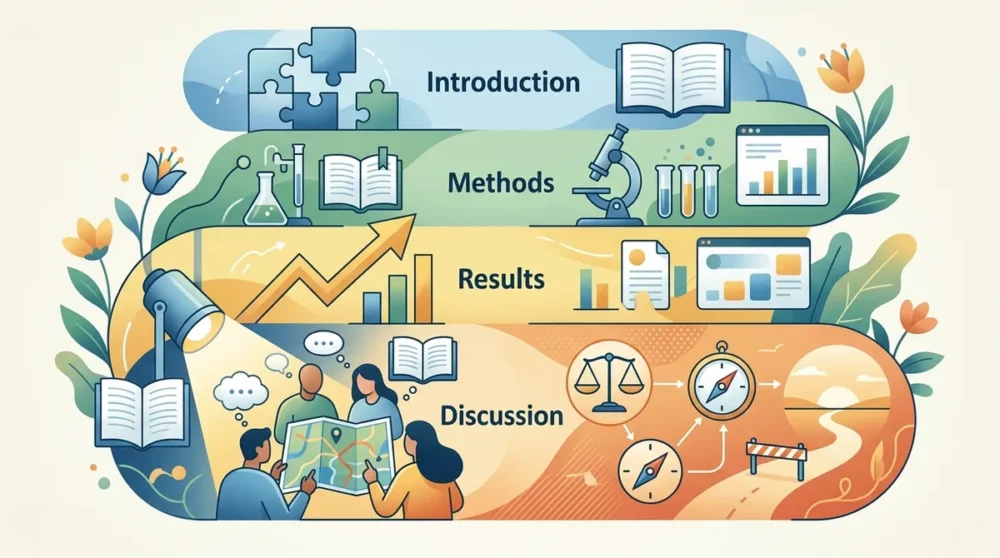
Most journals expect limitations to appear near the end of the Discussion section. Some journals ask for a dedicated subheading labeled “Limitations.” Others prefer the limitations to be woven into the final paragraphs of the Discussion. Always check the target journal’s author guidelines before you format this section.
The limitations section typically follows your interpretation of results and leads into future research directions. This placement is deliberate. You first explain what your findings mean, then acknowledge what constrained the study, then suggest how future work can address those gaps.
For a broader look at crafting the Discussion section, consult this guide on 7 key steps to write a strong Discussion section.

7 Ways to Write Study Limitations That Strengthen Your Manuscript
1. Be Specific, Not Vague
Vague statements weaken your limitations section. Phrases like “the study had some limitations” tell reviewers nothing. Instead, name each limitation clearly. Describe exactly what the constraint was and why it existed.
For example, instead of writing “the sample was small,” write: “The sample included 48 participants from a single outpatient clinic, which may limit the generalizability of findings to broader patient populations.”
Specific language shows scientific maturity. It also helps reviewers evaluate your work fairly rather than imagining worse problems than those that actually exist.
2. Explain How Each Limitation Affects Interpretation
Listing limitations without analysis is not enough. You must explain how each constraint affects what readers should conclude from your data. This is where many authors fall short.
For each limitation, ask yourself:
- What does this limitation prevent us from concluding?
- Does it affect internal validity, external validity, or both?
- Does it change the practical significance of the findings?
Answering these questions gives your limitations section depth. It also prevents reviewers from raising objections you have not already addressed. This approach aligns with PubMed-indexed journal standards that expect transparent reporting of research constraints.
3. Distinguish Between Minor and Major Constraints
Not all limitations carry the same weight. A small reduction in statistical power is very different from a fundamental flaw in study design. Your limitations section should reflect this difference clearly.
Use language that calibrates the severity of each issue:
- Minor constraints: “This may slightly reduce the precision of our estimates…”
- Moderate constraints: “This limits the degree to which findings can be generalized…”
- Significant constraints: “This prevents us from establishing causality and restricts conclusions to associations…”
Calibrated language gives reviewers an accurate picture of your study’s boundaries. It also shows that you understand the scientific weight of each issue. For further reading on how a well-written manuscript reflects these standards, review these 11 expert tips for writing a strong Discussion section.
4. Maintain Consistency With Your Results and Discussion
Your limitations section must align with the rest of your manuscript. If your Discussion claims strong, generalizable conclusions, but your limitations describe a highly restricted sample, reviewers will notice the contradiction. This inconsistency is a common cause of rejection.
Review your claims throughout the manuscript before finalizing the limitations section. Make sure that:
- Your conclusions do not overreach what your data support.
- Your stated limitations match the actual constraints described in your Methods section.
- Your abstract does not overclaim findings that the limitations section qualifies.
Consistency across all sections is a sign of a well-edited manuscript. The scientific editing team at San Francisco Edit regularly helps authors identify and resolve these internal inconsistencies before submission.
5. Avoid Being Defensive or Apologetic
The tone of your limitations section matters. Authors sometimes become defensive, over-justifying every constraint in a way that reads as dismissive. Others become overly apologetic, suggesting that the study’s value is undermined by its limitations.
Neither approach serves you well. Aim for a neutral, professional tone that:
- Acknowledges constraints without exaggeration
- Explains why the limitation existed (practical, ethical, logistical)
- Reaffirms the value of the study’s contributions despite those constraints
- Invites future research rather than suggesting the work is irreparably flawed
This balanced tone signals scientific confidence. Reviewers respond well to authors who can evaluate their own work objectively.
6. Link Each Limitation to a Future Research Direction
One of the most effective strategies for writing study limitations is to pair each constraint with a constructive suggestion for future research. This transforms your limitations from a list of weaknesses into a research agenda.
For example: “Because this study used a cross-sectional design, causal relationships could not be established. Longitudinal studies tracking participants over 12 months or more would provide stronger evidence for directionality.”
This approach serves multiple purposes:
- It demonstrates that you understand the scientific implications of your constraints.
- It positions your work as part of a broader scholarly conversation.
- It gives reviewers and readers a constructive reason to value your contribution.
For more on writing a study’s broader implications, see this resource on 6 types of research implications every author must know.
7. Get Professional Editing Before You Submit
Even experienced authors benefit from a second pair of expert eyes on their limitations section. A professional manuscript editor can identify vague language, internal inconsistencies, and missed limitations that authors often overlook because they are too close to their own work.
Non-native English speakers face an additional challenge: expressing nuanced scientific judgments in precise, formal English requires a level of linguistic command that goes beyond general fluency. Misworded limitations can mislead reviewers or suggest a lack of methodological awareness. Professional language editing ensures that your intended meaning is communicated with clarity and precision.
San Francisco Edit specializes in helping researchers from all backgrounds prepare manuscripts for peer-reviewed publication. With a 98% acceptance rate for edited papers and a team of native English-speaking PhD scientists, the service gives authors the expert support they need. You can explore what to expect from the process on the about San Francisco Edit page.

Common Mistakes to Avoid in the Limitations Section
Knowing what not to do is just as important as knowing best practices. Here are the most common mistakes editors see in limitations sections:
- Omitting the section entirely: Reviewers will raise these issues themselves, and it looks worse if you did not address them first.
- Listing limitations without explanation: This gives reviewers no context for how seriously to weigh each constraint.
- Introducing new limitations in other sections: All constraints should be consolidated in the limitations discussion, not scattered throughout the manuscript.
- Using hedging language that implies uncertainty about your own findings: There is a difference between acknowledging constraints and undermining your own results.
- Ignoring limitations that reviewers will obviously notice: If a methodological constraint is visible in your data, address it directly. Ignoring it signals a lack of rigor.
For a comprehensive look at what manuscript editors look for across all sections, visit the knowledge center at San Francisco Edit.
Quick Reference: Study Limitations by Type
| Limitation Type | Example | Effect on Manuscript |
|---|---|---|
| Sample size | Small cohort of 30 participants | Reduces statistical power and generalizability |
| Sampling bias | Convenience sampling from one hospital | Limits external validity |
| Measurement issues | Self-reported symptom data | Introduces recall bias and measurement error |
| Study design | Cross-sectional, observational design | Prevents causal inference |
| Time frame | 6-week follow-up period only | Restricts conclusions about long-term outcomes |
| Context specificity | Single-country study | May not apply to other cultural or clinical contexts |
| Analytic choices | Selected covariates may not capture all confounders | Residual confounding may affect effect estimates |
Using a structured approach like this table helps ensure you do not overlook any category of limitation when writing your manuscript. For structured guidance on writing the full methods section that underpins these limitations, review these 11 expert tips for writing a strong Methods section.
Limitations vs. Delimitations: Understanding the Difference
Many authors confuse limitations with delimitations. These are related but distinct concepts. Understanding the difference helps you write a more precise and credible manuscript.
Study limitations are constraints that were outside the researcher’s control. They arose from practical, logistical, or resource-related factors that affected what was possible.
Delimitations are intentional boundaries that the researcher set. They are conscious choices about scope, such as excluding certain age groups or focusing on a specific geographic region.
Delimitations belong in the Methods section, where you describe how you designed your study. Limitations belong in the Discussion section, where you interpret what your findings mean and what constrained them. Mixing these two concepts creates confusion for reviewers and weakens your manuscript’s clarity.
For additional context, the USC Libraries research guide on study limitations provides a useful academic overview of how to distinguish and discuss these elements in scholarly writing.
How a Professional Editor Improves Your Limitations Section
Professional manuscript editors bring an objective perspective that most authors cannot provide for their own work. When reviewing a limitations section, an expert editor will:
- Check that all limitations are clearly named and explained
- Verify that the tone is neutral and professional, not defensive or dismissive
- Ensure that limitations are consistent with the Methods and Results sections
- Suggest where future research directions should be added
- Correct language that could be misread or misinterpreted by reviewers
For authors who write in English as a second language, this type of editing is especially valuable. The scientific manuscript editing service for non-native English speakers at San Francisco Edit is designed specifically for this audience. You can also read what researchers say about the results in the testimonials section.
For published academic guidance on reporting standards in research, the EQUATOR Network reporting guidelines provide detailed frameworks for different study types, including how limitations should be reported in clinical and observational research.
Conclusion: Make Your Study Limitations Work for You
Study limitations are not a section to rush through or avoid. When written well, they demonstrate scientific integrity, critical thinking, and scholarly maturity. They reassure reviewers that you understand your study’s boundaries and have thought carefully about what your findings mean.
By being specific, explaining the impact of each constraint, maintaining consistency with your other sections, and linking limitations to future research, you transform a potentially weak section into one that actually supports your case for publication.
If you are ready to strengthen your manuscript with expert editing support, take the next step and submit your manuscript to San Francisco Edit for a professional review by native English-speaking PhD scientists who understand exactly what peer-reviewed journals expect.
FAQs
Q: What are study limitations in a research paper?
A: Study limitations are the constraints in your research that affected what you could measure, control, or generalize from your data. They include factors such as small sample size, study design choices, measurement error, and context-specific settings. Addressing them transparently shows reviewers that you understand the boundaries of your findings.
Q: How do you write a limitations section without weakening your manuscript?
A: Write each limitation with a specific explanation of how it affects interpretation, and pair it with a suggestion for future research. Use a neutral, professional tone — neither defensive nor overly apologetic. This approach demonstrates critical thinking and scientific integrity, which strengthens rather than undermines your manuscript.
Q: Where should study limitations be placed in a research manuscript?
A: Study limitations are typically placed near the end of the Discussion section. They follow your interpretation of results and lead into future research directions. Some journals require a dedicated subheading for limitations, so always check the target journal’s author guidelines before formatting this section.
Q: What is the difference between study limitations and delimitations?
A: Study limitations are constraints outside the researcher’s control that affected the study’s scope or validity. Delimitations are intentional boundaries the researcher set, such as focusing on a specific age group or geographic region. Limitations belong in the Discussion section, while delimitations should be described in the Methods section.
Q: How does professional editing help with a manuscript’s limitations section?
A: A professional manuscript editor brings an objective perspective that identifies vague language, internal inconsistencies, and missing limitations that authors often overlook. For non-native English speakers in particular, expert editing ensures that nuanced scientific judgments are expressed with the linguistic precision that peer-reviewed journals require.