Key Takeaways
-
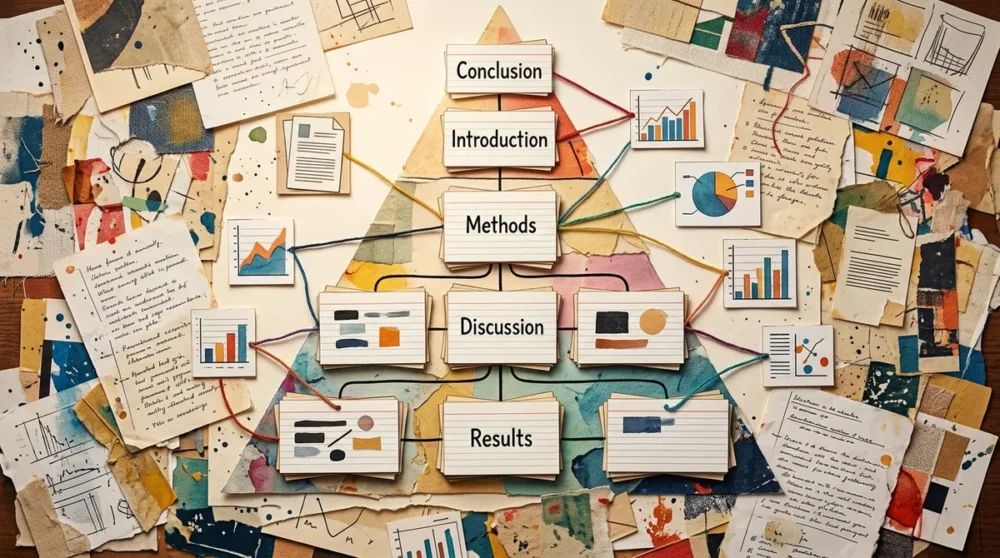
Start outlining with the Results section first, then move to Discussion and Introduction—this prevents overpromising in your introduction and overstating conclusions based on actual findings.
-
Define a clear central message of 20-25 words before outlining anything else, and ensure every section directly supports this thesis statement.
-
Assign specific references, figures, and data tables to each outline point as you build it, preventing citation gaps and making editing 30-40% faster.
-
Review your target journal's author guidelines before building your outline to match structural requirements (like IMRaD format) from the start, saving significant revision time.
-
Use 2-4 logical subpoints under each major section to act as topic sentences, keeping paragraphs focused and allowing editors to assess argument flow before full editing begins.
-
Share your completed outline with a professional editor or co-author before writing the full draft to catch structural weaknesses early and improve journal acceptance rates.
Every successful manuscript starts with a strong outline. Without one, even the best research can get lost in a maze of disorganized ideas. A manuscript outline acts as a blueprint — it shows you exactly where each section, argument, and piece of evidence belongs before you write a single word. For academic researchers, clinicians, and early-career scientists, knowing how to create an outline for a manuscript is one of the most valuable skills you can develop. According to leading editorial resources, outlining is widely regarded as the single most important step in preparing a manuscript for journal publication. This guide walks you through 11 clear, actionable steps to build an outline that makes writing easier, editing faster, and publication more likely.

Why a Manuscript Outline Matters
An outline does far more than organize your thoughts. It helps editors and reviewers follow your argument clearly. It reduces the number of major revisions needed after submission. In fact, editors who receive a manuscript with a clear outline or chapter-by-chapter summary can reduce initial structural editing time by up to 30–40%. That is a significant advantage when you are working against submission deadlines.
For non-native English authors, a solid outline is especially valuable. It allows you to focus on language and clarity later, knowing that the structure is already sound. If you are planning to submit your manuscript for professional editing, providing an outline alongside your draft can speed up the entire process.

The 11 Steps to Create a Strong Manuscript Outline
Step 1: Define Your Central Message First
Before you write anything else, identify the one key message your manuscript must communicate. This is often called your central message or thesis statement. Aim for a sentence of 20–25 words that captures your main finding and its significance. Every section of your outline should support this message directly. This is also discussed in detail at how to determine a central message for a scientific article.
Step 2: Identify Your Target Journal Early
Different journals have different structural requirements. Some require a strict IMRaD format (Introduction, Methods, Results, and Discussion). Others allow more flexibility. Review your target journal’s author guidelines before you build your outline. This ensures your structure matches expectations from the start, saving you time during revision.
Step 3: Start With the Results Section
This may feel counterintuitive, but experienced manuscript editors recommend outlining the Results section first. Your data is your foundation. Once you know what you found, you can build the rest of the manuscript around those findings. Starting with results also helps you avoid writing an Introduction that overpromises or a Discussion that overstates your conclusions. You can find more guidance on this at how to write a results section for a scientific paper.
Step 4: Outline the Discussion Next
With your results mapped out, move to the Discussion. This section interprets your findings, compares them with existing literature, and addresses limitations. In your outline, list the key points you will make in order. Note which references support each point. This prevents the common mistake of writing a Discussion that simply restates the results. For additional tips, see how to write a discussion section for a research paper.
Step 5: Build the Introduction Third
Now that you know your results and how you will discuss them, write the Introduction outline. This section should establish why the research question matters, summarize what is already known, and state the gap your study addresses. Your outline should include three to four key points that lead logically to your research objective. See key elements for writing an introduction for publication for more detail.
Step 6: Outline the Methods Section
The Methods section is often the most straightforward to outline. List each subsection in the order you will present it: study design, participants or materials, procedures, and statistical analysis. Be specific about what details belong in each part. Editors flag Methods sections that are vague or incomplete, so a detailed outline here prevents those issues later. You can also review how to write a methods section for structure guidance.
Step 7: Map References and Evidence to Each Section
A strong outline does not just list topics. It assigns supporting evidence to each point. As you build each section of your outline, note which references, figures, or data tables belong there. This prevents citation gaps from appearing during the writing phase. It also makes the editing process much more efficient, because every claim already has a source attached to it.
| Manuscript Section | Outline Priority | Key Elements to Include |
|---|---|---|
| Results | First | Key findings, figures, tables, statistical outcomes |
| Discussion | Second | Interpretation, literature comparison, limitations |
| Introduction | Third | Background, knowledge gap, research objective |
| Methods | Fourth | Study design, procedures, analysis methods |
| Abstract | Last | Summary of all sections in 150–300 words |
Step 8: Use Logical Subpoints Under Each Section
Each major section of your outline should have two to four subpoints. These act as topic sentences for future paragraphs. Subpoints keep your writing focused and prevent long, wandering paragraphs. They also make it easier for your editor to assess the flow of your argument before full editing begins. Well-structured subpoints are one of the hallmarks of a publication-ready manuscript. See basic outline structure for research papers for worked examples.
Step 9: Check for Logical Gaps and Inconsistencies
Once your outline is complete, read through it from start to finish. Ask yourself: does each section follow logically from the previous one? Are there claims without supporting evidence? Are there sections that repeat the same point? Identifying these issues at the outline stage is far less costly than discovering them after you have written 5,000 words. This step is where many structural weaknesses are caught and corrected. Resources on how to structure a research paper correctly can also help at this stage.
Step 10: Collaborate With Your Editor on the Outline
If you are working with a professional editing service, sharing your outline before writing the full draft is highly recommended. Collaborative outlining — where authors and editors discuss structure together — improves alignment with target journals and publisher expectations. It also allows the editor to flag issues early, before they become embedded in finished prose. Scientific editing services at San Francisco Edit are well-suited to this kind of structural consultation. The team includes native English-speaking PhD scientists who understand journal requirements across a wide range of fields, and their 98% acceptance rate speaks to the quality of that partnership. You can also explore client testimonials to see how collaborative editing has helped others.
Step 11: Outline the Abstract Last
The abstract is the last section to outline, not the first. Since it summarizes the entire manuscript, you need to know what you are summarizing before you write it. In your outline, note the key sentence for each component: background, objective, methods, results, and conclusion. Writing the abstract last ensures it accurately reflects your completed manuscript. For detailed guidance, visit how to write an abstract for a scientific paper.

Common Mistakes to Avoid When Creating a Manuscript Outline
Even experienced authors make avoidable errors during the outlining stage. Recognizing these mistakes early can save significant revision time later.
- Starting with the Introduction: This often leads to an over-broad opening that does not connect well with the actual results.
- Skipping the outline entirely: Writing directly from notes without a plan almost always produces a manuscript with structural problems.
- Making the outline too vague: Listing only section headings without subpoints does not give enough guidance during writing.
- Failing to assign references: Leaving citations to the end often creates gaps in evidence or misattributed sources.
- Ignoring journal-specific requirements: Not reviewing the target journal’s guidelines before outlining wastes time on structural revisions later.
- Not revisiting the outline mid-draft: Your outline should evolve as you write. Treat it as a living document, not a fixed plan.

How Outlines Differ for Different Manuscript Types
Not all manuscripts follow the same outline structure. Journal articles, book chapters, and theses each have distinct requirements. Understanding these differences helps you create an outline that fits your specific document type.
| Manuscript Type | Typical Outline Structure | Key Consideration |
|---|---|---|
| Journal Article | IMRaD (Introduction, Methods, Results, Discussion) | Journal-specific word limits and section order |
| Review Article | Introduction, Body sections by theme, Conclusion | Logical thematic grouping of literature |
| Thesis or Dissertation | Chapter-by-chapter with summaries and transitions | Argument continuity across chapters |
| Book Chapter | Introduction, Main argument sections, Summary | Fit within the broader book’s narrative arc |
| Case Report | Background, Case Presentation, Discussion | Clear clinical narrative and teaching point |
For book-length manuscripts, editors often request chapter-by-chapter outlines that include summaries and argument goals for each chapter. This helps catch plot or argument inconsistencies early in the process. You can find related guidance on how to structure a scientific review article from planning to publication. For medical case reports specifically, see how to write a medical case report.
What a Good Manuscript Outline Looks Like
A useful outline is neither too brief nor excessively detailed. It should fit on one to two pages for a standard journal article. Each section should have a heading, two to four subpoints, and notes about which figures or references support that section. Think of it as a map that shows both the destination and the route.
Here is a numbered example of what a Results section outline might look like:
- Primary outcome: State the main result with the key statistic. Note which figure supports it.
- Secondary outcomes: List two to three supporting findings in order of importance. Assign table references.
- Subgroup analyses: Note any stratified findings that add nuance. Flag potential limitations to address in the Discussion.
- Negative or null findings: Include any results that did not support your hypothesis. These are still publishable and scientifically important.
Peer-reviewed journals indexed in PubMed expect manuscripts to follow a clear, logical structure. Having an outline ensures your manuscript meets that standard before submission.
Using an Outline to Reduce Revision Cycles
One of the greatest practical benefits of outlining is that it reduces revision cycles. A 2021 editorial commentary noted that manuscripts developed from a clear outline typically require fewer major structural revisions. This is because the most common reasons for revision — unclear argument, missing evidence, poor flow — are addressed during the outline stage rather than after the full draft is written.
Professional editors at services like San Francisco Edit recommend that authors always submit an outline alongside their manuscript when possible. This allows the editor to assess the manuscript’s structural integrity before line-level editing begins. The result is a faster, more targeted editing process that focuses on language precision rather than rebuilding the argument from scratch.
For researchers working with language editing services, a clear outline also helps editors preserve your intended meaning while improving English clarity. This is especially important for non-native English authors whose core scientific argument should not be altered during editing. Guidelines from institutions such as the National Library of Medicine reinforce the importance of clear manuscript structure for indexing and discoverability.
Practical Tips for Outlining Efficiently
- Use a word processor’s outline view or a simple numbered list to build your structure.
- Block out 60–90 minutes of uninterrupted time to create your first outline draft.
- Review the outline against your journal’s author guidelines before writing begins.
- Share the outline with a co-author or mentor for early feedback on structure.
- Update the outline as you write — it should reflect the manuscript as it develops.
For those preparing their first scientific paper, the knowledge center at San Francisco Edit offers a wide range of resources on manuscript structure, writing tips, and journal submission guidance. You can also explore 11 key steps to write a scientific paper in 2026 for a broader view of the publication process. The National Institutes of Health also offers publicly available guidance on scientific writing standards that aligns well with what journal editors expect.
Conclusion
Learning how to create an outline for a manuscript is one of the highest-value investments you can make in your publishing career. A strong outline saves time, reduces revisions, and significantly improves the coherence and logic of your final manuscript. Whether you are preparing a journal article, a thesis, or a clinical case report, the 11 steps in this guide will help you build a structure that editors and reviewers can follow with ease. Start with your central message, build from the results outward, map your evidence to each section, and revisit the outline as you write. The result will be a manuscript that is far more likely to be accepted on the first submission. If you are ready to take your manuscript to the next level with expert structural and language support, submit your manuscript to San Francisco Edit and let our team of PhD-level editors help you get published.
FAQs
Q: What is the best way to create an outline for an academic manuscript?
A: Start by defining a clear central message of 20–25 words that your entire manuscript must support. Then outline your sections in this recommended order: Results first, then Discussion, then Introduction, and finally Methods. Assign references and figures to each section as you build the outline.
Q: Should I write the manuscript first or create the outline first?
A: Always create the outline before writing the full manuscript. An outline allows you to identify structural gaps, logical inconsistencies, and missing evidence before investing time in a full draft. This approach significantly reduces the number of major revisions needed later.
Q: How detailed should a manuscript outline be for journal submission?
A: A useful manuscript outline should fit on one to two pages and include section headings, two to four subpoints per section, and notes about supporting references or figures. It should be detailed enough to guide your writing but flexible enough to evolve as your manuscript develops.
Q: How can an outline help reduce the number of revisions needed?
A: An outline addresses the most common causes of major revisions — poor flow, missing evidence, and unclear argument — before the full draft is written. Manuscripts developed from a clear outline typically require fewer structural revisions because the logical framework is established early in the process.
Q: How do outlines differ between journal articles and book-length manuscripts?
A: Journal article outlines typically follow the IMRaD structure and fit on one to two pages, while book-length manuscript outlines include chapter-by-chapter summaries, transitions between chapters, and argument or narrative goals for each section. Both types should map evidence to each section and maintain a consistent central message throughout.